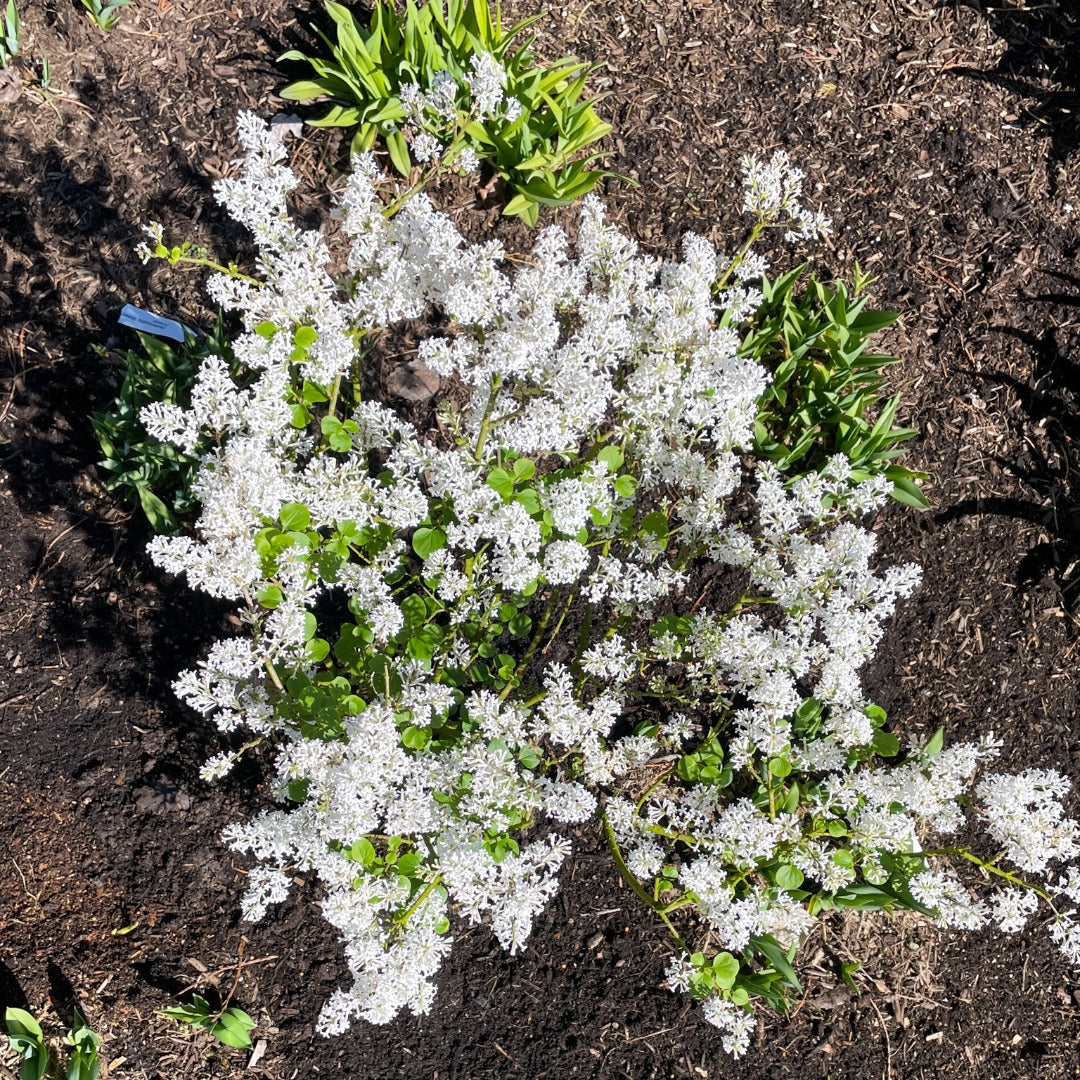
This compact lilac breathes timeless elegance into your landscapes with pink flower buds that open into a multitude of pristine white blossoms. Its captivating, sweet fragrance saturates the spring air, transforming your patio or garden into a true haven of peace. Thanks to its dense, rounded habit, it remains impeccable all season long without requiring constant effort. This hardy shrub adapts beautifully to small spaces and containers while inviting a joyful dance of butterflies from the very first sunny days.
Characteristics
Foliage: Small, shiny dark green oval leaves create a rich backdrop that enhances the pale blooms and stays healthy until autumn.
Flowering and stems: Tight clusters of pure white flowers emerge from soft pink buds in late spring to offer a striking visual and olfactory show.
Light: A full sun location promotes abundant flowering and ensures a tight, well-branched structure.
Habit: Its naturally globular and compact silhouette allows for precise space structuring without encroaching on neighbouring plants.
Growth: Its contained mature size reassures urban gardeners, offering a stable and balanced presence year after year.
Soil: It thrives fully in rich, neutral, and well-drained soil to maintain its vigour and brilliance.
Temperature (Hardiness): This cultivar bravely faces winter rigours with its hardiness zone 3.
Resistances: Its high natural tolerance to powdery mildew makes it a durable and aesthetic choice for worry-free gardening.
Usage
Elegantly punctuates terrace corners when planted in containers.
Creates fragrant flowering borders along foundations or pathways.
Integrates perfectly as a focal point in a perennial massif.
Forms a structural low hedge that is easy to maintain for defining living areas.
Maintenance
Watering: Water regularly during establishment and maintain fresh soil, especially during heatwaves.
Fertilization: Apply a balanced fertilizer for flowering shrubs in early spring to support floral production.
Pruning: Remove spent flowers immediately after blooming to promote the formation of new wood.
Planting: Choose a well-ventilated site to promote optimal air circulation around the foliage.
Winter protection: Protect roots with a thick organic mulch to stabilize soil temperature during winter.
Having an exceptional garden is possible, even in the city! Discover our selection of trees and shrubs perfect for small lots, and transform your outdoor space into a green oasis.
Discover our complete guide to mastering shrub planting and care. Learn the best planting times, essential techniques, along with tips for watering, fertilizing, and managing common issues. Our practical advice...
In exterior design, shrubs represent furniture. They set the scene and set the tone for the flower bed. Shrubs constitute the living architectural elements of the landscaped garden. As proof,...
Le grand choix d’espèces fournit l’occasion de varier les formes, les feuillages, et de créer des floraisons successives, bref, de composer un jardin magnifique à longueur d’année. Pour toutes ces...