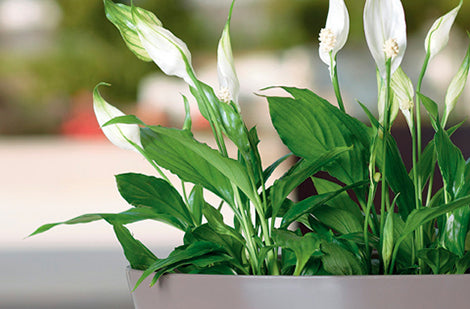
Epipremnum aureum 'Neon'
Epipremnum aureum 'Neon' – 'Neon' Pothos
Exposure
- Bright indirect light
- Medium light
Rusticity
- Heart shaped leaves
- Neon green foliage
- Rapid growth
- Easy care
- Purifies the air
The Epipremnum aureum 'Neon', or 'Neon' Pothos, electrifies any room with its uniquely coloured foliage. Native to the Solomon Islands, this easy-going plant features long, vining stems with heart-shaped leaves in an almost fluorescent lime green. It instantly brings a vibrant atmosphere and a touch of tropical energy, making it ideal for brightening up the dimmer spaces in your home.
Characteristics
- Foliage: Its evergreen, heart-shaped leaves display a spectacular, solid chartreuse colour. The vibrancy of the colour is at its peak in good light.
- Light: It thrives in bright, indirect light. It also tolerates medium light, though its leaves might take on a slightly darker shade.
- Habit: The plant has a magnificent trailing habit, perfect for hanging baskets. It can also be trained to climb a support or moss pole.
- Growth: Its growth is fast, with its vines capable of growing several feet in a single season.
- Humidity: It adapts very well to normal household humidity but appreciates a slightly more humid environment if possible.
- Potting Mix: Use a well-draining potting mix for indoor plants to ensure good root aeration.
- Temperature: The ideal temperature is between 18°C and 29°C. Protect it from cold drafts.
- Watering: Allow the top third of the soil to dry out between waterings. The 'Neon' Pothos is very tolerant and easily forgives neglect.
- Resistances: This plant is particularly resistant to drought. It is not very susceptible to pests and diseases.
Use
- Types of Use: It is spectacular in a hanging container, on top of a bookshelf where its vines can cascade, or in a pot on a desk for a pop of bright colour.
- Decorative Benefits: Its lime-green foliage creates a bright and bold focal point. In addition to its beauty, the Pothos is known for its excellent air-purifying qualities.
Care
- Fertilizing: Apply a balanced indoor plant fertilizer once a month from spring to autumn to support its vigorous growth.
- Pruning: Pinch the tips of the vines to encourage the plant to branch out, promoting denser, more compact foliage.
- Repotting: Repot your Pothos every one to two years, or when you notice roots growing out of the drainage pot.
Plant details
Dimensions
Dimensions
Characteristics
Characteristics
Habit:
- Trailing
- Climbing
Flowering colours:
Plant needs
Plant needs
Watering:
- Tolerates dry and well-drained soil
Maintenance:
- Easy
- Prune as needed
Soil requirement:
- Well drained
- Tropical plant soil
Features
Features
Resistance:
- Underwatering
- Drought
Attract:
Use:
- Hanging
- Trailing pot
- Office
Attribute:
- Fast growth
- Air purifier
- Toxic

Related articles
-
Potting House Plants: which pot to choose
Read the articleBien qu'une plante puisse passer plusieurs mois et parfois même plusieurs années dans le même pot, avec le temps ses racines envahissent tout l'espace disponible. Il devient important de choisir...
-
Moving Up a Level: Advanced Guide to Repotting ...
Read the articlePropagate your violets! Discover the simple cutting method, the secret to the perfect soil mix, and how to fight mealybugs.
-
The Complete Guide to Buying and Caring for Ind...
Read the articleBringing a touch of nature to your home with plants is a great idea! Not only do they beautify your living space, but they also help purify the air. However,...
-
Build Your Own Terrarium: The Complete, Easy Gu...
Read the articleThe terrarium is the perfect addition to your decor! Learn how to easily create your own miniature garden with our complete guide.
-
Create a garden with succulents
Read the articleLes plantes grasses n’ont pas leur pareil pour créer des arrangements à la fois impressionnants par leurs couleurs, leurs formes et leurs textures et faciles à entretenir. Qu’on les agence...
-
Houseplants to discover - Butterfly Palm or Are...
Read the articleDypsis lutescens, anciennement Chrysalidocarpus lutescens