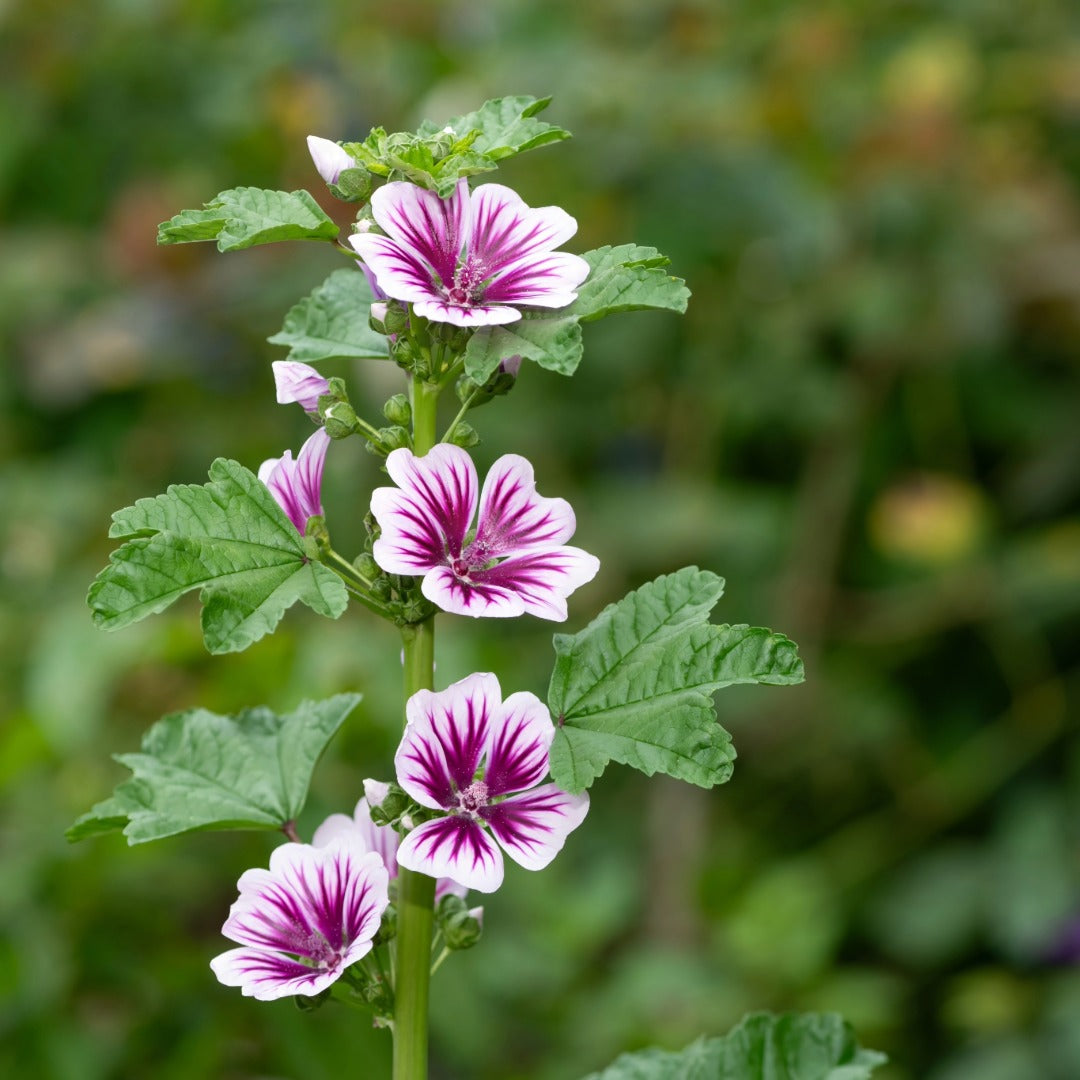
Brighten your garden with the Zebrina mallow, a spectacular perennial that instantly captures attention. Display continuous blooms throughout the summer with its cup-shaped, violet-white flowers boldly striped with dark purple. Vigorous and easy to grow, this variety brings remarkable verticality and irresistible cottage charm to your borders. It drives pollinators wild while showing excellent resilience against unpredictable weather.
Characteristics
Foliage : Deciduous, alternate, palmately lobed leaves of a beautiful bright green, offering a rich texture that highlights the blooms.
Flowering / Fruiting / Stems : Abundant 5-petaled flowers boasting a unique dark purple striped pattern on a lilac or pinkish-white background, carried on upright and sturdy stems.
Light Requirements : Requires full sun exposure to maximize flower abundance; tolerates light partial shade.
Habit : Bushy and erect, forming a well-structured vertical clump.
Growth : Fast growth rate, reaching full maturity in a single season.
Soil : Flourishes in fertile, moist, and well-drained soil; adapts well to poorer soils if drainage is adequate.
Temperature : Hardy to zone 4.
Resistances : Demonstrates good tolerance to temporary drought once established and efficiently resists White-tailed deer.
Use
Types of use : Integrate this variety at the back of borders, in the middle of mixed flower beds, or grow it in large containers to liven up patios.
Decorative advantages : Structures your space with its vertical habit and creates a striking chromatic contrast thanks to its unique striped patterns.
Maintenance
Watering : Water regularly during the first season to encourage deep rooting. Subsequently, maintain slightly moist soil and let the surface dry out between waterings.
Fertilization : Incorporate well-rotted compost at planting. Apply a natural granular fertilizer for flowering plants in early spring to sustain continuous flower production.
Pruning : Cut back spent flower stems to stimulate new waves of buds and prolong the display. Cut the foliage down to the ground in autumn.
Planting : Space plants 45 to 60 cm apart in a hole enriched with organic matter, ideally in spring.
Winter protection : Apply an organic mulch at the base of the plant in autumn to protect the crown from severe frosts, especially during the first few winters.
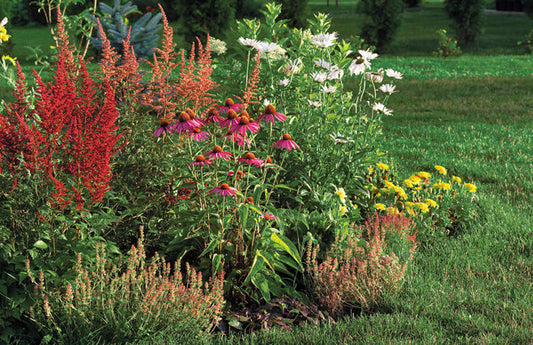
Osez créer des associations inédites qui sauront refléter votre personnalité, même si pour cela vous deviez déplacer certaines vivaces pour mieux les mettre en valeur.
Variétés à découvrir, la tomate se savoure crue, en sandwich, en bruschetta ou en salade. Cuite, c'est l'ingrédient de base de sauces, soupes et salsas.
En pénétrant au jardin, ce sont souvent les plantes vivaces que l’on remarque en premier. Un massif de sauges, d’hémérocalles, d’astilbes, d’échinacées ou de lavande offre un spectacle d’une beauté...