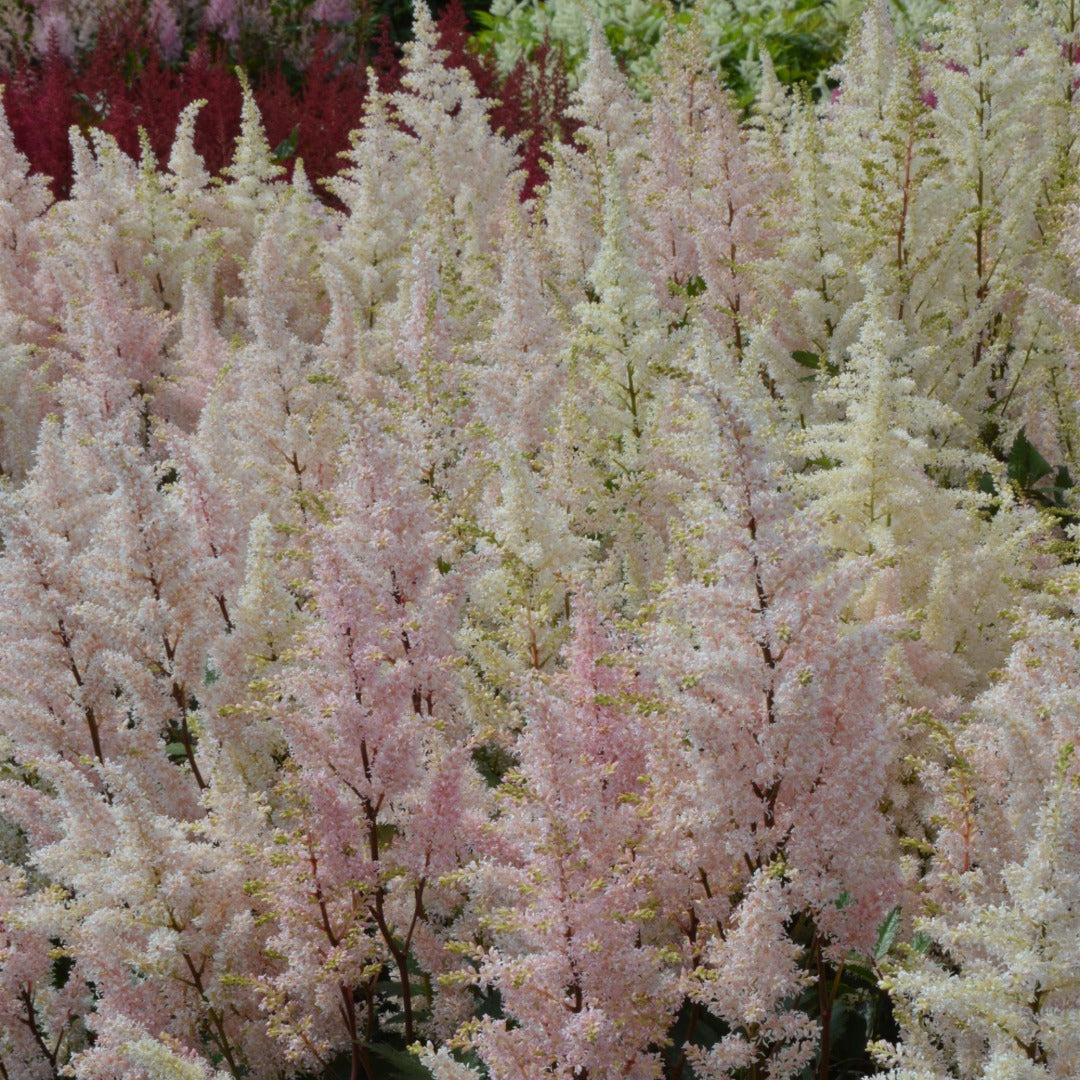
Brighten the shaded areas of your garden with this irresistible variety boasting a beautifully airy charm. The 'Peach Blossom' Japanese astilbe deploys a spectacular profusion of dense, feathery plumes in a soft salmon-pink delicately tinted with peach. Its deeply cut, spring-green foliage creates an exceptional textural contrast in woodlands and moist borders. Vigorous and easy to grow, it beautifully structures shaded spaces while attracting a multitude of pollinators.
Characteristics
Foliage : Deciduous, compound, and deeply divided leaves, sporting a glossy finish in a beautiful bright green that persists all summer.
Flowering / Fruiting / Stems : Tiny flowers clustered in dense, erect, and feathery pyramidal plumes of a delicate peach-pink, carried by sturdy floral stems.
Light Requirements : Flourishes in partial shade or full shade; tolerates direct sun only if the soil remains constantly moist.
Habit : Erect, compact, and bushy clump.
Growth : Medium growth rate, quickly forming a dense and graphic dome of foliage.
Soil : Demands soil rich in organic matter, loose, moist to wet, but well-drained to prevent root suffocation.
Temperature : Hardy to zone 3.
Resistances : Offers excellent resistance to White-tailed deer, slugs, and common foliage diseases.
Use
Types of use : Ideal for bordering shaded pathways, dressing up woodlands, greening the edges of water features, or composing magnificent flowering pots and containers on the patio.
Decorative advantages : Brings an incomparable lightness through its feathery texture, illuminates dark corners of the yard, and provides superb cut flowers for fresh bouquets.
Maintenance
Watering : Maintain the soil uniformly moist throughout the season. Water generously during periods of intense heat, as this variety does not tolerate drought.
Fertilization : Incorporate a generous layer of well-rotted compost at planting time. Apply a natural granular fertilizer for flowering plants in early spring to sustain the blooms.
Pruning : Remove spent flower plumes at the base to keep a tidy appearance, although their dried seed heads remain decorative in winter. Cut all foliage down to the ground in autumn or early spring.
Planting : Space plants 45 to 60 cm apart in a hole enriched with humus, ideally in spring or early autumn.
Winter protection : Install a mulch of dead leaves or bark in autumn to retain soil moisture and protect the crown from successive frosts.
Osez créer des associations inédites qui sauront refléter votre personnalité, même si pour cela vous deviez déplacer certaines vivaces pour mieux les mettre en valeur.
Variétés à découvrir, la tomate se savoure crue, en sandwich, en bruschetta ou en salade. Cuite, c'est l'ingrédient de base de sauces, soupes et salsas.
En pénétrant au jardin, ce sont souvent les plantes vivaces que l’on remarque en premier. Un massif de sauges, d’hémérocalles, d’astilbes, d’échinacées ou de lavande offre un spectacle d’une beauté...