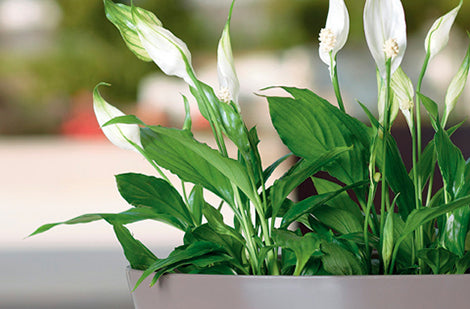
Zantedeschia spp.
Zantedeschia spp. - Calla Lily
Exposure
- Bright indirect light
- Light sun
Rusticity
Bloom time
- May
- June
- July
- August
- Sculptural trumpet-shaped flowers in vibrant colours
- Graphic green foliage sometimes dappled silver
- Upright silhouette perfect for modern décor
- Brilliant summer blooms from May-August
- Ideal as a luminous table centerpiece
With its sculptural elegance, the Calla Lily stands out as a centerpiece in any contemporary décor. Its chalice-shaped flowers, carried by rigid and graphic stems, rise proudly above lance-shaped green foliage, which is sometimes dappled with silver. It is the ideal plant for those seeking immediate visual impact and a touch of exotic refinement in their home.
Characteristics
- Bloom: Trumpet-shaped coloured spathes available in a vibrant palette: white, yellow, pink, orange, red, or deep purple.
- Flowering Period: Offers a prolonged floral display generally extending from May to August, depending on the planting period.
- Foliage: Large arrowhead-shaped leaves in a rich green, often scattered with decorative translucent spots.
- Habit: Upright, compact, and highly structured, offering a clean and orderly silhouette.
- Light: Requires bright indirect light to bloom abundantly; tolerates a few hours of soft morning sun.
Use
- Style & Placement: Elevate a dining room centerpiece, a bright kitchen counter, or an accent table in the living room.
- Decorative Benefits: Its minimalist allure pairs perfectly with a ceramic decorative pot or a sleekly designed planter.
Care & Success
- Watering: Keep the potting soil uniformly moist during the growth and flowering period. Never allow standing water to remain in the saucer.
- Humidity: Appreciates average room humidity. Avoid immediate proximity to intense heat sources in winter.
- Potting Soil: Use a rich, fertile, and very well-drained mix. A blend of indoor potting soil with added compost and perlite is ideal.
- Repotting: Repot in the spring, just before growth resumes. Do not plant the rhizomes too deeply (approximately 5 cm).
- Fertilizing: Apply a high-potassium fertilizer once every two weeks during the flowering period.
- Dormancy: After flowering, reduce watering. If the plant enters dormancy, store the bulb in a dry, cool place until the following spring.
- Toxicity: Keep out of reach of pets and children (ingestion causes irritation).
Plant details
Dimensions
Dimensions
Characteristics
Characteristics
Habit:
- Upright
- Compact
Flowering colours:
- White
- Yellow
- Pink
- Orange
- Red
- Purple
Plant needs
Plant needs
Watering:
- Allow to dry between waterings
Maintenance:
- Moderate
Soil requirement:
- Indoor potting soil
- Rich
- Well drained
Features
Features
Resistance:
Attract:
Use:
- Decorative pot
- Centerpiece
- Seasonal décor
Attribute:
- Decorative flower
- Upright habit
- Bulbous plant
- Toxic to pets

Related articles
-
Potting House Plants: which pot to choose
Read the articleBien qu'une plante puisse passer plusieurs mois et parfois même plusieurs années dans le même pot, avec le temps ses racines envahissent tout l'espace disponible. Il devient important de choisir...
-
Moving Up a Level: Advanced Guide to Repotting ...
Read the articlePropagate your violets! Discover the simple cutting method, the secret to the perfect soil mix, and how to fight mealybugs.
-
The Complete Guide to Buying and Caring for Ind...
Read the articleBringing a touch of nature to your home with plants is a great idea! Not only do they beautify your living space, but they also help purify the air. However,...
-
Build Your Own Terrarium: The Complete, Easy Gu...
Read the articleThe terrarium is the perfect addition to your decor! Learn how to easily create your own miniature garden with our complete guide.
-
Create a garden with succulents
Read the articleLes plantes grasses n’ont pas leur pareil pour créer des arrangements à la fois impressionnants par leurs couleurs, leurs formes et leurs textures et faciles à entretenir. Qu’on les agence...
-
Houseplants to discover - Butterfly Palm or Are...
Read the articleDypsis lutescens, anciennement Chrysalidocarpus lutescens