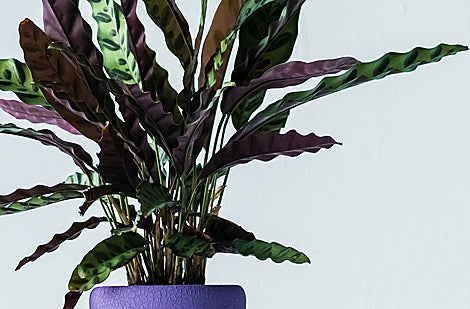
Zantedeschia spp.
Zantedeschia spp. - Calla Lily
Exposure
- Bright indirect light
- Light sun
Rusticity
Bloom time
- May
- June
- July
- August
- Sculptural trumpet-shaped flowers in vibrant colours
- Graphic green foliage sometimes dappled silver
- Upright silhouette perfect for modern décor
- Brilliant summer blooms from May-August
- Ideal as a luminous table centerpiece
With its sculptural elegance, the Calla Lily stands out as a centerpiece in any contemporary décor. Its chalice-shaped flowers, carried by rigid and graphic stems, rise proudly above lance-shaped green foliage, which is sometimes dappled with silver. It is the ideal plant for those seeking immediate visual impact and a touch of exotic refinement in their home.
Characteristics
- Bloom: Trumpet-shaped coloured spathes available in a vibrant palette: white, yellow, pink, orange, red, or deep purple.
- Flowering Period: Offers a prolonged floral display generally extending from May to August, depending on the planting period.
- Foliage: Large arrowhead-shaped leaves in a rich green, often scattered with decorative translucent spots.
- Habit: Upright, compact, and highly structured, offering a clean and orderly silhouette.
- Light: Requires bright indirect light to bloom abundantly; tolerates a few hours of soft morning sun.
Use
- Style & Placement: Elevate a dining room centerpiece, a bright kitchen counter, or an accent table in the living room.
- Decorative Benefits: Its minimalist allure pairs perfectly with a ceramic decorative pot or a sleekly designed planter.
Care & Success
- Watering: Keep the potting soil uniformly moist during the growth and flowering period. Never allow standing water to remain in the saucer.
- Humidity: Appreciates average room humidity. Avoid immediate proximity to intense heat sources in winter.
- Potting Soil: Use a rich, fertile, and very well-drained mix. A blend of indoor potting soil with added compost and perlite is ideal.
- Repotting: Repot in the spring, just before growth resumes. Do not plant the rhizomes too deeply (approximately 5 cm).
- Fertilizing: Apply a high-potassium fertilizer once every two weeks during the flowering period.
- Dormancy: After flowering, reduce watering. If the plant enters dormancy, store the bulb in a dry, cool place until the following spring.
- Toxicity: Keep out of reach of pets and children (ingestion causes irritation).
Plant details
Dimensions
Dimensions
Characteristics
Characteristics
Habit:
- Upright
- Compact
Flowering colours:
- White
- Yellow
- Pink
- Orange
- Red
- Purple
Plant needs
Plant needs
Watering:
- Allow to dry between waterings
Maintenance:
- Moderate
Soil requirement:
- Indoor potting soil
- Rich
- Well drained
Features
Features
Resistance:
Attract:
Use:
- Decorative pot
- Centerpiece
- Seasonal décor
Attribute:
- Decorative flower
- Upright habit
- Bulbous plant
- Toxic to pets

Related articles
-
Calathea: The Essential Guide to Mastering the ...
Read the articleCalathea is a stunning addition, but it's demanding! The key to its success? Humidity. Find out why tap water and dry air are its worst enemies and how to give...
-
Jade Plant (Crassula): The Easy-Care Succulent ...
Read the articleThe jade plant is a must-have! Learn all the secrets to caring for this resilient succulent that naturally grows into an elegant miniature tree.
-
Madagascar Dragon Tree: Embrace Effortless, Gra...
Read the articleAdd a modern touch to your home! The Madagascar Dragon Tree is low-maintenance, perfect for beginners, and stands out with its slender look and two-toned foliage.
-
Aspidistra: The "Cast Iron Plant" Indestructibl...
Read the articleDon't have a green thumb? The Cast Iron Plant is for you! Tolerant of shade and missed waterings, it's perfect for lobbies and offices. Learn how to maintain its leathery...
-
Embrace the Fern: The Champion of Shade and Tro...
Read the articleGot a dark corner? Ferns are your allies! They are easy to care for if you master one factor: humidity. Learn how to water them perfectly for spectacular and full...