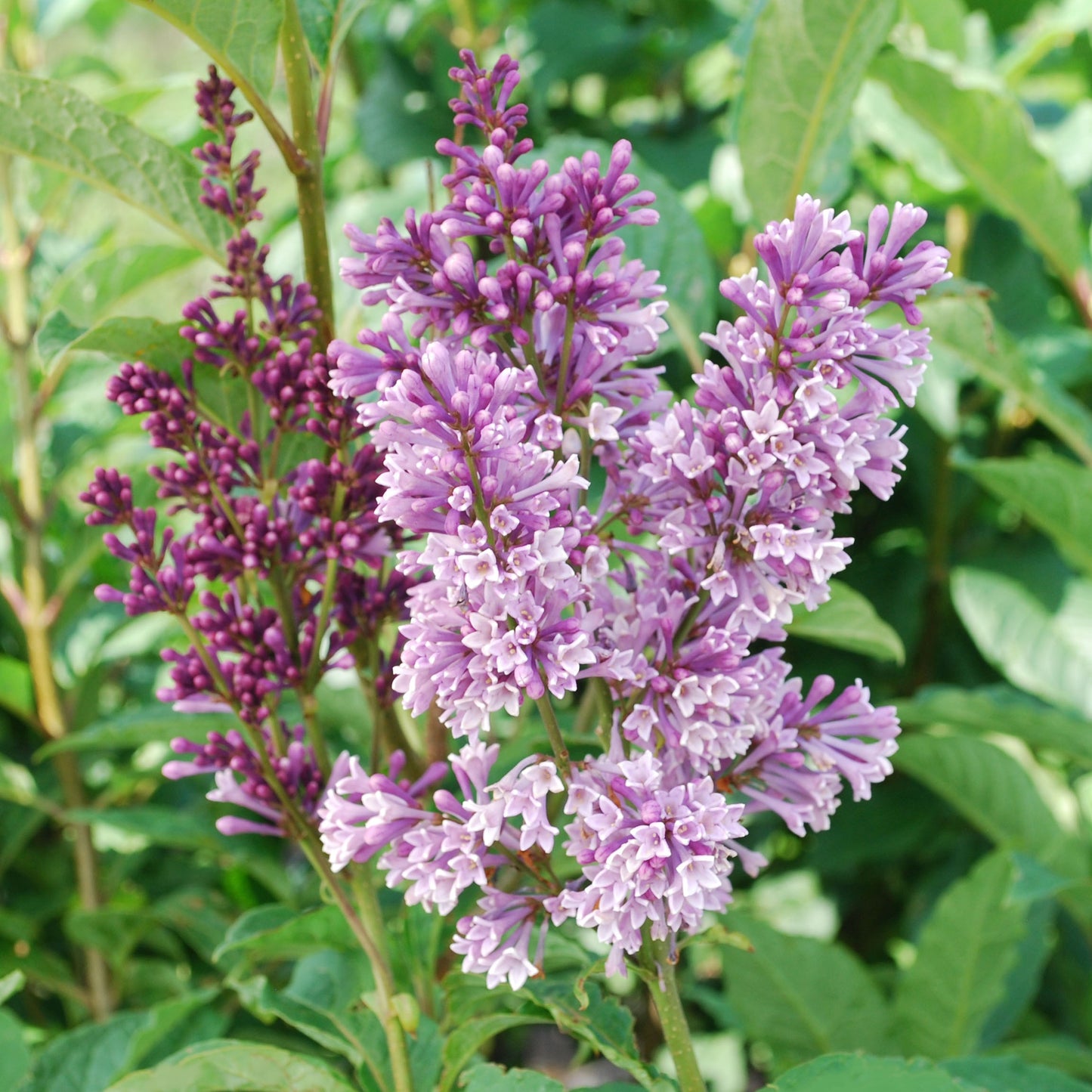
Syringa x prestoniae 'Donald Wyman', commonly known as Donald Wyman Preston Lilac, is a highly esteemed shrub, often considered one of the finest lilacs. It is particularly valued for its spectacular late-season flowering, which extends the lilac season in the garden. This shrub brings undeniable charm and a remarkable presence with its colourful flower clusters and elegant form.
Characteristics
Foliage: The leaves are pointed, dark green, creating a relatively dense texture. The foliage is deciduous and turns a lovely buttery yellow in the fall, sometimes tinged with bronze.
Flowering: In late spring, typically from late May to mid-June, this lilac is covered in upright, dense panicles. Purple flower buds open into single, deep pinkish-purple to intense fuchsia blossoms that are lightly scented. This flowering occurs about two weeks later than common lilacs.
Light: Full sun.
Habit: This shrub has a bushy and upright habit, forming a large, rounded, dense mass. It is multi-stemmed and may sometimes become slightly bare at the base, with a typical clearance of about one metre from the ground. It is non-suckering.
Growth: Moderate. It can reach a height of 2 to 3 metres (approximately 6.5 to 10 feet) and a spread of 1.25 to 2.4 metres (approximately 4 to 8 feet) at maturity.
Moisture: Highly adaptable, it tolerates dry to medium moisture conditions well once established.
Soil: Adapts to various soil types but prefers rich, fertile, well-drained soil. It is not particular about soil pH.
Hardiness: Extremely hardy, it tolerates temperatures down to approximately minus 45 degrees Celsius (minus 50 degrees Fahrenheit).
Watering: Moderate. Water regularly after planting until established, then during prolonged periods of drought.
Resistance: It shows excellent disease resistance, particularly to powdery mildew, typical of Preston lilacs. It is also resistant to urban pollution and tolerates drought well once established.
Uses
Types of Use: The 'Donald Wyman' Lilac is magnificent used as a specimen plant to highlight its flowering and habit. It is also very effective in shrub borders, informal flowering hedges, or for creating screens. Its hardiness makes it suitable for general garden use (in the ground).
Ornamental Features: Its abundant, colourful flowers offer a striking display in late spring. Its dense, dark green foliage provides a beautiful backdrop during the summer, followed by attractive fall colour. Its relatively full texture helps it stand out from plants with finer foliage.
Care
Fertilizing: Fertilize in spring with a balanced fertilizer for flowering shrubs if the soil is poor. A layer of compost can also be beneficial.
Pruning: Prune only as needed, immediately after flowering, to avoid compromising the following year's flowers. Remove faded flowers to encourage a neater appearance and potentially more abundant flowering next year, although this is not strictly necessary. Pruning can help maintain a desirable shape or rejuvenate an old specimen.
Planting: Plant in spring or fall. Ensure sufficient spacing to allow for its full development, about 1.5 to 2.5 metres between plants, depending on use (closer for a hedge). Dig a planting hole twice as wide as the root ball and of the same depth. Incorporate compost into the backfill soil.
Having an exceptional garden is possible, even in the city! Discover our selection of trees and shrubs perfect for small lots, and transform your outdoor space into a green oasis.
Discover our complete guide to mastering shrub planting and care. Learn the best planting times, essential techniques, along with tips for watering, fertilizing, and managing common issues. Our practical advice...
In exterior design, shrubs represent furniture. They set the scene and set the tone for the flower bed. Shrubs constitute the living architectural elements of the landscaped garden. As proof,...
Le grand choix d’espèces fournit l’occasion de varier les formes, les feuillages, et de créer des floraisons successives, bref, de composer un jardin magnifique à longueur d’année. Pour toutes ces...