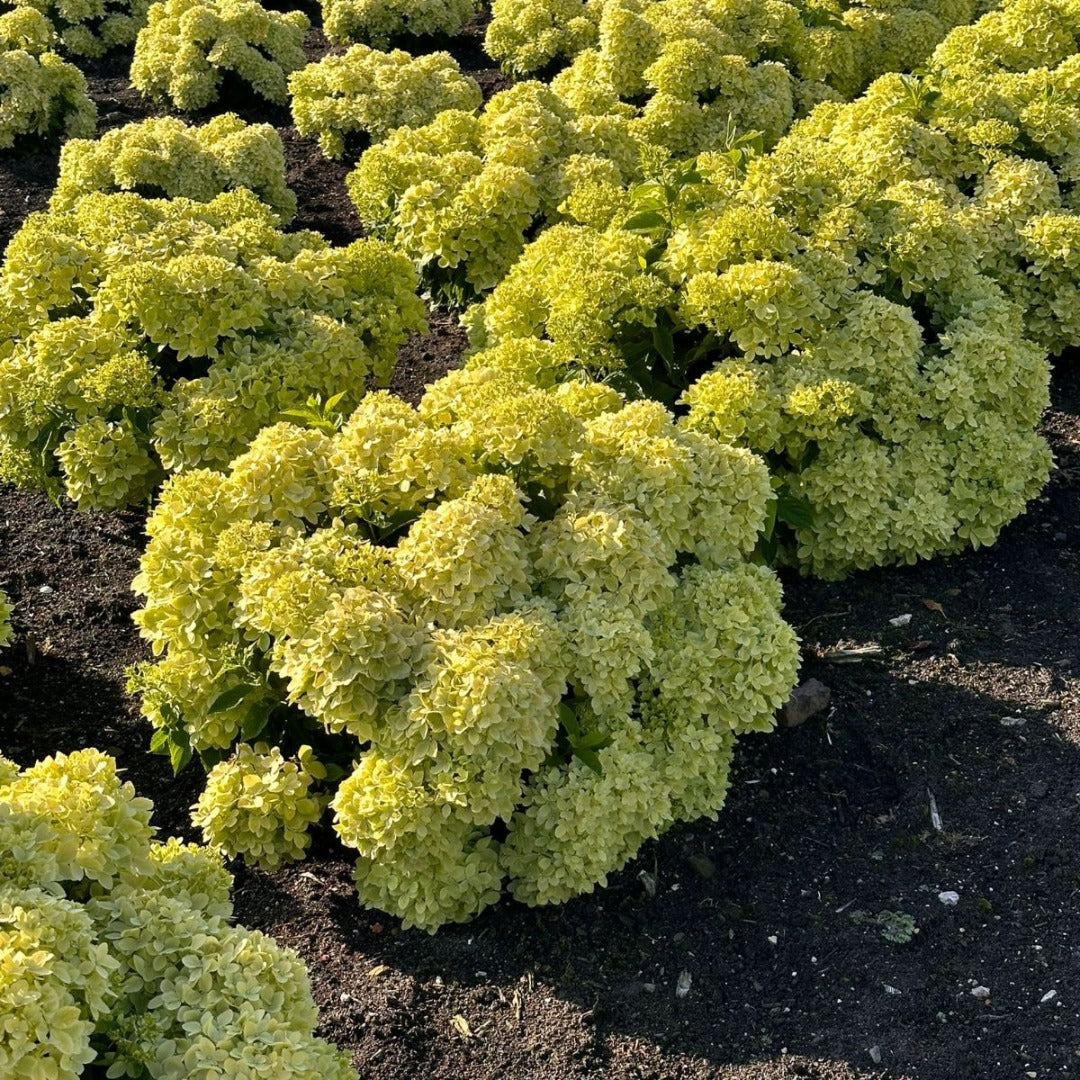
The 'Bubble Bath' Hydrangea enchants gardens with its unique blooms featuring incurved petals that resemble delicate soap bubbles. Part of the Seaside Swirl® series, this variety stands out for its ability to rebloom on both old and new wood, ensuring a generous floral display from early summer through to fall. Its sturdy stems and compact habit make it an exceptional choice for adding a touch of softness and elegance to garden beds or large containers.
Characteristics
Foliage: Displays large, glossy dark green leaves, providing a dense texture and the perfect backdrop for its blooms.
Flowering / Fruit / Stems: Produces dense mophead flowers with cupped sepals. The colour shifts from soft pink to lavender-blue depending on soil acidity.
Light: Prefers morning sun with protection from the harsh afternoon sun (partial shade).
Habit: Features a rounded, upright, and compact form that does not flop under the weight of the flowers.
Growth: Reaches a mature size of approximately 60 to 90 cm (24 to 36 inches) in height and width.
Soil: Thrives in soil rich in organic matter that is perfectly drained. Acidity directly influences the flower shades.
Temperature: Outstanding hardiness (Zone 3); significantly more cold-tolerant than traditional macrophylla varieties.
Resistances: Strong resistance to common fungal issues such as powdery mildew.
Use
Types of use: Ideal for mass plantings, foundation borders, low hedges, or as a thriller in containers.
Decorative advantages: Its sculpturally shaped flowers are stunning as cut flowers and maintain their beauty even when dried.
Maintenance
Watering: Keep the soil uniformly moist, especially during hot spells. Mulching at the base helps retain moisture.
Fertilization: Apply a flowering shrub fertilizer in early spring. Use a soil acidifier to achieve or maintain blue tones.
Pruning: Lightly prune after flowering if necessary. Since it blooms on both old and new wood, avoid heavy pruning in the spring.
Planting: Space plants approximately 90 cm (36 inches) apart to allow for proper air circulation.
Winter Protection: Although extremely hardy, a layer of mulch at the base is recommended to protect the root system in variable climates.
Having an exceptional garden is possible, even in the city! Discover our selection of trees and shrubs perfect for small lots, and transform your outdoor space into a green oasis.
Discover our complete guide to mastering shrub planting and care. Learn the best planting times, essential techniques, along with tips for watering, fertilizing, and managing common issues. Our practical advice...
In exterior design, shrubs represent furniture. They set the scene and set the tone for the flower bed. Shrubs constitute the living architectural elements of the landscaped garden. As proof,...
Le grand choix d’espèces fournit l’occasion de varier les formes, les feuillages, et de créer des floraisons successives, bref, de composer un jardin magnifique à longueur d’année. Pour toutes ces...