
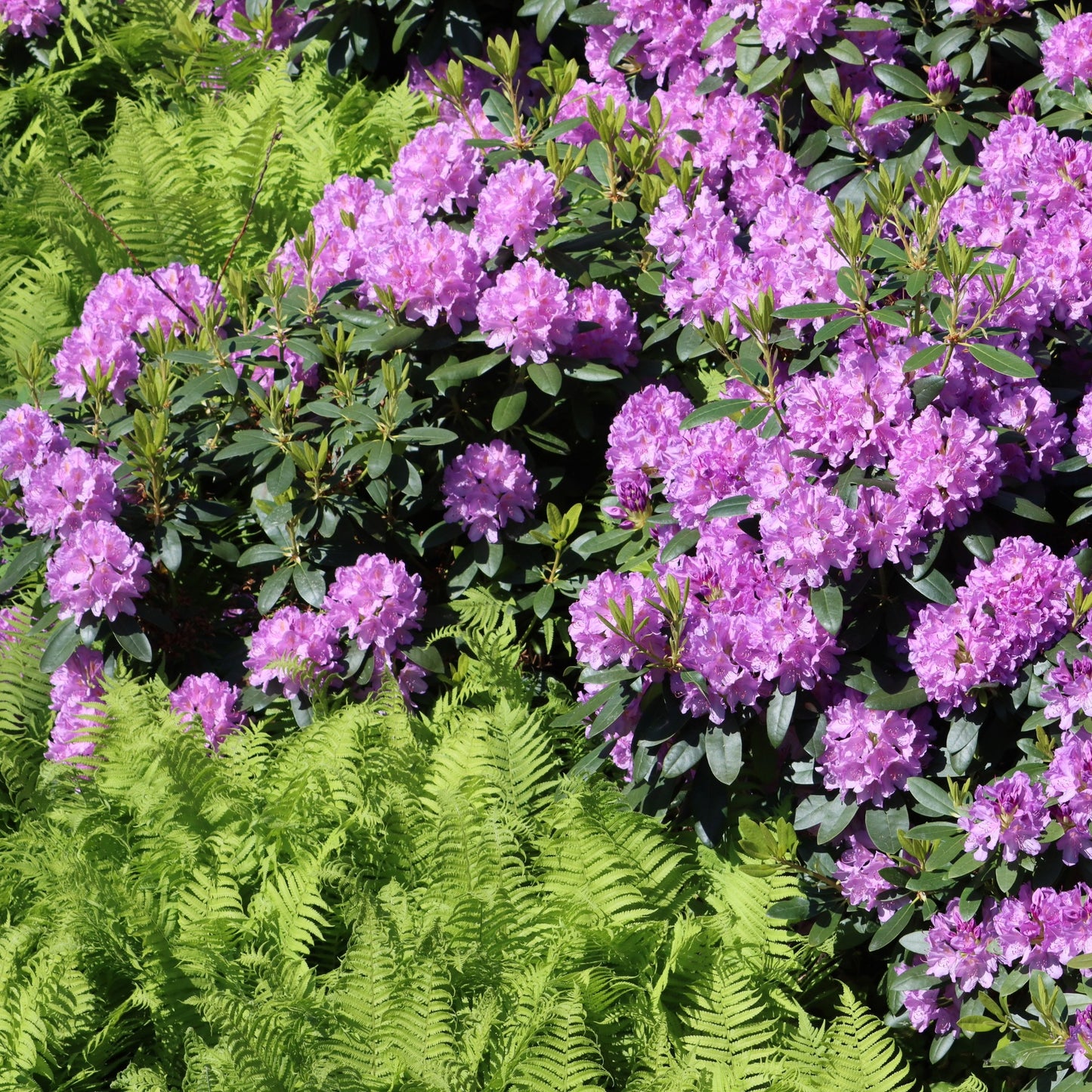
Rhododendron 'English Roseum'
Rhododendron 'English Roseum' (Elepidote) – English Roseum Rhododendron
Exposure
- Partial shade
- Shade
Rusticity
Bloom time
- May
- June
- Abundant lilac-pink blooms
- Large-leaf elepidote type
- Excellent winter hardiness
- Majestic garden structure
- Ideal for shaded areas
The 'English Roseum' Rhododendron is a timeless classic that brings royal elegance to shaded gardens. This vigorous elepidote shrub decks itself in an abundance of dome-shaped, lilac-pink flower clusters, creating a striking visual display starting in late spring. Renowned for its exceptional hardiness and ability to brave harsh winters, it remains one of the most reliable choices for structuring beds with nobility and evergreen persistence.
Characteristics
- Foliage: Large, leathery, elliptical evergreen leaves of a lustrous dark green, providing a structured presence throughout the year.
- Flowering: Spectacular clusters (corymbs) of soft lilac-pink funnel-shaped flowers, blooming generously in May and June.
- Light: Prefers partial shade; protection from direct afternoon sun prevents foliage scorch.
- Habit: Bushy, dense, and rounded habit, becoming majestic with age.
- Growth: Moderate growth rate, reaching approximately 1.8 to 2.5 metres at maturity.
- Soil: Requires acidic, organic-rich, cool, and perfectly drained soil.
- Temperature: Excellent hardiness (Zone 4).
- Resistances: Good cold resistance and tolerates humidity better than many other rhododendron varieties.
Use
- Types of use: Ideal for woodland gardens, as a focal specimen to draw the eye, or for creating a flowering evergreen hedge under mature trees.
- Decorative advantages: Offers a magnificent contrast between its pastel flowers and dark foliage; structures the garden even in winter.
Maintenance
- Watering: Maintain uniformly moist soil, especially during summer dry spells. Water at the base to avoid wetting the foliage.
- Fertilization: Apply an acidic plant fertilizer (rhododendron/azalea type) early in the spring before flowering.
- Pruning: Carefully remove spent flowers (deadhead) to encourage the next season's growth. Prune lightly after flowering if necessary to maintain shape.
- Planting: Do not plant too deeply, as the roots are shallow. Add sphagnum peat moss to the planting hole.
- Winter Protection: Install winter protection (snow fencing and burlap) during the first few years and in sites exposed to prevailing winds.
Plant details
Dimensions
Dimensions
Characteristics
Characteristics
Habit:
- Rounded
- Bushy
Flowering colours:
- Pink
- Mauve
Plant needs
Plant needs
Watering:
- Moderate
- Tolerates moist soil
Maintenance:
- Fertilize regularly
- Winter protection
- Remove spent flowers
Soil requirement:
- Rich
- Acidic
- Moist
- Well-drained
Features
Features
Resistance:
- Cold
- Disease
Attract:
- Pollinators
- Butterflies
- Hummingbirds
Use:
- Specimen
- Mass planting
- Flower bed
- Container
Attribute:
- Evergreen foliage
- Long flowering
- Shade

Related articles
-
Trees and shrubs for small space landscaping
Read the articleHaving an exceptional garden is possible, even in the city! Discover our selection of trees and shrubs perfect for small lots, and transform your outdoor space into a green oasis.
-
When and how to plant shrubs: successful planti...
Read the articleDiscover our complete guide to mastering shrub planting and care. Learn the best planting times, essential techniques, along with tips for watering, fertilizing, and managing common issues. Our practical advice...
-
Choosing shrubs to plant
Read the articleIn exterior design, shrubs represent furniture. They set the scene and set the tone for the flower bed. Shrubs constitute the living architectural elements of the landscaped garden. As proof,...
-

Shrubs: beautiful all year long
Read the articleLe grand choix d’espèces fournit l’occasion de varier les formes, les feuillages, et de créer des floraisons successives, bref, de composer un jardin magnifique à longueur d’année. Pour toutes ces...