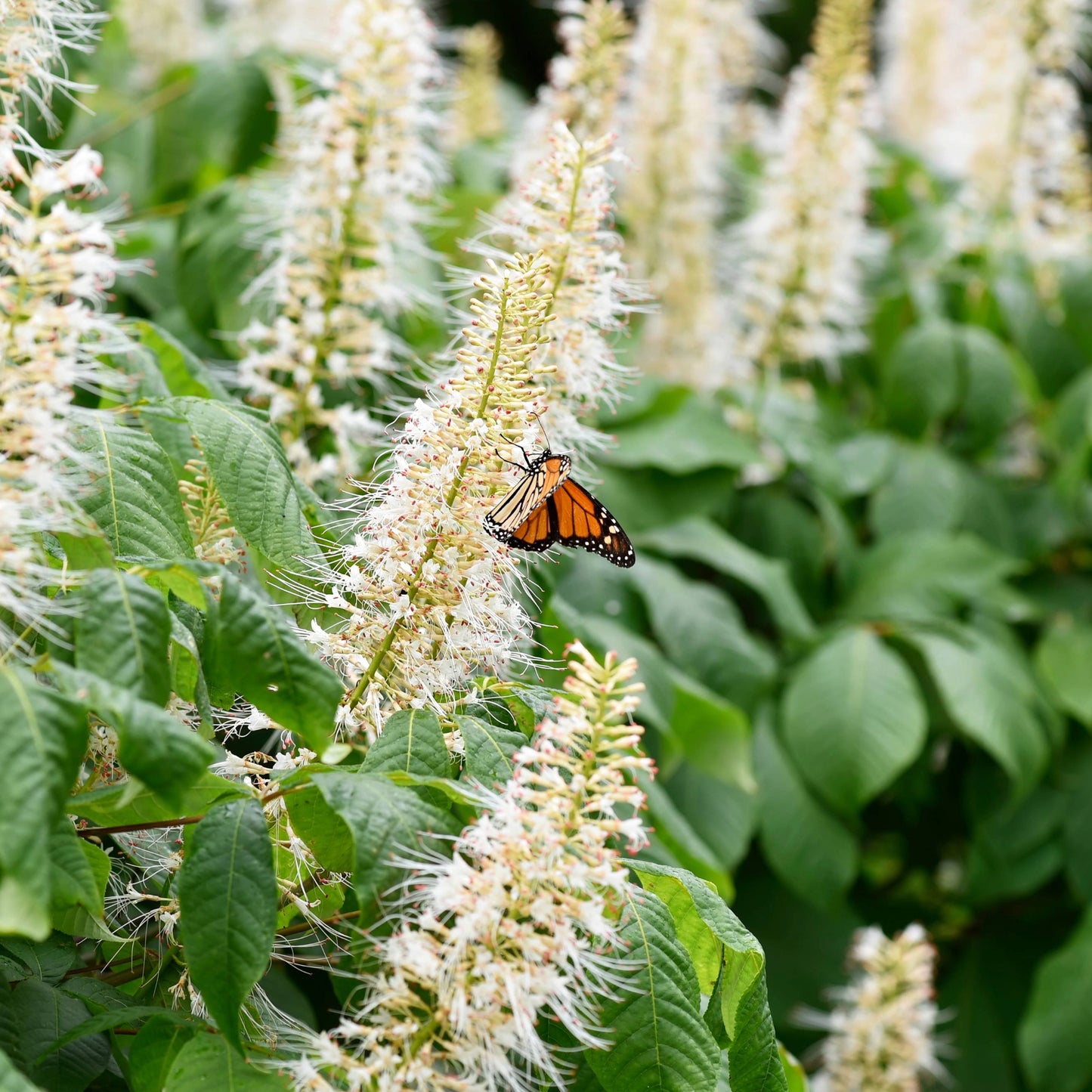
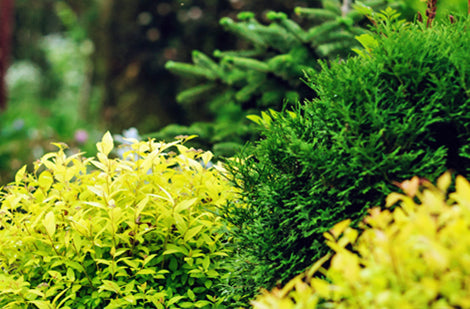
'Hummingbird' Clethra is a particularly charming native shrub, prized for its compact form and incredibly fragrant summer bloom. Unlike other larger varieties, 'Hummingbird' is a perfect solution for small gardens. It stands out for its ability to produce an abundance of white flowers even in difficult conditions, such as shady areas and moist soils.
Characteristics
Foliage: It develops dense, glossy, deciduous foliage in a beautiful dark green during the summer. In the fall, it takes on a magnificent and brilliant golden-yellow colour.
Flowering: In the heart of summer (July-August), the shrub covers itself in upright spikes (racemes) of small white flowers. These flowers release a sweet and spicy fragrance, very powerful, which attracts a myriad of pollinators.
Light: It flowers well in both full sun and partial shade, making it a valuable asset for less sunny gardens.
Habit: It forms a shrub with a bushy, compact, and rounded habit. It tends to sucker (spread from the base) to form beautiful, dense colonies.
* **Growth**: With a medium growth rate, it reaches a height of 60 to 120 cm (2-4 feet) with a spread of 90 to 150 cm (3-5 feet).
Soil: It thrives in moist, acidic soil rich in organic matter. It is one of the few shrubs that tolerates heavy soils and areas where water may accumulate very well.
Hardiness: Very hardy, it faces Zone 4 winters without any problem.
Resistance: It demonstrates excellent resistance to deer.
Uses
Types of Use: Its compact habit and tendency to spread make it an excellent choice for mass plantings or for naturalizing in shade gardens or woodlands. It is also perfect in borders and near wet areas.
Ornamental Features: It perfumes the air and offers a precious bloom in mid-summer. Its bright yellow fall colouration is another of its great attractions.
Care
Watering: Maintain moist soil, especially during dry spells, to ensure good performance.
Fertilizing: Apply a fertilizer for acid-loving plants or compost in the spring.
Pruning: Since it blooms on new wood, prune it as needed in late winter or early spring to control its shape or remove dead branches.
Planting: Plant it in acidic soil rich in compost that retains moisture well. To limit its spread, you can remove suckers in the spring.
Winter Protection: No protection is required for this hardy native shrub.
Having an exceptional garden is possible, even in the city! Discover our selection of trees and shrubs perfect for small lots, and transform your outdoor space into a green oasis.
Discover our complete guide to mastering shrub planting and care. Learn the best planting times, essential techniques, along with tips for watering, fertilizing, and managing common issues. Our practical advice...
In exterior design, shrubs represent furniture. They set the scene and set the tone for the flower bed. Shrubs constitute the living architectural elements of the landscaped garden. As proof,...
Le grand choix d’espèces fournit l’occasion de varier les formes, les feuillages, et de créer des floraisons successives, bref, de composer un jardin magnifique à longueur d’année. Pour toutes ces...