Leucanthemum x superbum 'Sweet Daisy® Rebecca'
Leucanthemum 'Sweet Daisy® Rebecca' – 'Sweet Daisy® Rebecca' Shasta Daisy
Exposure
- Sun
Rusticity
Bloom time
- June
- July
- August
- Unique fringed double flowers
- Very sturdy compact habit
- Extended summer blooming
- Excellent cut flower
- Attracts butterflies
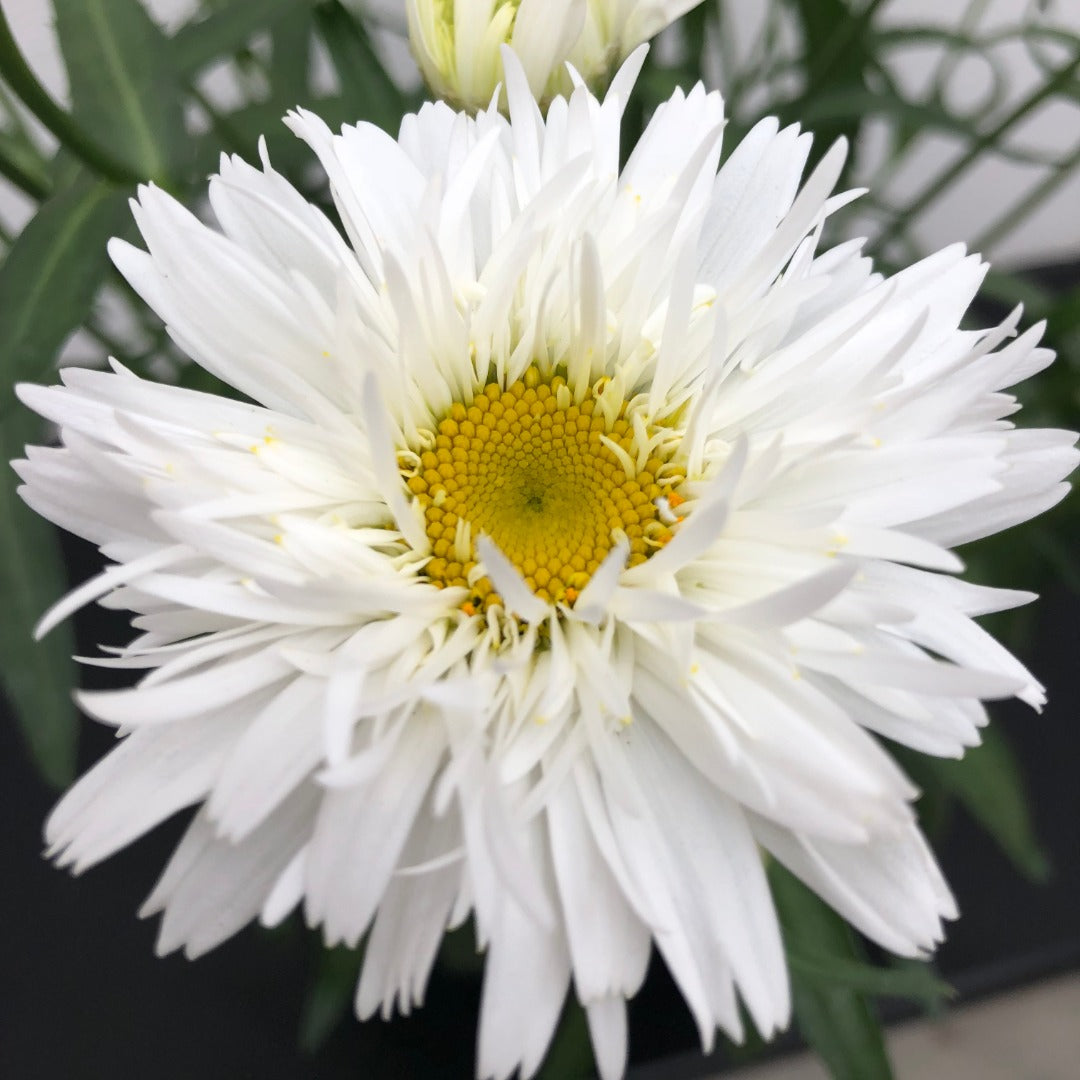
Brighten up your garden beds with this modern and spectacular take on the classic Shasta Daisy. 'Sweet Daisy® Rebecca' stands out with its pure white double flowers, featuring fringed and ruffled petals that create a unique airy texture around a vibrant yellow heart. Compact and sturdy, it brings a touch of freshness and dynamism to the garden from early summer, maintaining an impeccable upright habit that won't flop under the weight of its blooms.
Characteristics
- Foliage: Lance-shaped, dark green leaves providing a striking contrast to the brilliant white flowers.
- Flowering: Impressive double flowers with jagged (fringed) petals, bright white with a yellow central disk.
- Light: Prefers full sun for optimal blooming.
- Habit: Forms a compact, dense, and well-upright mound.
- Growth: Moderate growth rate, reaching about 25 to 30 cm in height.
- Soil: Thrives in fertile, rich, and especially well-drained soil.
- Temperature: Hardy to Canadian zone 4.
- Resistances: Good resistance to fungal diseases and tolerant of White-tailed deer.
Use
- Types of Use: Ideal for the front of flower beds, pathway borders, or in containers on a sunny terrace.
- Decorative Advantages: Its "ruffled" look adds a sculptural and romantic dimension; perfect for fresh-cut flower bouquets.
Maintenance
- Watering: Water regularly to keep the soil moist but never waterlogged. Increase frequency during intense heat spells.
- Fertilization: Apply a granular perennial fertilizer in spring or a phosphorus-rich soluble fertilizer during the blooming period.
- Pruning: Deadhead faded flowers regularly to stimulate new bud formation and extend the season.
- Planting: Space plants 30 to 40 cm apart in a hole twice as wide as the root ball.
- Winter Protection: Apply organic mulch at the base in the fall to protect roots from freeze-thaw cycles.
Plant details
Dimensions
Dimensions
Characteristics
Characteristics
Habit:
- Mounded
- Upright
Flowering colours:
- White
Plant needs
Plant needs
Watering:
- Moderate
Maintenance:
- Medium
- Deadhead
- Cut back in spring
Soil requirement:
- Rich
- Well-drained
Features
Features
Resistance:
- White-tailed deer
- Cold
- Heat
Attract:
- Pollinators
- Butterflies
Use:
- Border
- Mass Planting
- Pot – vedette
- Container
- Planter
Attribute:
- Cut Flower
- Long Blooming
- Attracts Pollinators
- Small Gardens and Yards

Related articles
-
Perennials for all occasions
Read the articleOsez créer des associations inédites qui sauront refléter votre personnalité, même si pour cela vous deviez déplacer certaines vivaces pour mieux les mettre en valeur.
-
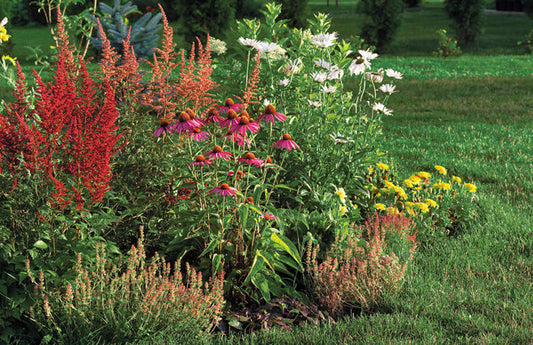
Landscaping with perennials
Read the articleVariétés à découvrir, la tomate se savoure crue, en sandwich, en bruschetta ou en salade. Cuite, c'est l'ingrédient de base de sauces, soupes et salsas.
-
Perennials proper maintenance: cut and fertilize
Read the articleLa grande popularité des vivaces vient du fait qu'après avoir été oubliées pendant des mois au cours de l'hiver, elles réapparaissent sur la scène plus énergiques et surprenantes que par...
-
How to plant perennials in your garden
Read the articleEn pénétrant au jardin, ce sont souvent les plantes vivaces que l’on remarque en premier. Un massif de sauges, d’hémérocalles, d’astilbes, d’échinacées ou de lavande offre un spectacle d’une beauté...