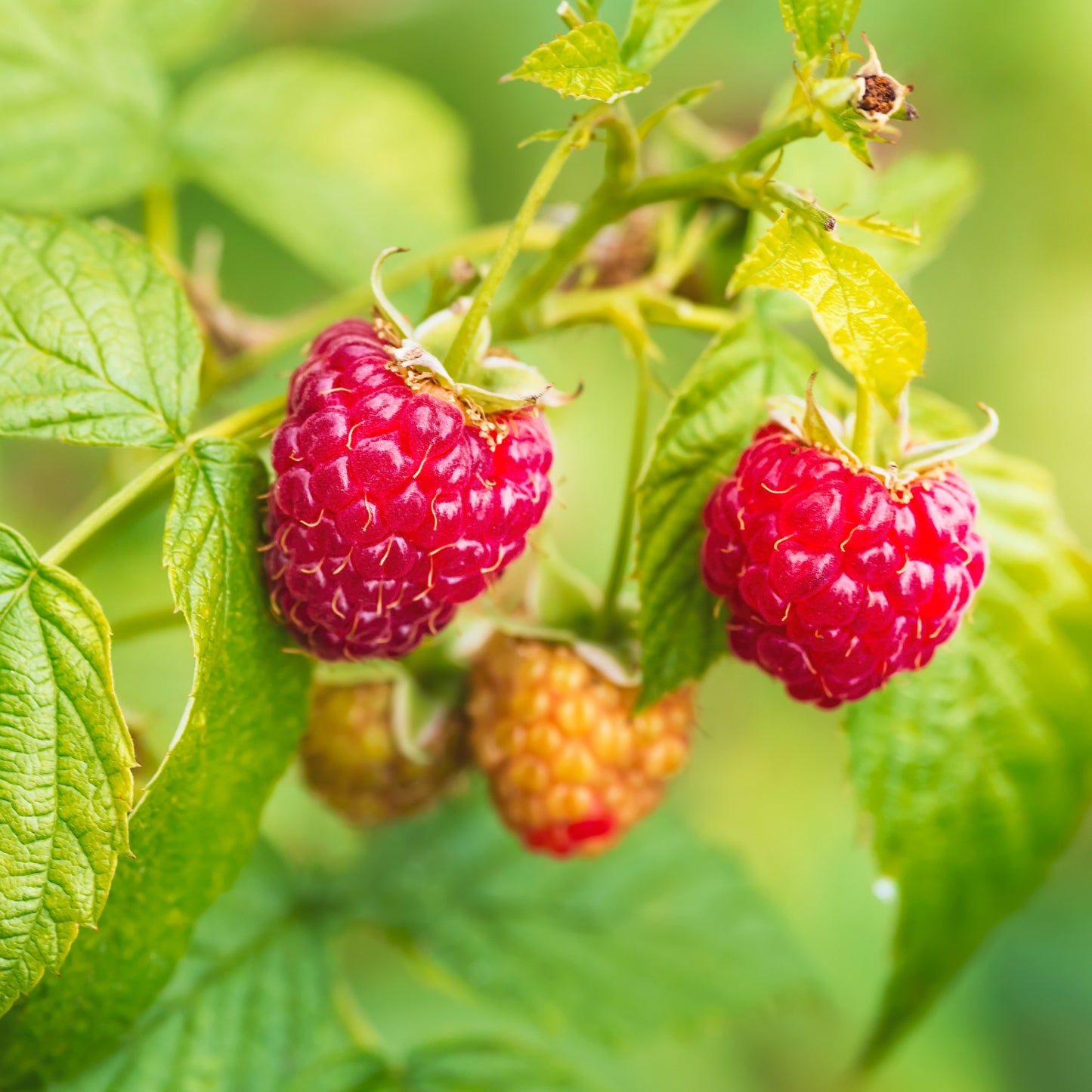
Rubus idaeus 'Killarney'
'Killarney' Red Raspberry - Rubus idaeus 'Killarney'
'Killarney' Red Raspberry - Rubus idaeus 'Killarney'
Exposure
- Sun
Rusticity
Bloom time
- May - June
- Abundant harvest of sweet raspberries
- Very hardy and robust variety
- Firm fruits easy to pick
- Excellent resistance to fungal diseases
- Perfect for delicious homemade jams
Boost your backyard orchard with the 'Killarney' Red Raspberry, an exceptional summer-bearing variety that guarantees an abundant harvest of flavorful fruit during the heart of the season! Renowned for its unmatched hardiness and vigorous canes that effortlessly brave our harsh winters, 'Killarney' produces beautiful, bright red raspberries with remarkable sweetness. Highly productive and easy to grow, it transforms any garden space into an irresistible gourmet treat for the whole family.
The harvest: production and flavours
The 'Killarney' raspberry stands out for its concentrated summer production, delivering a generous yield early in the season. Its fruits display excellent firmness and handle beautifully during picking.
- Harvest period: July (concentrated production on previous year's canes).
- Visual description: Medium to large, rounded, bright red berries that are particularly firm and fleshy.
- Flavour profile: Very sweet and mild, revealing a classic wild raspberry aroma with very low acidity. The flesh remains pleasantly firm and juicy.
- Culinary uses: Excellent enjoyed fresh straight from the garden, ideal for freezing due to their firmness, or perfect for jams, pies, smoothies, and summer desserts.
Planting guide
To maximize the growth of your 'Killarney' raspberry, follow these essential steps:
- The ideal location: Plant your 'Killarney' in full sun to stimulate fast, uniform ripening of the fruit. Choose a wide-open space. While its canes are shorter, stockier, and more robust than other varieties, light trellising makes maintenance and picking much easier.
- Soil preparation: This fruit shrub requires well-drained, loose soil enriched with organic matter, ideally slightly acidic to neutral (pH 6.0 to 6.8). Incorporate a generous amount of compost or well-rotted manure before planting.
- Putting it in the ground: Dig a hole twice as wide as the original pot. Position the plant while keeping the crown level with the soil surface. Fill in the space with your amended soil, then tamp down lightly. Maintain a distance of 60 to 90 cm (2 to 3 feet) between plants and allow 1.2 to 1.5 metres (4 to 5 feet) between rows.
- Pollination:
- Type: SELF-FERTILE, 'Killarney' sets fruit successfully on its own without needing another plant nearby.
- Suggested partners: NO PARTNER IS REQUIRED.
Maintenance guide
- Watering: Hydrate the soil regularly to keep it consistently moist, especially during the flowering stage and fruit formation. Deep watering at the base prevents the roots from drying out.
- Fertilization: Apply a balanced fertilizer formulated for small fruits in early spring. Spread an annual layer of compost around the base of the plant to nourish the soil sustainably.
- Pruning: As a summer-bearing (non-remontant) variety, 'Killarney' follows a simple, precise pruning cycle:
- After harvest: Locate and cut down to ground level all the brown canes that bore fruit in July. Keep the new, green current-year canes completely intact, as they will provide your harvest the following summer. Thin out the plant by removing any weak stems.
- Protection:
- Against birds: Protect your precious ripe berries by installing bird netting if local wildlife proves too greedy.
- Winter care: Developed in Manitoba, 'Killarney' displays exceptional cold tolerance (Zone 3). It withstands Canadian winters without any artificial shelter. Deploy organic mulch over the soil in autumn to preserve moisture and protect the root system.
Plant details
Dimensions
Dimensions
Characteristics
Characteristics
Habit:
- Upright
- Suckering
Flowering colours:
- White
Plant needs
Plant needs
Watering:
- Moderate
Maintenance:
- Medium
Soil requirement:
- Rich
- Moist
- Well drained
Features
Features
Resistance:
- Cold
- Disease
Attract:
- Birds
- Butterflies
- Pollinators
- Bees
Use:
- Mass Planting
- Edible Garden
- Fruit Hedge
- Trellis
- Pots and Containers
Attribute:
- Self-fertile
- Edible
- Small landscaping and yard
- Produces berries