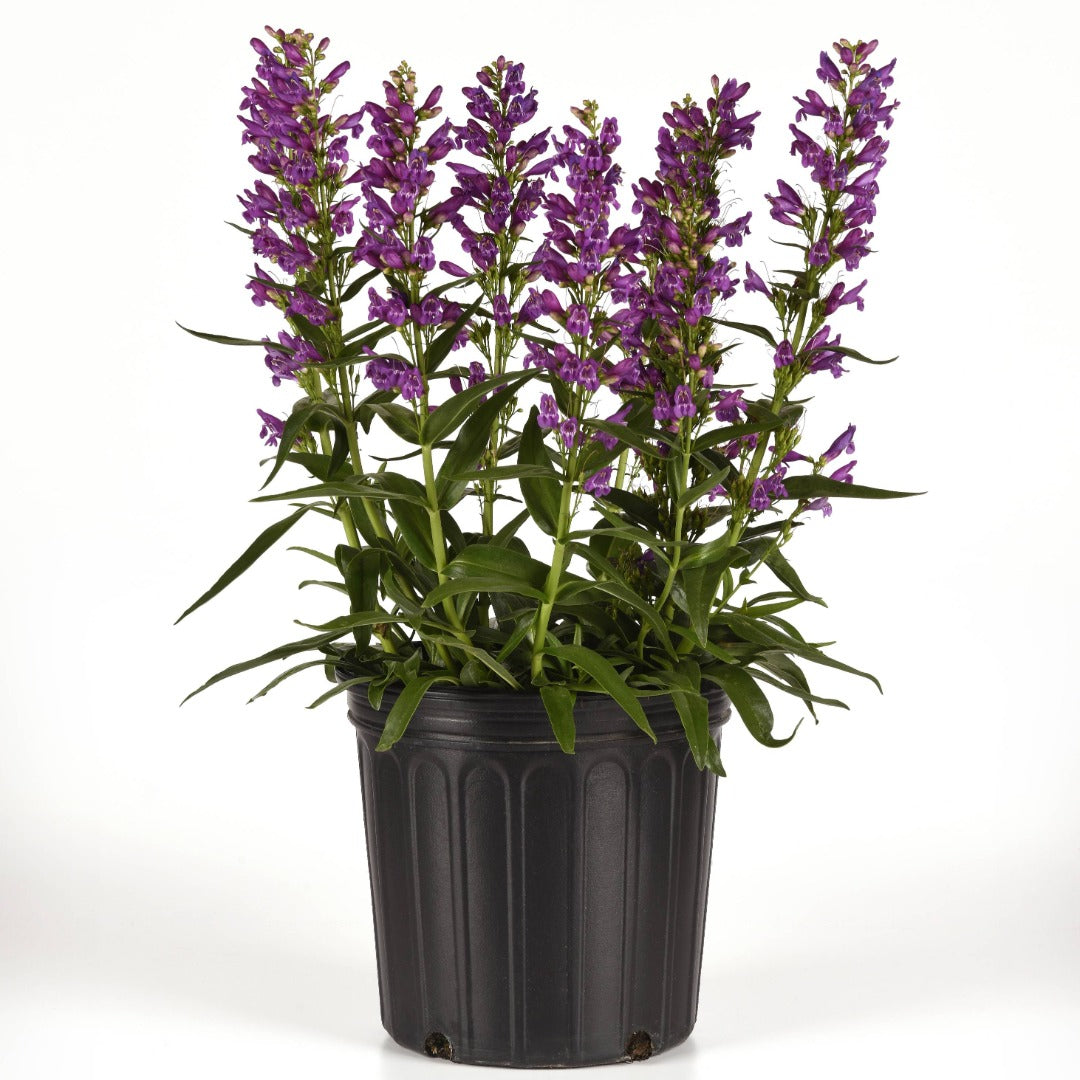
Energize landscape designs with the Summit Sweets™ Purple beard tongue, a spectacular perennial that erects proud stems loaded with vibrant purple bell-shaped flowers. This premium variety captivates the eye with its generous and early blooming that renews faithfully throughout the summer. Perfectly adapted to sunny conditions, it structures outdoor spaces with elegance while demonstrating excellent heat tolerance, making it a valuable ally for creating brilliant and lasting outdoor displays.
Characteristics
Foliage : Deploys deep glossy green, lanceolate, and beautifully dense deciduous foliage, offering a perfect contrast to the purple hues of the flowers.
Blooms / Fruit / Stems : Produces dense vertical clusters composed of sturdy flower spikes carrying tubular, rich purple-violet bell-shaped flowers that reveal a lighter, brighter throat.
Luminosity : Requires a full sun location to ensure perfect stem rigidity and optimal coloration.
Port : Presents an upright, compact, and well-structured silhouette.
Growth : Shows fast growth, reaching a maximum height of 45 cm and a spread of 35 cm.
Soil : Thrives in light, sandy, or gravelly soil that is moderately rich and strictly well-drained.
Temperature : Benefits from excellent hardiness in zone 4.
Resistances : Naturally repels White-tailed deer, hares, and rabbits, while demonstrating remarkable tolerance to drought and extreme heat.
Use
Types of use : Beautifully structures the middle of flower beds, integrates wonderfully into contemporary rock gardens, and enhances ornamental container arrangements on the terrace or balcony.
Decorative advantages : Brings strong verticality and a touch of theatrical color that persists for many weeks, catching summer light remarkably well.
Maintenance
Watering : Water regularly during the first year to ensure root system establishment. Reduce inputs afterward, as this plant prefers dry to moderately moist soil and dreads stagnant water.
Fertilization : Apply a light layer of compost in spring. Avoid overly nitrogenous fertilizers that weaken the rigidity of the flower stems.
Pruning : Cut back faded flower stems to the base to encourage a second wave of blooms late in the season. Cut the plant completely to the ground in late autumn or early spring.
Planting : Space plants 35 cm apart. Install in a well-loosened hole without burying the crown of the plant.
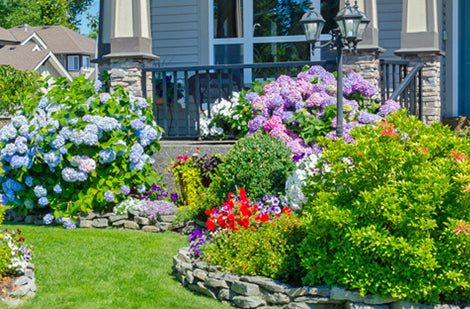
Osez créer des associations inédites qui sauront refléter votre personnalité, même si pour cela vous deviez déplacer certaines vivaces pour mieux les mettre en valeur.
Variétés à découvrir, la tomate se savoure crue, en sandwich, en bruschetta ou en salade. Cuite, c'est l'ingrédient de base de sauces, soupes et salsas.
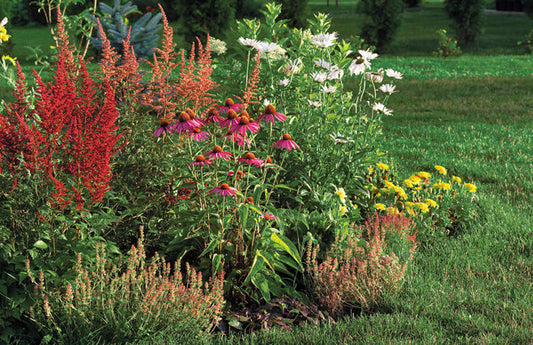
En pénétrant au jardin, ce sont souvent les plantes vivaces que l’on remarque en premier. Un massif de sauges, d’hémérocalles, d’astilbes, d’échinacées ou de lavande offre un spectacle d’une beauté...