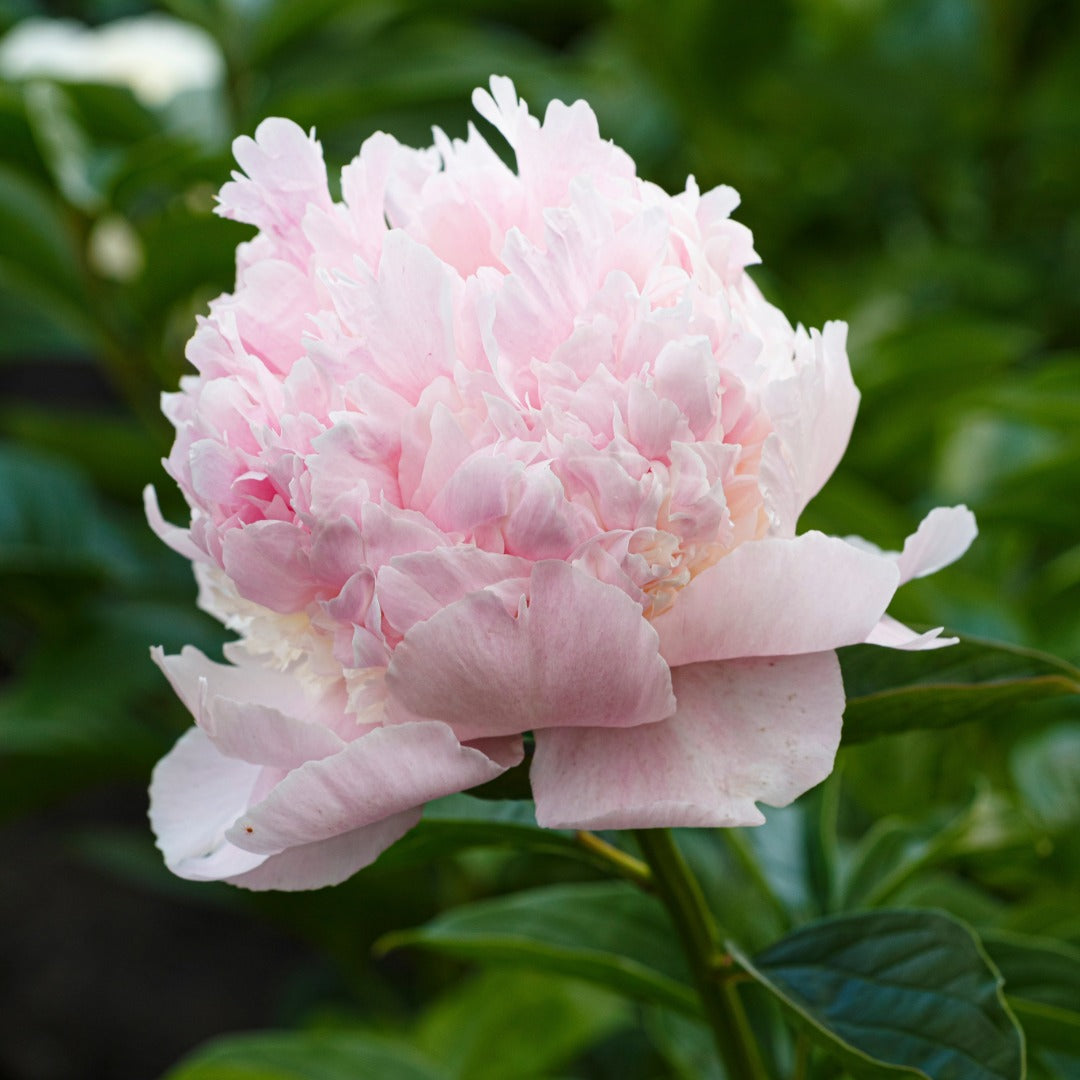
The 'Angel Cheeks' peony captivates the garden with its sublime, soft pink, bomb-style double blooms. Its delicately packed central petals release a sweet, enchanting fragrance that fills the air in early summer. Supported by sturdy stems that stand up well to the elements, these elegant flowers sit proudly atop deeply cut, dark green foliage that remains attractive throughout the entire season. This variety is a premier choice for those seeking both romantic softness and exemplary horticultural performance.
Characteristics
Foliage: Features deeply lobed, rich glossy green leaves that create a dense structure, remaining healthy until the first frosts.
Flowering: Produces large, globular double flowers in porcelain pink with a very discreet cream base, releasing a delicate scent in June.
Luminosity: Thrives in full sun for optimal blooming, though it tolerates light afternoon shade.
Habit: Forms an upright, compact, and bushy clump.
Growth: Reaches approximately 70 cm in height and 60 cm in spread with a moderate growth rate.
Soil: Prospers in deep, fertile, well-drained soil rich in organic matter.
Temperature: Provides excellent hardiness, suitable for zone 3.
Resistances: Highly cold-hardy and shows low sensitivity to leaf diseases when air circulation is adequate.
Use
Types of use: Integrate it into perennial borders, flower beds, or as a focal point near a terrace to enjoy its fragrance. It also excels in large containers.
Decorative advantages: Adds a romantic, airy touch to the landscape. It is one of the best varieties for cut flowers, lasting a long time in bouquets.
Maintenance
Watering: Water regularly during the first year of planting and during dry spells. Avoid wetting the foliage to prevent fungal diseases.
Fertilization: Apply rich compost or a granular fertilizer for perennials in early spring.
Pruning: Remove faded flowers to keep the plant tidy. In the fall, cut all foliage back to 5 cm above the ground after the first frost.
Planting: Plant fleshy roots so that the "eyes" are covered by no more than 2 to 5 cm of soil.
Winter Protection: Once established, it requires no specific protection due to its high hardiness level.
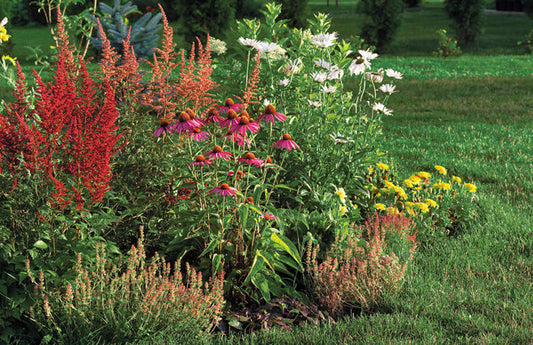
Osez créer des associations inédites qui sauront refléter votre personnalité, même si pour cela vous deviez déplacer certaines vivaces pour mieux les mettre en valeur.
Variétés à découvrir, la tomate se savoure crue, en sandwich, en bruschetta ou en salade. Cuite, c'est l'ingrédient de base de sauces, soupes et salsas.
En pénétrant au jardin, ce sont souvent les plantes vivaces que l’on remarque en premier. Un massif de sauges, d’hémérocalles, d’astilbes, d’échinacées ou de lavande offre un spectacle d’une beauté...