Nepenthes
Nepenthes - Pitcher Plant
Exposure
- Moderate indirect light
Rusticity
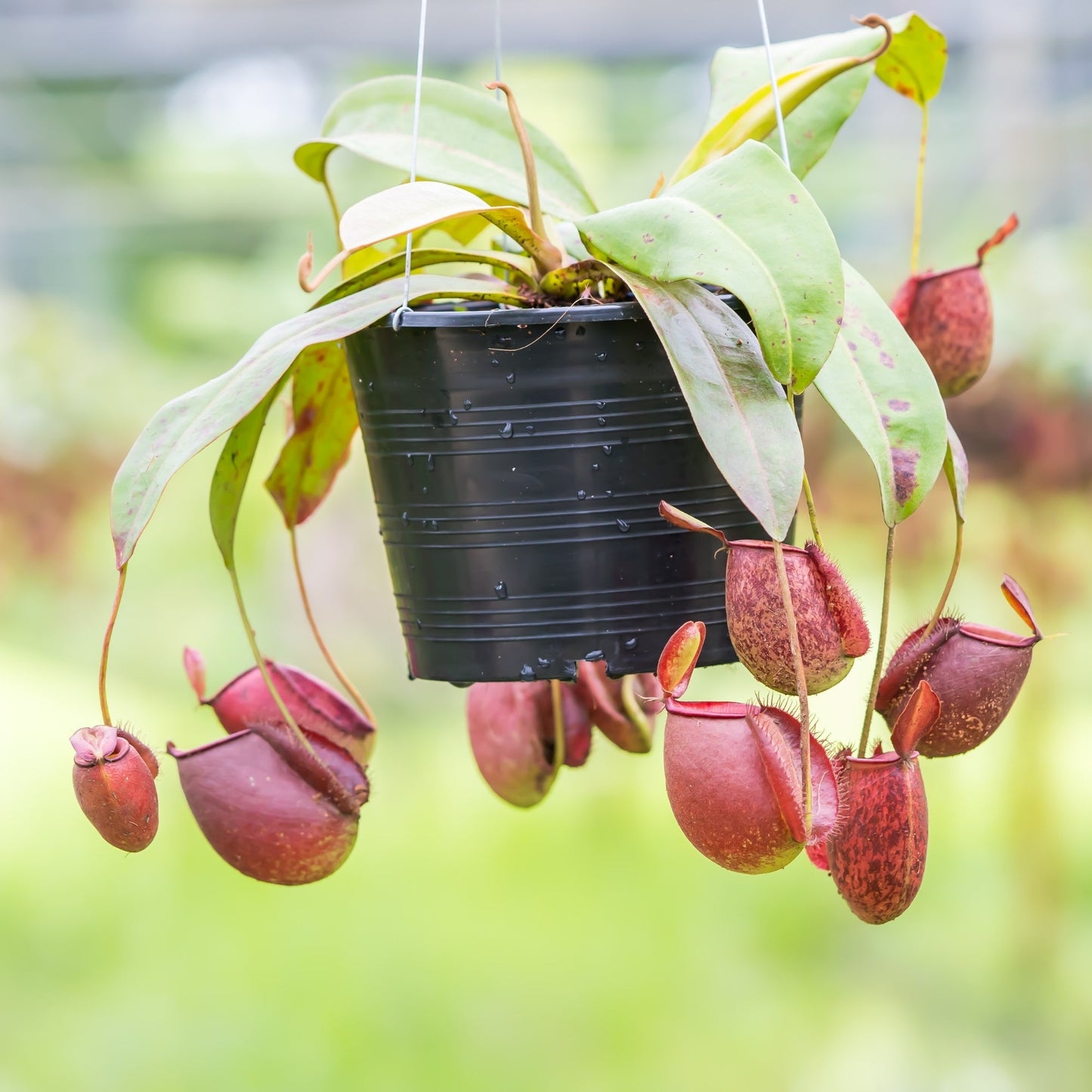
- Spectacular naturally hanging carnivorous pitchers
- Exotic jungle-inspired indoor look
- Natural control for small flying insects
- Fascinating and unique collector's plant
- Ideal for high-humidity home environments
A true marvel of evolution, the Nepenthes captivates with its prehistoric allure and spectacular hanging pitchers. This unique carnivorous plant uses its natural traps, often in vibrant colours, to attract and capture insects. It is a living collector's piece that transforms any space into a mysterious and sophisticated indoor jungle.
Characteristics
- Foliage: Elongated leaves ending in a tendril that supports a complex pitcher (trap).
- Habit: Trailing or climbing silhouette, ideal for high-level displays.
- Light: Prefers bright indirect light; good luminosity is essential for pitcher formation.
- Growth: Moderate, developing vine-like stems over time.
- Usage: Exotic indoor plant, effective for the natural control of small winged insects.
Use
- Style & Placement: Install it in a hanging basket in front of a kitchen window or in a bright bathroom.
- Decorative Benefits: Its colourful pitchers create a unique visual contrast and a guaranteed conversation starter in your décor.
Care & Success
- Watering: Keep the substrate moist at all times, but without standing water. Use exclusively distilled, demineralized, or rain water.
- Humidity: Requires high humidity (60%+). A humid bathroom or daily misting is recommended.
- Potting Soil: Use a very airy and nutrient-poor mix, such as pure sphagnum moss or an orchid/carnivorous plant mix. Never use standard potting soil.
- Feeding: Do not feed the plant artificially. It captures its own prey. Never place meat or human food inside the pitchers.
- Pitcher Browning: It is completely normal for a pitcher to eventually turn brown and dry out after a few months. This is part of the plant's natural cycle.
- Pruning: When a pitcher is completely dry, simply trim it off at the base of the tendril to maintain aesthetics and stimulate the plant.
- Fertilizing: Do not fertilize the roots, as this will burn the plant. It draws nutrients only through its traps.
- Toxicity: Non-toxic to pets and humans.
Plant details
Dimensions
Dimensions
Characteristics
Characteristics
Habit:
- Trailing
- Climbing
Flowering colours:
Plant needs
Plant needs
Watering:
- Keep moist (distilled water)
Maintenance:
- Moderate to expert
Soil requirement:
- Sphagnum moss
- Carnivorous mix
- No fertilizer
Features
Features
Resistance:
Attract:
Use:
- Terrarium
- Hanging basket
- Trellis
Attribute:
- Carnivorous
- Non-toxic
- Hanging pitchers
- Exotic

Related articles
-
Bring Your Plants Indoors for Winter: The Compl...
Read the articleDon't get caught by the first frost! Prepare your outdoor plants for winter with our complete guide.
-
When and how to repot house plants
Read the articleAlthough a plant can spend several months and sometimes even several years in the same pot, over time its roots invade all the available space.
-
Choosing the best potting soil for your indoor ...
Read the articleDon't let your plants stall: learn how to choose the ideal potting mix and optimize drainage for vibrant foliage.