
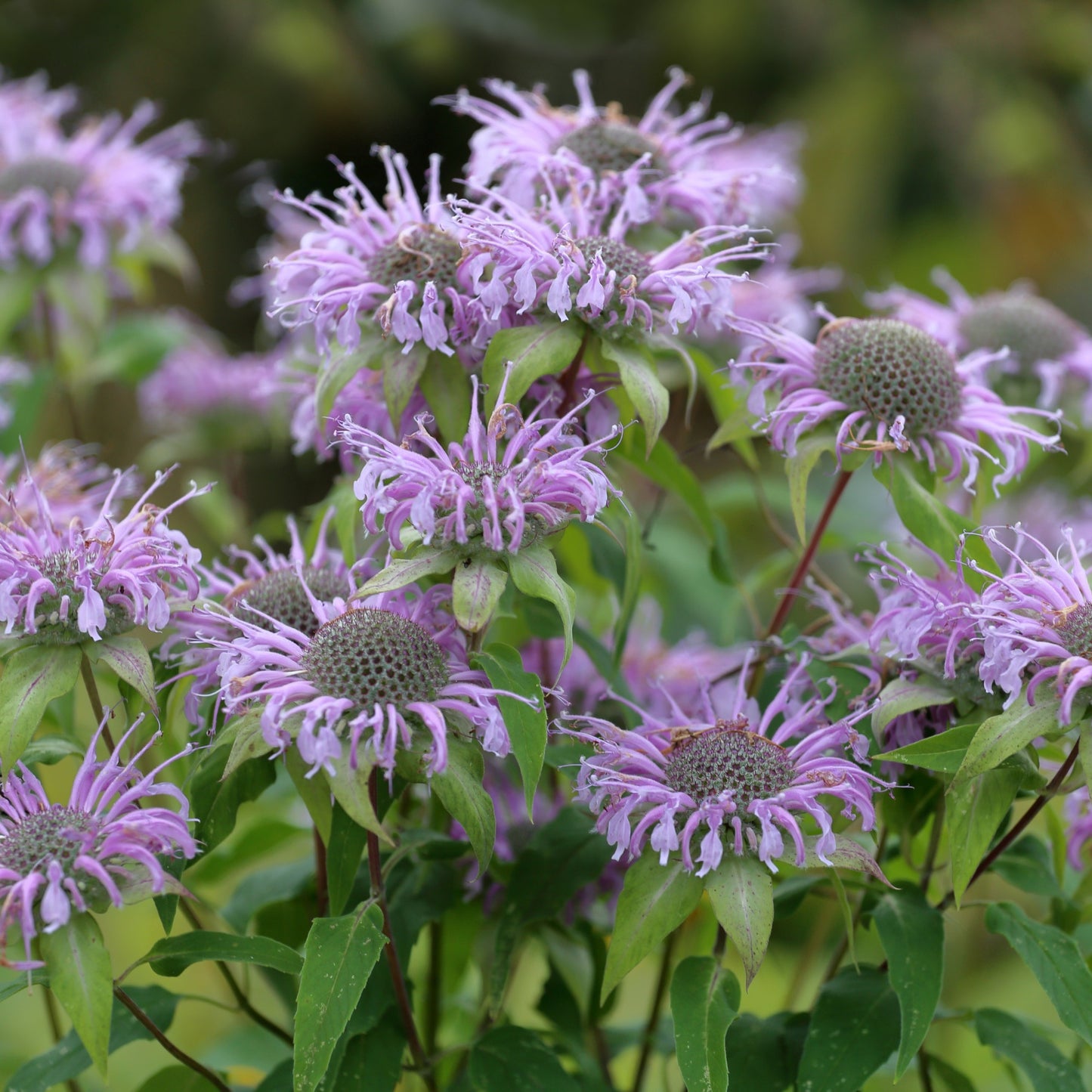
Monarda fistulosa
Monarda fistulosa – Wild Bergamot
Exposure
- Sun
- Partial shade
Rusticity
Bloom time
- July
- August
- Exquisite aromatic fragrance
- Pollinator champion
- Ultra-robust Canadian native
- Edible flowers and leaves
- High drought tolerance
Wild Bergamot is a poetic Canadian native perennial that breathes life into any naturalistic landscaping. Its shaggy, soft lavender blooms release an exquisite aromatic scent reminiscent of Earl Grey tea, irresistibly drawing butterflies and bumblebees during warm summer afternoons. Its legendary robustness and ability to adapt to varied conditions make it an ideal candidate for those seeking a garden that is beautiful, purposeful, and worry-free.
Characteristics
- Foliage: Features lance-shaped, grayish-green leaves with fine teeth that release an intense oregano and mint aroma when crushed.
- Flowering: Produces terminal, globular flower heads composed of tubular lavender to pale mauve flowers, creating a charming "disheveled" effect from July to August.
- Light: Thrives in full sun to strengthen stems, but also performs very well in partial shade.
- Habit: Displays an erect and bushy habit, forming dense and vigorous massifs.
- Growth: Displays rapid growth, spreading via rhizomes to form beautiful colonies.
- Soil: Highly adaptable, it prefers well-drained soils but tolerates clay or dry conditions.
- Temperature: Perfectly hardy for the Canadian climate, adapted up to zone 3.
- Resistances: Good drought resistance once established; generally avoided by White-tailed deer.
Use
- Types of use: Essential for pollinator gardens, flower prairies, cottage-style borders, or herb gardens.
- Decorative advantages: Offers a unique flowering texture and a refined wild appearance that harmonizes perfectly with ornamental grasses.
Maintenance
- Watering: Water regularly during the first year. Once established, it tolerates temporary dry spells quite well.
- Fertilization: A spring application of compost is sufficient. Avoid excess nitrogen.
- Pruning: Cut stems back to the ground in late fall or early spring. Divide the clump every 3 years.
- Planting: Provide a spacing of 45 to 60 cm to encourage good air circulation.
- Winter Protection: Requires no specific protection thanks to its exceptional hardiness.
Plant details
Dimensions
Dimensions
Characteristics
Characteristics
Habit:
- Upright
- Bushy
Flowering colours:
- Lavender
- Mauve
Plant needs
Plant needs
Watering:
- Moderate
- Tolerates dry and well-drained soil
Maintenance:
- Easy
- Divide
- Cut back
Soil requirement:
- Well-drained
- Clay
- Poor
- Adaptable
Features
Features
Resistance:
- White-tailed deer
- Drought
- Cold
- Heat
Attract:
- Pollinators
- Butterflies
- Hummingbirds
- Birds
- Bees
Use:
- Border
- Massif
- Flower bed
- Container
- In-ground
- Trellis
Attribute:
- Native
- Fragrant
- Long bloom
- Edible
- Small landscaping and garden

Related articles
-
Perennials for all occasions
Read the articleOsez créer des associations inédites qui sauront refléter votre personnalité, même si pour cela vous deviez déplacer certaines vivaces pour mieux les mettre en valeur.
-
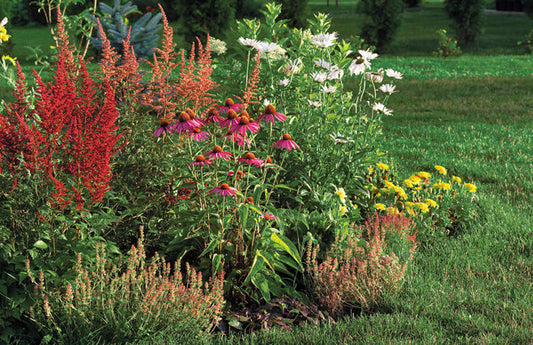
Landscaping with perennials
Read the articleVariétés à découvrir, la tomate se savoure crue, en sandwich, en bruschetta ou en salade. Cuite, c'est l'ingrédient de base de sauces, soupes et salsas.
-
Perennial Care Guide: How to Prune and Fertiliz...
Read the articleRevitalize your garden beds and extend your flowering season with our simple pruning and fertilizing techniques tailored for local hardiness zones.
-
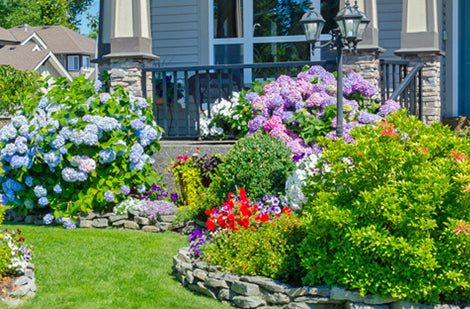
How to plant perennials in your garden
Read the articleEn pénétrant au jardin, ce sont souvent les plantes vivaces que l’on remarque en premier. Un massif de sauges, d’hémérocalles, d’astilbes, d’échinacées ou de lavande offre un spectacle d’une beauté...