
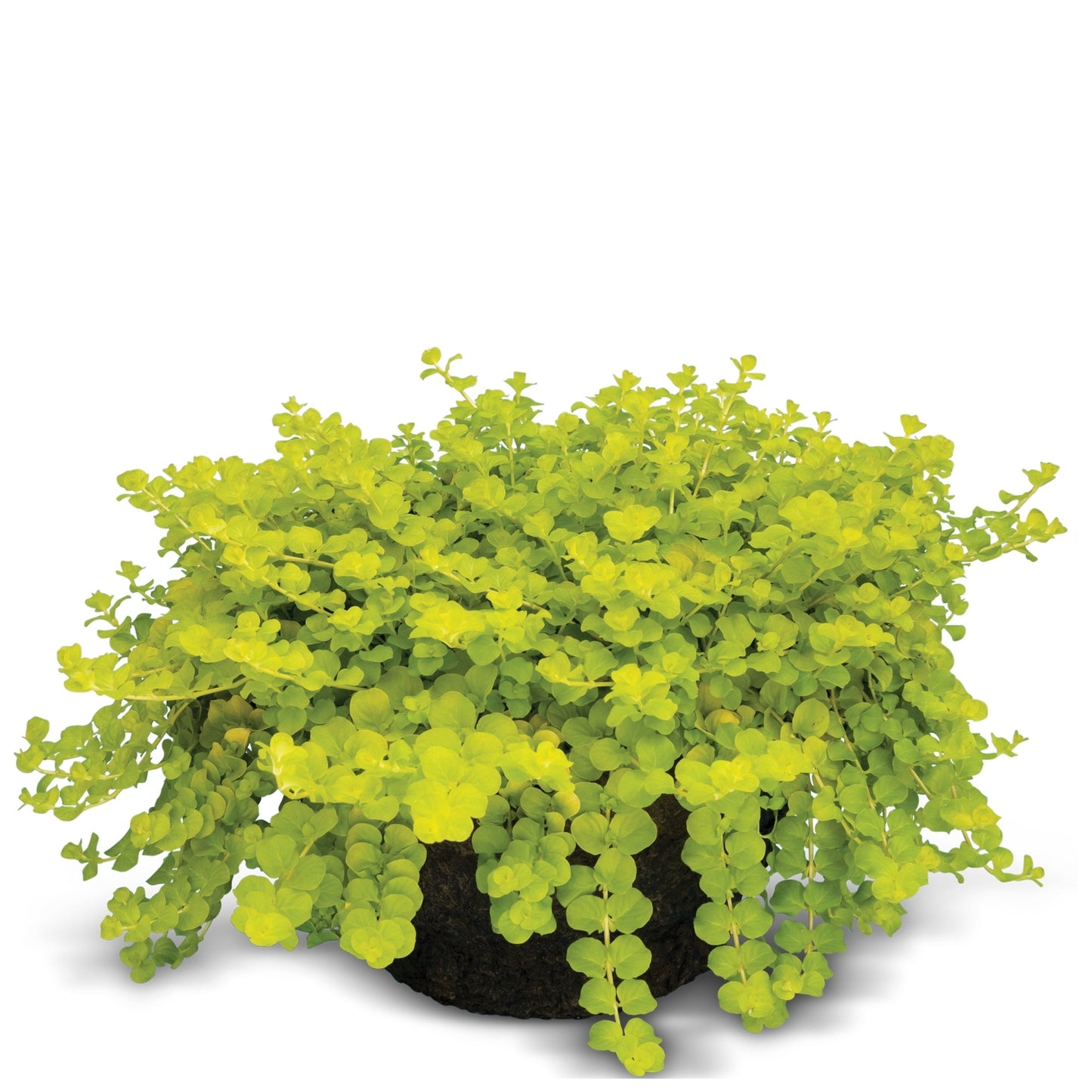
Lysimachia nummularia
Lysimachia nummularia – Creeping Jenny
Exposure
- Sun
- Partial shade
- Shade
Rusticity
Bloom time
- June
- July
- Ideal lawn replacement option
- Dense ground cover without mowing
- Resists deer, hares, and rabbits
- Thrives in moist, wet soil
- Stunning cascades in containers
Instantly create a vibrant, easy-care green carpet! Creeping Jenny spreads a profusion of small, shiny, bright green round leaves that rapidly colonize the ground. A perfect lawn replacement solution for shady or waterlogged areas where turf struggles to establish, it beautifully dresses the base of shrubs, defines pond margins, and cascades elegantly from pots and containers.
Characteristics
- Foliage: Small, deciduous to semi-evergreen, opposite, and rounded leaves reminiscent of shiny coins in a vivid, highly luminous green.
- Flowering / Stems: Creeping stems that root upon contact with the soil, bearing a profusion of small, cup-shaped, bright yellow flowers in summer.
- Light: Enjoy growing it in full sun, partial shade, or even light shade.
- Habit: Creeping, mat-forming, and trailing.
- Growth: Very rapid growth forming a dense ground cover that effectively smothers weeds.
- Soil: Rich, moist to wet soil, perfectly tolerant of poorly drained, clay, or waterlogged conditions.
- Temperature: Hardiness zone 3.
- Resistances: Exceptionally resistant to cold, standing water, temporary submersion, as well as browsing by White-tailed deer, hares, and rabbits.
Use
- Types of use: Adopt it as an ideal lawn alternative in moist or shady areas. Perfect as a ground cover under shrubs, along pond edges, between stepping stones, or trailing gracefully in a container.
- Decorative benefits: Creates a dense ground cover that smothers weeds while adding a luminous glow beneath taller plants. Provides a no-mow turf alternative with a uniform, brightly colored ground cover that enhances any landscape arrangement.
Maintenance
- Watering: Water regularly to keep the soil consistently moist or wet, especially during hot summer days.
- Fertilization: Apply a balanced fertilizer in spring to stimulate vigorous renewed growth.
- Pruning: Restrict spread in spring or late summer by simply trimming stems that extend beyond their designated area.
- Planting: Space plants 30 to 45 cm apart in loosened, moist soil to achieve a dense carpet quickly.
Plant details
Dimensions
Dimensions
Characteristics
Characteristics
Habit:
- Creeping
- Trailing
Flowering colours:
- Yellow
Plant needs
Plant needs
Watering:
- Tolerates wet soil
- Tolerates waterlogged soil
- Moderate
Maintenance:
- Easy. Contain the spread because it is invasive.
Soil requirement:
- Moist
- Rich
- Adaptable
Features
Features
Resistance:
- White-tailed deer
- Hare and rabbit
- Cold
Attract:
- Pollinators
Use:
- Ground cover
- Shaded area
- Under the trees
- Along the paths
- Hanging planter. Warning: invasive.
Attribute:
- Ground cover
- Substitute for grass without the need for mowing

Related articles
-
Perennials for all occasions
Read the articleOsez créer des associations inédites qui sauront refléter votre personnalité, même si pour cela vous deviez déplacer certaines vivaces pour mieux les mettre en valeur.
-
Landscaping with perennials
Read the articleVariétés à découvrir, la tomate se savoure crue, en sandwich, en bruschetta ou en salade. Cuite, c'est l'ingrédient de base de sauces, soupes et salsas.
-
Perennial Care Guide: How to Prune and Fertiliz...
Read the articleRevitalize your garden beds and extend your flowering season with our simple pruning and fertilizing techniques tailored for local hardiness zones.
-
How to plant perennials in your garden
Read the articleEn pénétrant au jardin, ce sont souvent les plantes vivaces que l’on remarque en premier. Un massif de sauges, d’hémérocalles, d’astilbes, d’échinacées ou de lavande offre un spectacle d’une beauté...