
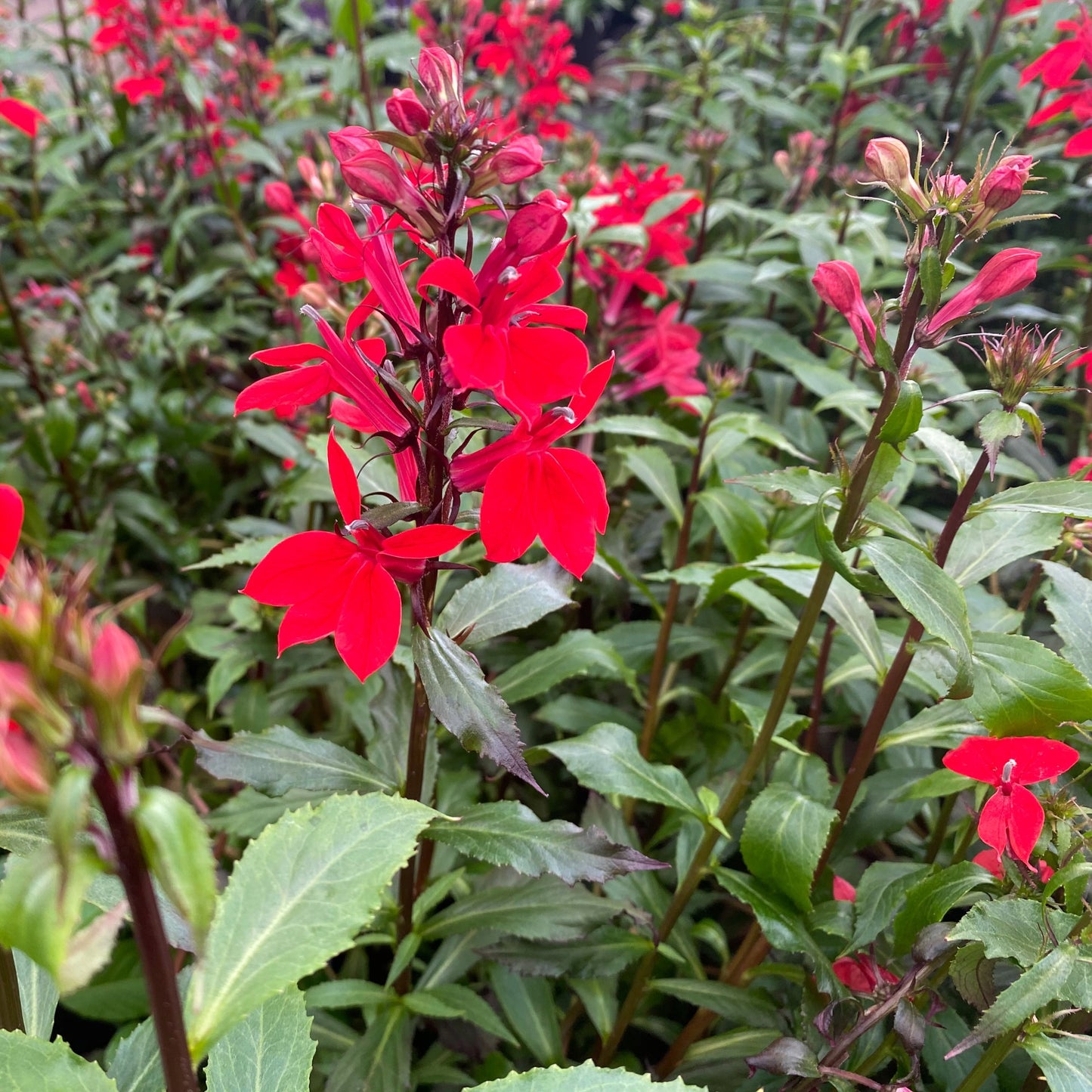
Lobelia cardinalis
Lobelia cardinalis – Cardinal Flower
Exposure
- Sun
- Partial shade
Rusticity
Bloom time
- July
- August
- September
- Incomparable scarlet red
- Number one hummingbird magnet
- Ideal for waterlogged soils
- Elegant garden verticality
- Spectacular native
The Cardinal Flower is a true horticultural star, offering one of the most intense and purest reds in the plant world. This Canadian native perennial proudly raises flamboyant flower spikes that seem to vibrate above deep green foliage. A literal beacon for hummingbirds, it transforms wet areas and pond edges into a striking visual spectacle from mid-summer until the first signs of autumn.
Characteristics
- Foliage: Features rich green, lance-shaped leaves that can sometimes be tinged with bronze. Deciduous, the foliage forms a compact basal rosette.
- Flowering: Produces terminal racemes of brilliant scarlet-red tubular flowers from July to September.
- Light: Thrives in full sun to partial shade. In full sun, it requires constantly waterlogged soil.
- Habit: Displays an erect and columnar habit, providing sharp and elegant verticality.
- Growth: Displays moderate growth, reaching approximately 90 cm in height with a restricted spread.
- Soil: Prefers rich, humus-heavy, and especially very wet soils. Perfectly tolerates clay soils.
- Temperature: Excellent Canadian hardiness, adapted up to zone 3.
- Resistances: Resists diseases well in humid environments; generally avoided by White-tailed deer.
Use
- Types of use: An essential element for water gardens, stream banks, rain gardens, or very cool flower beds.
- Decorative advantages: Offers a powerful chromatic contrast and a vertical structure that catches the eye from a distance.
Maintenance
- Watering: Crucial. The soil must remain moist at all times. It does not tolerate any drought.
- Fertilization: Apply rich compost or an organic fertilizer in the spring to support blooming vigor.
- Pruning: Cut back flower stems after blooming to encourage the formation of the winter rosette.
- Planting: Space plants 30 cm apart. Ensure the crown is not buried too deep.
- Winter Protection: A light mulch of fallen leaves helps prevent frost heaving without smothering the rosette.
Plant details
Dimensions
Dimensions
Characteristics
Characteristics
Habit:
- Upright
Flowering colours:
- Red
Plant needs
Plant needs
Watering:
- Tolerates moist soil
- Tolerates wet soil
Maintenance:
- Medium
- Fertilize regularly
- Remove spent flowers
Soil requirement:
- Moist
- Rich
- Clay
- Waterlogged
Features
Features
Resistance:
- White-tailed deer
- Cold
- Disease
- Wet areas
Attract:
- Hummingbirds
- Butterflies
- Pollinators
Use:
- Pond
- Border
- Massif
- Flower bed
- Rain garden
- In-ground
Attribute:
- Native
- Long bloom
- Small landscaping and garden
- Wet area

Related articles
-
Perennials for all occasions
Read the articleOsez créer des associations inédites qui sauront refléter votre personnalité, même si pour cela vous deviez déplacer certaines vivaces pour mieux les mettre en valeur.
-
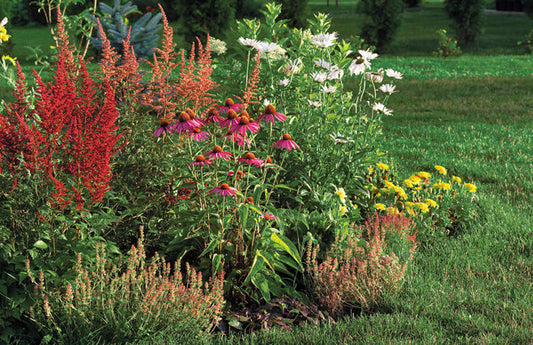
Landscaping with perennials
Read the articleVariétés à découvrir, la tomate se savoure crue, en sandwich, en bruschetta ou en salade. Cuite, c'est l'ingrédient de base de sauces, soupes et salsas.
-
Perennial Care Guide: How to Prune and Fertiliz...
Read the articleRevitalize your garden beds and extend your flowering season with our simple pruning and fertilizing techniques tailored for local hardiness zones.
-
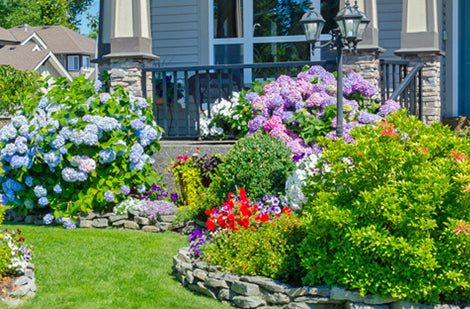
How to plant perennials in your garden
Read the articleEn pénétrant au jardin, ce sont souvent les plantes vivaces que l’on remarque en premier. Un massif de sauges, d’hémérocalles, d’astilbes, d’échinacées ou de lavande offre un spectacle d’une beauté...