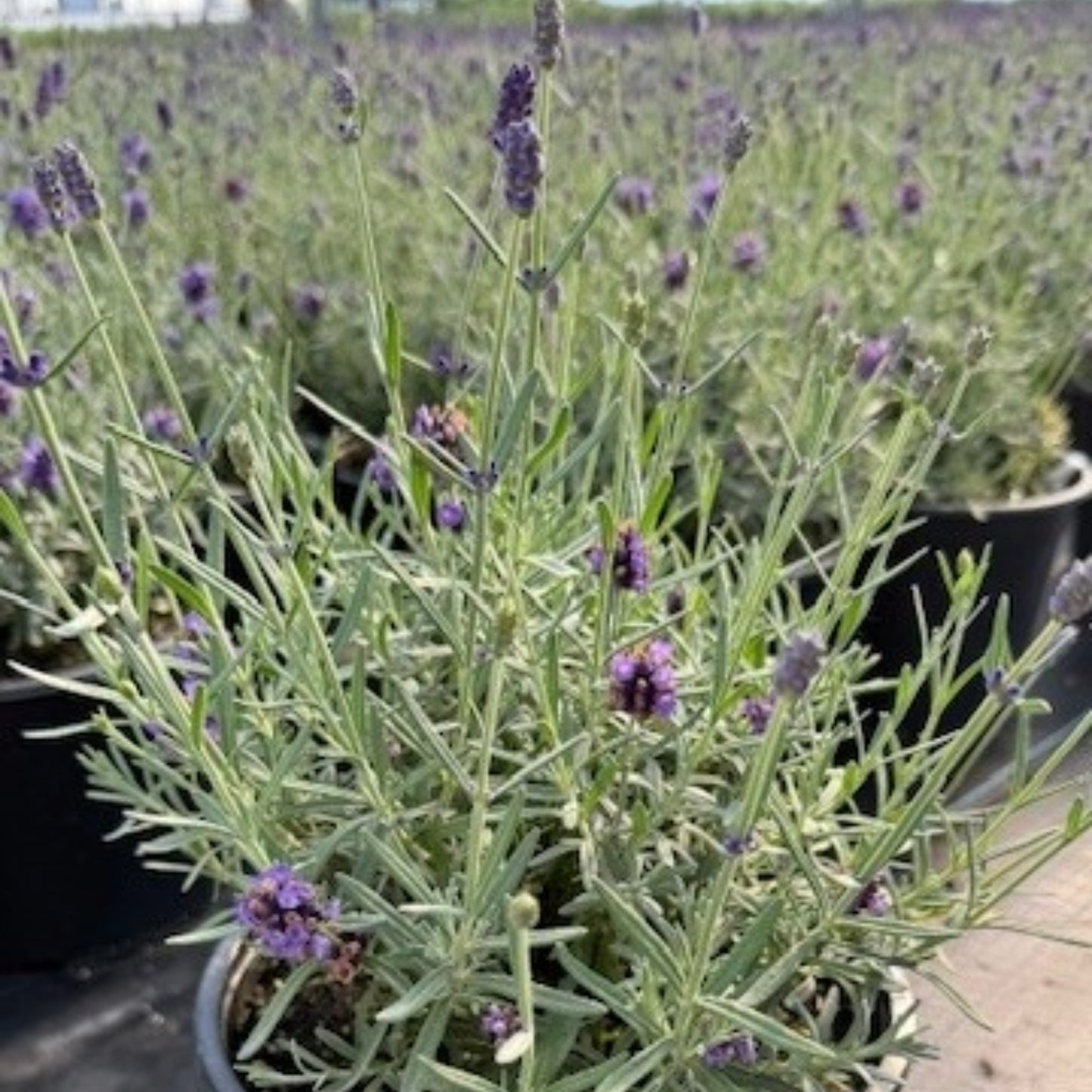
This exceptional English lavender revolutionizes landscape designs with its remarkable silver foliage that maintains its stunning beauty throughout the seasons. Rigid flower stems bear dense spikes of a contrasting deep violet-blue, exhaling the classic, soothing fragrance that gardeners seek. Its compact silhouette and high tolerance to environmental stressors make it an indispensable choice for structuring sunny garden spaces.
Characteristics
Foliage : Evergreen, displaying a luminous and persistent grey-silver shade, linear and aromatic to the touch.
Floraison / Fructification / Tiges : Dense violet-blue spikes that stand proudly above the foliage.
Luminosity : Full sun to maximize the intensity of its colour and flowering.
Port : Bushy, compact, and beautifully rounded.
Growth : Moderate, reaching about 40 cm in height and spread.
Soil : Perfectly drained, gravelly or sandy, tolerating poor soils but highly sensitive to stagnant moisture.
Temperature : Hardy to zone 4.
Resistances : Repels White-tailed deer, hare and rabbit thanks to its essential oils, while demonstrating excellent tolerance to drought and intense heat.
Use
Types of use : Ideal for borders, rock gardens, perennial beds, or in containers to decorate patios and balconies.
Decorative advantages : Structures the garden with its neat habit, brings a unique graphic touch through its silver and violet contrast, and remains attractive all year round.
Maintenance
Watering : Water regularly after planting to promote root establishment, then allow the soil to dry out completely between waterings.
Fertilization : Avoid nitrogen-rich fertilizers; apply a light compost or a low-dose granular fertilizer in early spring if necessary.
Pruning : Prune lightly after flowering to remove faded spikes and cut back by one-third in early spring to maintain a compact shape, avoiding cutting into old, dry wood.
Planting : Space plants 45 cm apart in a hole twice as wide as the root ball, ensuring the crown is not buried.
Winter Protection : Install winter protection or a light mulch of leaves in areas with harsh winters and without consistent snow cover.
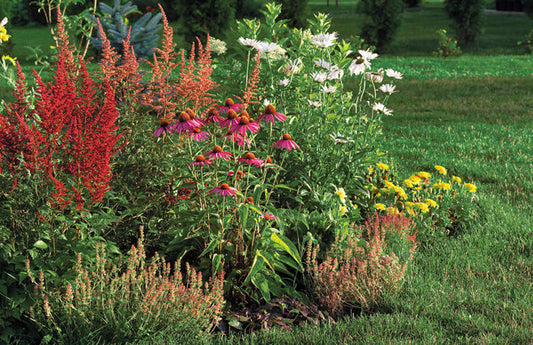
Osez créer des associations inédites qui sauront refléter votre personnalité, même si pour cela vous deviez déplacer certaines vivaces pour mieux les mettre en valeur.
Variétés à découvrir, la tomate se savoure crue, en sandwich, en bruschetta ou en salade. Cuite, c'est l'ingrédient de base de sauces, soupes et salsas.
En pénétrant au jardin, ce sont souvent les plantes vivaces que l’on remarque en premier. Un massif de sauges, d’hémérocalles, d’astilbes, d’échinacées ou de lavande offre un spectacle d’une beauté...