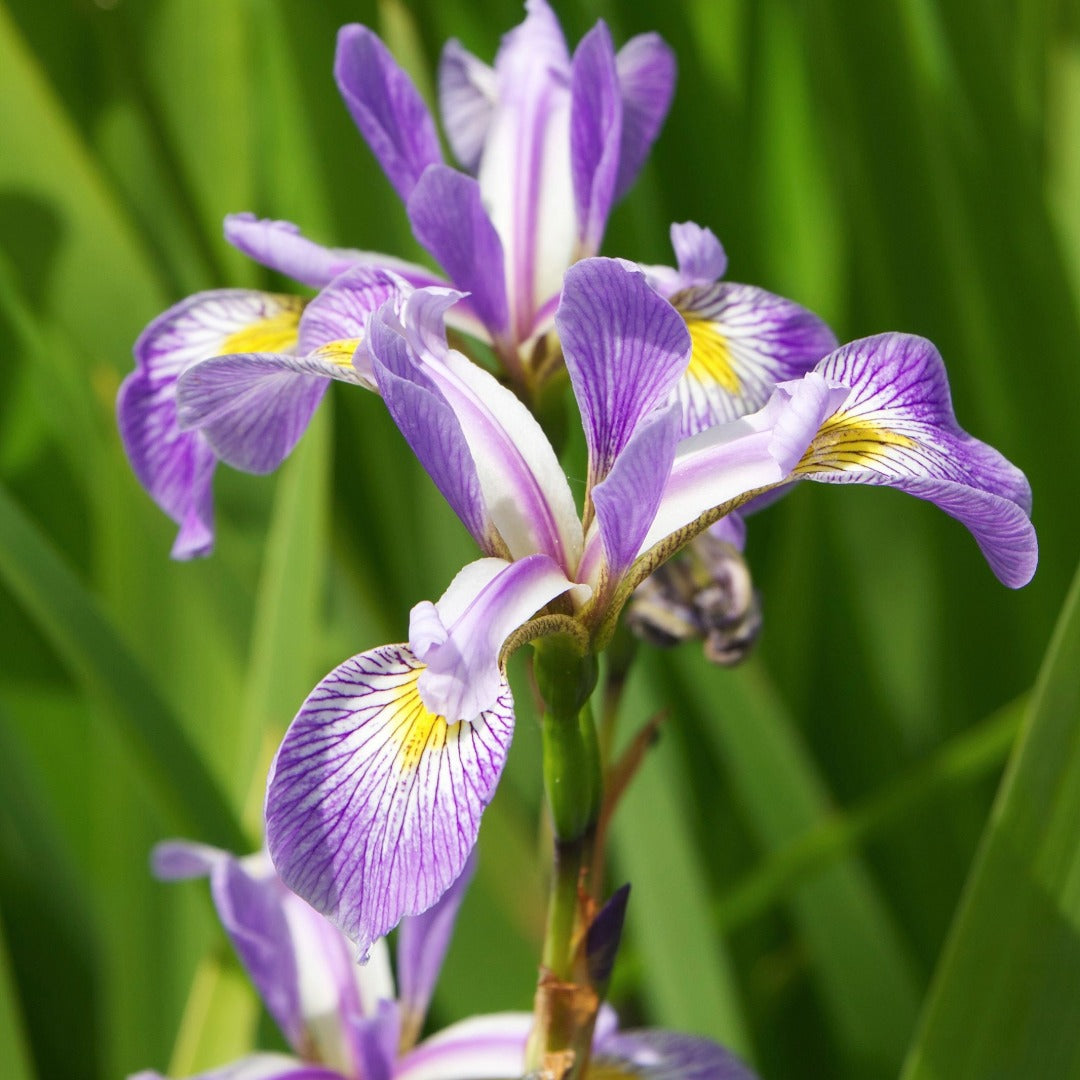
Iris versicolor
Iris versicolor – Blue Flag Iris
Exposure
- Sun
- Part shade
Rusticity
Bloom time
- May
- June
- July
- Striking unique bluish purple blooms
- Extremely robust native variety
- Perfect for moist soils
- Naturally deters White-tailed deer
- Flawless graphic vertical structure
Illuminate damp garden spaces with this striking native jewel. The blue flag iris deploys magnificent, unique bluish-purple blossoms highlighted by yellow and white markings in the heart of summer. Its slender silhouette and graphic allure bring incomparable vertical structure to waterlogged areas and shoreline borders.
Characteristics
- Foliage : Long, sword-shaped leaves of a steady bluish green maintain impeccable form throughout the season. The foliage is deciduous.
- Flowering / Fruiting / Stems : Complex flowers in shades of blue, mauve, and purple bloom proudly atop sturdy stems. The flowering then gives way to green, then brown seed capsules in autumn.
- Light Requirements : Provide a full sun location to obtain a profusion of blooms, although the plant tolerates light shade.
- Habit : Erect, forming dense clumps that expand gracefully over the years without becoming invasive.
- Growth Rate : Moderate to fast, quickly reaching full maturity.
- Soil : Thrives fully in a soil rich in organic matter, heavy, clayey, and constantly moist to wet.
- Hardiness : Offers excellent hardiness (zone 3), perfectly withstanding the harshest winter conditions.
- Resistance : Naturally deters White-tailed deer while tolerating water-saturated soils and temporary flooding.
Use
- Types of Use : Ideal for stabilizing shorelines, planting in rain gardens, bordering ponds, or integrating into a low, damp flowerbed. Also perfectly suited for cultivation in aquatic containers.
- Decorative Advantages : Creates striking vertical accents and adds an irresistible, wild natural touch to the landscape design.
Maintenance
- Watering : Maintain the soil continuously moist or wet. Water generously and regularly if the plant is grown outside of a naturally damp zone or pond.
- Fertilization : Apply a rich compost at planting time or add a balanced organic fertilizer in spring to sustain its vigour.
- Pruning : Cut back the dried foliage completely to a few centimetres above the ground in autumn or very early spring to stimulate fresh new growth.
- Planting : Install rhizomes just beneath the soil surface, respecting the recommended spacing to allow the clump to spread.
Plant details
Dimensions
Dimensions
Characteristics
Characteristics
Habit:
- Upright
Flowering colours:
- Blue
- Mauve
- Purple
Plant needs
Plant needs
Watering:
- Tolerates moist soil
- Tolerates wet soil
- Moderate
Maintenance:
- Easy
- Cut back
- Cut back in spring
- Prune in autumn
Soil requirement:
- Moist
- Rich
- Acidic
- Adaptable
Features
Features
Resistance:
- White-tailed deer
- Cold
- Disease
Attract:
- Pollinators
- Butterflies
- Hummingbirds
- Beneficial insects
Use:
- Pond
- Border
- Mass planting
- Flowerbed
- In-ground
- Thriller pot
Attribute:
- Cut flower
- Native

Related articles
-
Perennials for all occasions
Read the articleOsez créer des associations inédites qui sauront refléter votre personnalité, même si pour cela vous deviez déplacer certaines vivaces pour mieux les mettre en valeur.
-
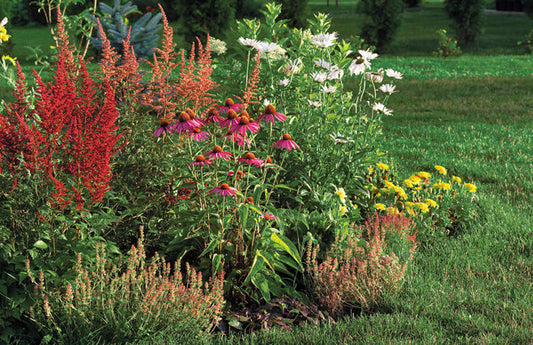
Landscaping with perennials
Read the articleVariétés à découvrir, la tomate se savoure crue, en sandwich, en bruschetta ou en salade. Cuite, c'est l'ingrédient de base de sauces, soupes et salsas.
-
Perennial Care Guide: How to Prune and Fertiliz...
Read the articleRevitalize your garden beds and extend your flowering season with our simple pruning and fertilizing techniques tailored for local hardiness zones.
-
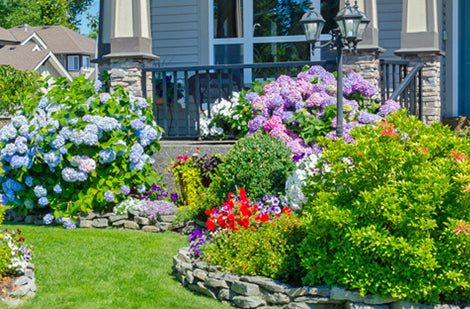
How to plant perennials in your garden
Read the articleEn pénétrant au jardin, ce sont souvent les plantes vivaces que l’on remarque en premier. Un massif de sauges, d’hémérocalles, d’astilbes, d’échinacées ou de lavande offre un spectacle d’une beauté...