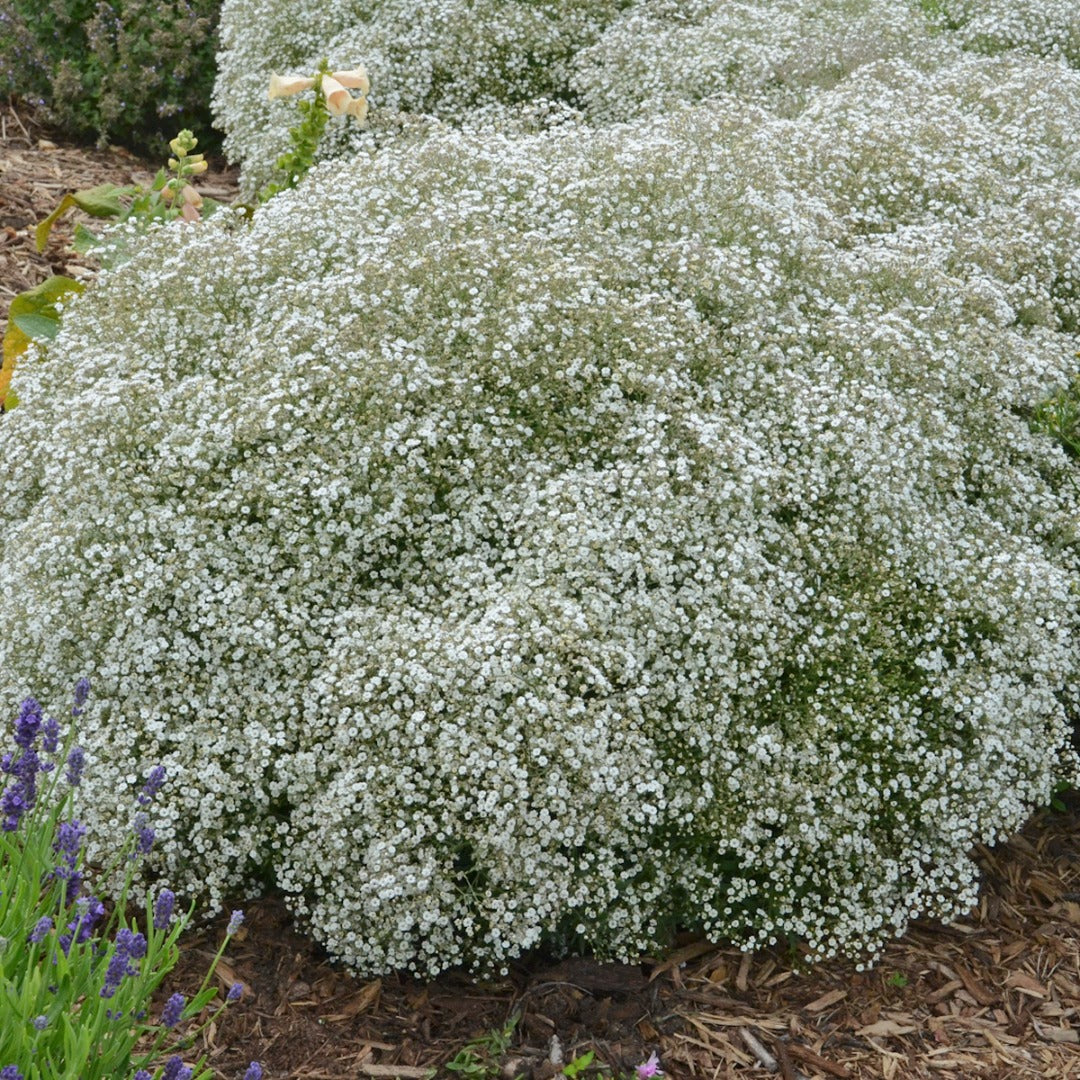
Brighten your landscape with this brilliant white floral cloud that redefines the charm of summer gardens. The 'Summer Sparkles' baby's breath produces a spectacular profusion of tiny, lightly scented double flowers that drape the plant from late spring until the first frosts. More compact and early-blooming than traditional varieties, it maintains a perfectly tidy, rounded silhouette without ever flopping. Its airy appearance instantly creates a striking textural contrast within garden beds while making it the perfect choice for dressing up fresh or dried bouquets.
Characteristics
Foliage : Deciduous, linear, and sharp leaves of a discreet grayish green, almost hidden beneath the abundance of the blooms.
Flowering / Fruiting / Stems : Miniature, pure white double flowers carried by a multitude of fine, branched, and extremely dense stems.
Light Requirements : Requires full sun exposure to maximize floral density and guarantee a compact habit.
Habit : Rounded, compact, and airy, forming a regular and dense dome.
Growth : Fast growth rate, forming a mature and generous clump from the very first season.
Soil : Flourishes in sandy or gravelly soil, dry to moist, and absolutely demands excellent drainage as well as an alkaline pH.
Temperature : Hardy to zone 3.
Resistances : Offers remarkable tolerance to drought once established, resists salinity as well as White-tailed deer.
Use
Types of use : Integrate this variety at the front of borders, in sunny rock gardens, along flower beds, or grow it in containers to structure your patio arrangements.
Decorative advantages : Visually lightens landscape compositions with its white mist effect and provides excellent stems for crafting country-style bouquets.
Maintenance
Watering : Water moderately after planting to encourage root establishment. Subsequently, allow the soil to dry out completely between waterings, as this variety detests excess moisture.
Fertilization : Amend the soil with a little compost at planting. Avoid fertilizers too rich in nitrogen, which stimulate foliage at the expense of stem rigidity.
Pruning : Cut the plant back lightly by half after the first main wave of blooms to encourage a successive production of new flower buds.
Planting : Space plants 45 to 60 cm apart in a deep hole that allows for the development of its taproot, ideally in spring.
Winter protection : Avoid any location where water stagnates in winter, as winter moisture is its main enemy. No heavy mulching is required if the soil drains perfectly.
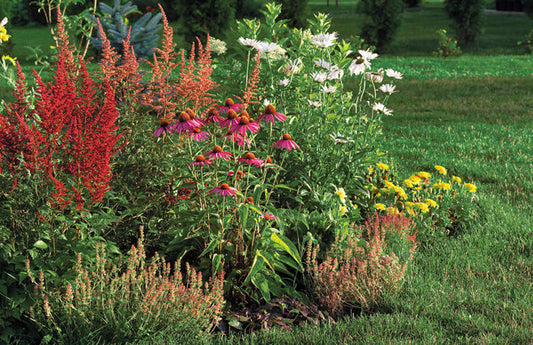
Osez créer des associations inédites qui sauront refléter votre personnalité, même si pour cela vous deviez déplacer certaines vivaces pour mieux les mettre en valeur.
Variétés à découvrir, la tomate se savoure crue, en sandwich, en bruschetta ou en salade. Cuite, c'est l'ingrédient de base de sauces, soupes et salsas.
En pénétrant au jardin, ce sont souvent les plantes vivaces que l’on remarque en premier. Un massif de sauges, d’hémérocalles, d’astilbes, d’échinacées ou de lavande offre un spectacle d’une beauté...