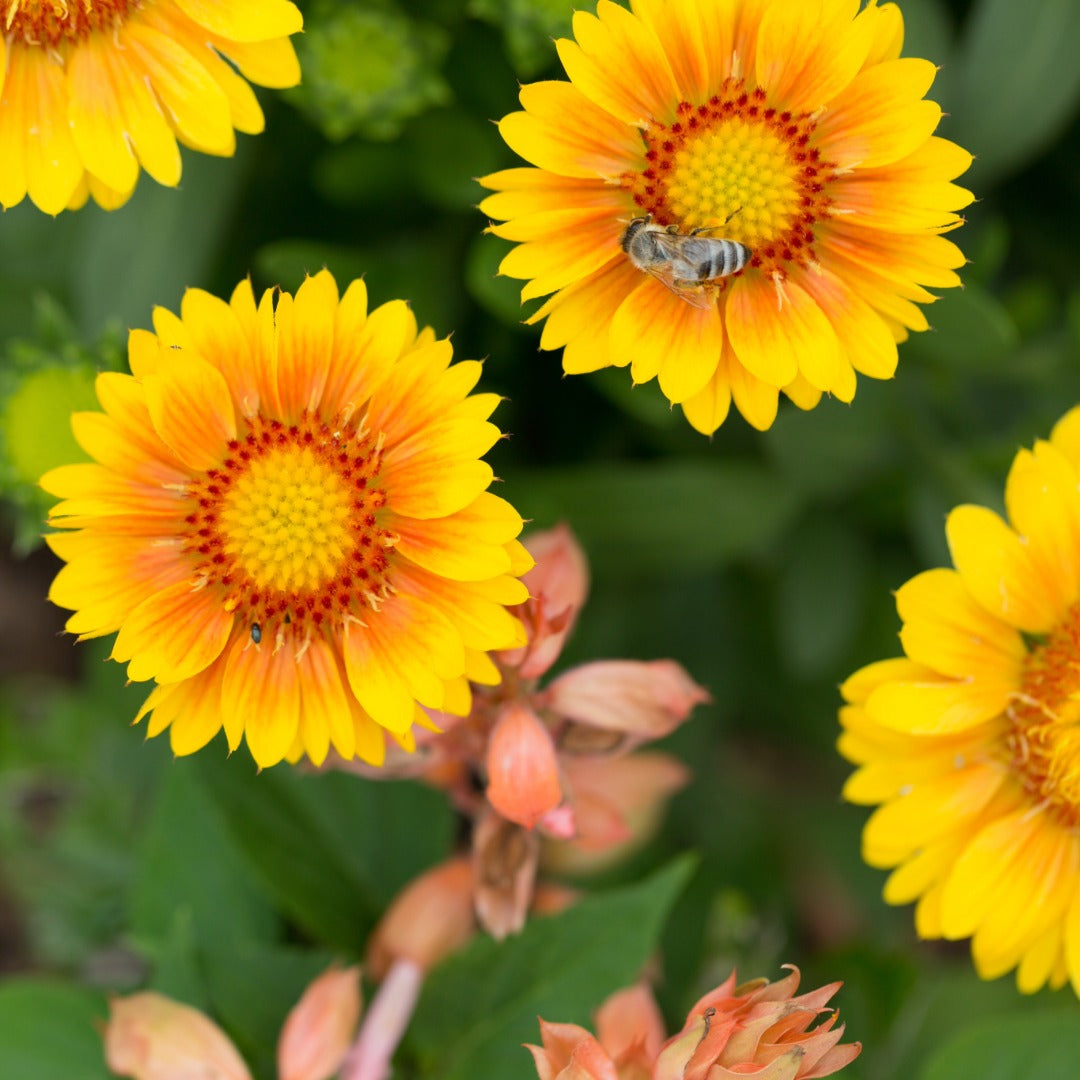
Brighten sunny spaces with the Arizona Apricot blanket flower, a striking perennial that deploys a continuous profusion of unique apricot and amber-yellow blooms. This compact and vigorous cultivar flowers tirelessly throughout the season, transforming borders and beds into true carpets of warm color. Highly robust, it withstands intense heat and drought beautifully once established, while displaying an irresistible charm that instantly energizes outdoor decors.
Characteristics
Foliage: Deploys deciduous, true green, slightly fuzzy foliage, forming a compact and dense rosette that beautifully highlights the blooms.
Floraison: Produces an abundance of large flower heads with spreading petals featuring a delicate apricot gradient, ending in bright yellow tips around a prominent central disk.
Luminosity: Requires a full sun location to maximize color intensity and flower quantity.
Port: Presents a compact, bushy, and nicely rounded shape.
Growth: Shows fast growth, reaching a maximum height of 30 cm and a similar spread.
Sol: Thrives in poor to moderately fertile soil, but demands impeccable drainage above all.
Temperature: Benefits from excellent hardiness in zone 3.
Resistances: Naturally repels White-tailed deer, hares, and rabbits, while demonstrating remarkable tolerance to drought and extreme heat.
Use
Types of use: Beautifully enhances the front of flower beds, borders, sunny rock gardens, as well as arrangements in containers on the terrace or balcony.
Decorative advantages: Creates a striking visual impact thanks to its warm color contrast and maintains a spectacular effect from early summer until the first frosts.
Maintenance
Watering: Water regularly after planting to promote root establishment. Reduce watering afterwards, as this plant prefers rather dry soils and dreads excess moisture.
Fertilization: Avoid overly rich fertilizers that stimulate foliage at the expense of flowers. Apply a light compost in spring if necessary.
Pruning: Remove faded flowers regularly to stimulate new buds and prolong the display. Cut back the foliage to a few centimeters above the ground in autumn or early spring.
Planting: Space plants 30 cm apart to ensure good air circulation. Plant in a hole corresponding to the size of the root ball, taking care not to bury the crown.
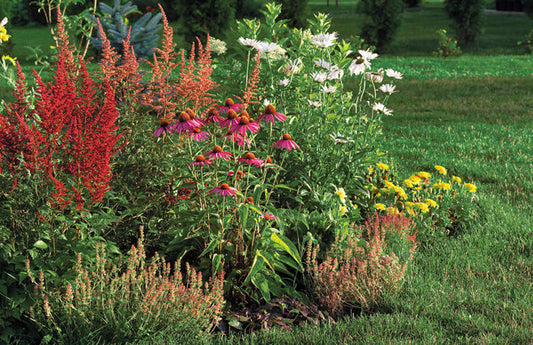
Osez créer des associations inédites qui sauront refléter votre personnalité, même si pour cela vous deviez déplacer certaines vivaces pour mieux les mettre en valeur.
Variétés à découvrir, la tomate se savoure crue, en sandwich, en bruschetta ou en salade. Cuite, c'est l'ingrédient de base de sauces, soupes et salsas.
En pénétrant au jardin, ce sont souvent les plantes vivaces que l’on remarque en premier. Un massif de sauges, d’hémérocalles, d’astilbes, d’échinacées ou de lavande offre un spectacle d’une beauté...