
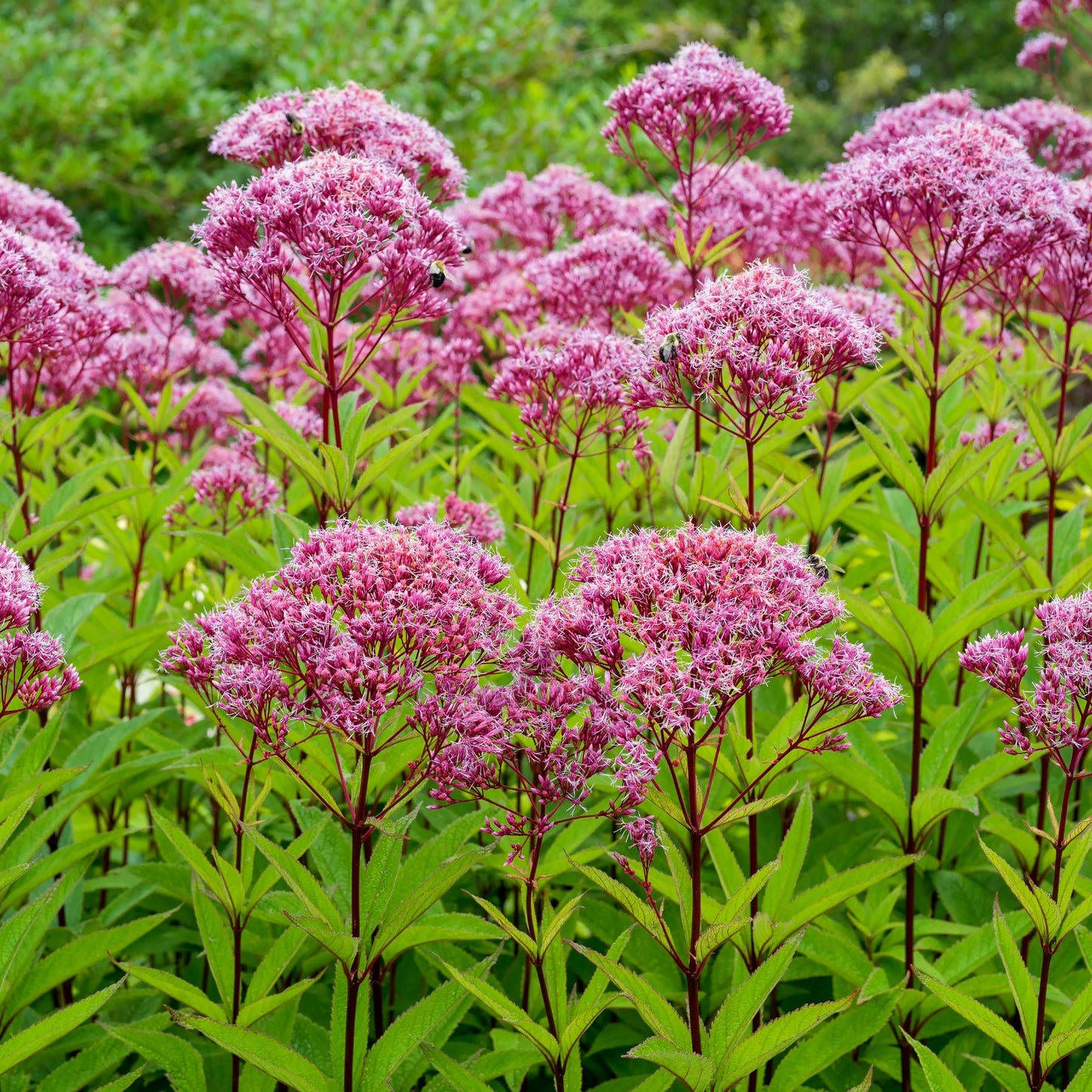
Eutrochium purpureum
Eutrochium purpureum – Joe Pye Weed
Exposure
- Sun
- Partial shade
Rusticity
Bloom time
- July
- August
- September
- Monarch butterfly magnet
- Stately architectural structure
- Spectacular airy blooms
- Ideal for moist soils
- Robust low-maintenance native
Joe Pye Weed is a graceful giant that brings incomparable architectural structure to large-scale gardens. This Canadian native perennial unfolds with majesty, crowning its tall, sturdy stems with broad, airy domes of delicate purplish-pink. A true biodiversity hub, it becomes the gathering point for Monarch butterflies and bumblebees from mid-summer onward, transforming your landscape into a living, moving masterpiece.
Characteristics
- Foliage: Distinguished by large, lance-shaped forest green leaves arranged in whorls along the stems. Deciduous, the foliage remains healthy and vigorous.
- Flowering: Produces imposing clusters of tubular, cotton-candy-like flowers in shades of mauve pink to smoky purple from July to September.
- Light: Thrives best in full sun for strong stems, but tolerates light partial shade.
- Habit: Presents an erect, powerful, and columnar habit, generally requiring no staking.
- Growth: Displays vigorous growth, reaching 1.5 to 2 meters in height with a generous spread.
- Soil: Prefers rich, deep soils that are consistent in moisture. Performs admirably in clay soils.
- Temperature: Perfectly hardy for the Canadian climate, withstanding Zone 3 winters.
- Resistances: Highly resistant to diseases and pests; rarely bothered by White-tailed deer.
Use
- Types of use: Key element for the back of borders, rain gardens, pond banks, or for creating a natural summer screen.
- Decorative advantages: Offers massive visual impact and a sculptural presence. Spent flower heads provide winter interest.
Maintenance
- Watering: Requires soil that never dries out completely. Water generously during heatwaves.
- Fertilization: Amend the soil with rich compost each spring to support its towering growth.
- Pruning: Cut stems back to the ground in early spring to make way for new growth.
- Planting: Provide significant spacing of 90 cm to 1 meter to allow it to flourish.
- Winter Protection: Requires no specific protection thanks to its exceptional native hardiness.
Plant details
Dimensions
Dimensions
Characteristics
Characteristics
Habit:
- Upright
Flowering colours:
- Pink
- Mauve
- Purple
Plant needs
Plant needs
Watering:
- Tolerates moist soil
- Tolerates wet soil
- Moderate
Maintenance:
- Easy
- Cut back in spring
Soil requirement:
- Moist
- Rich
- Clay
Features
Features
Resistance:
- White-tailed deer
- Cold
- Disease
- Wet areas
Attract:
- Butterflies
- Pollinators
- Birds
- Bees
Use:
- Massif
- Flower bed
- Water's edge
- Rain garden
- In-ground
Attribute:
- Native
- Long bloom
- Fast growth
- Large landscaping
- Shade

Related articles
-
Perennials for all occasions
Read the articleOsez créer des associations inédites qui sauront refléter votre personnalité, même si pour cela vous deviez déplacer certaines vivaces pour mieux les mettre en valeur.
-
Landscaping with perennials
Read the articleVariétés à découvrir, la tomate se savoure crue, en sandwich, en bruschetta ou en salade. Cuite, c'est l'ingrédient de base de sauces, soupes et salsas.
-
Perennial Care Guide: How to Prune and Fertiliz...
Read the articleRevitalize your garden beds and extend your flowering season with our simple pruning and fertilizing techniques tailored for local hardiness zones.
-
How to plant perennials in your garden
Read the articleEn pénétrant au jardin, ce sont souvent les plantes vivaces que l’on remarque en premier. Un massif de sauges, d’hémérocalles, d’astilbes, d’échinacées ou de lavande offre un spectacle d’une beauté...