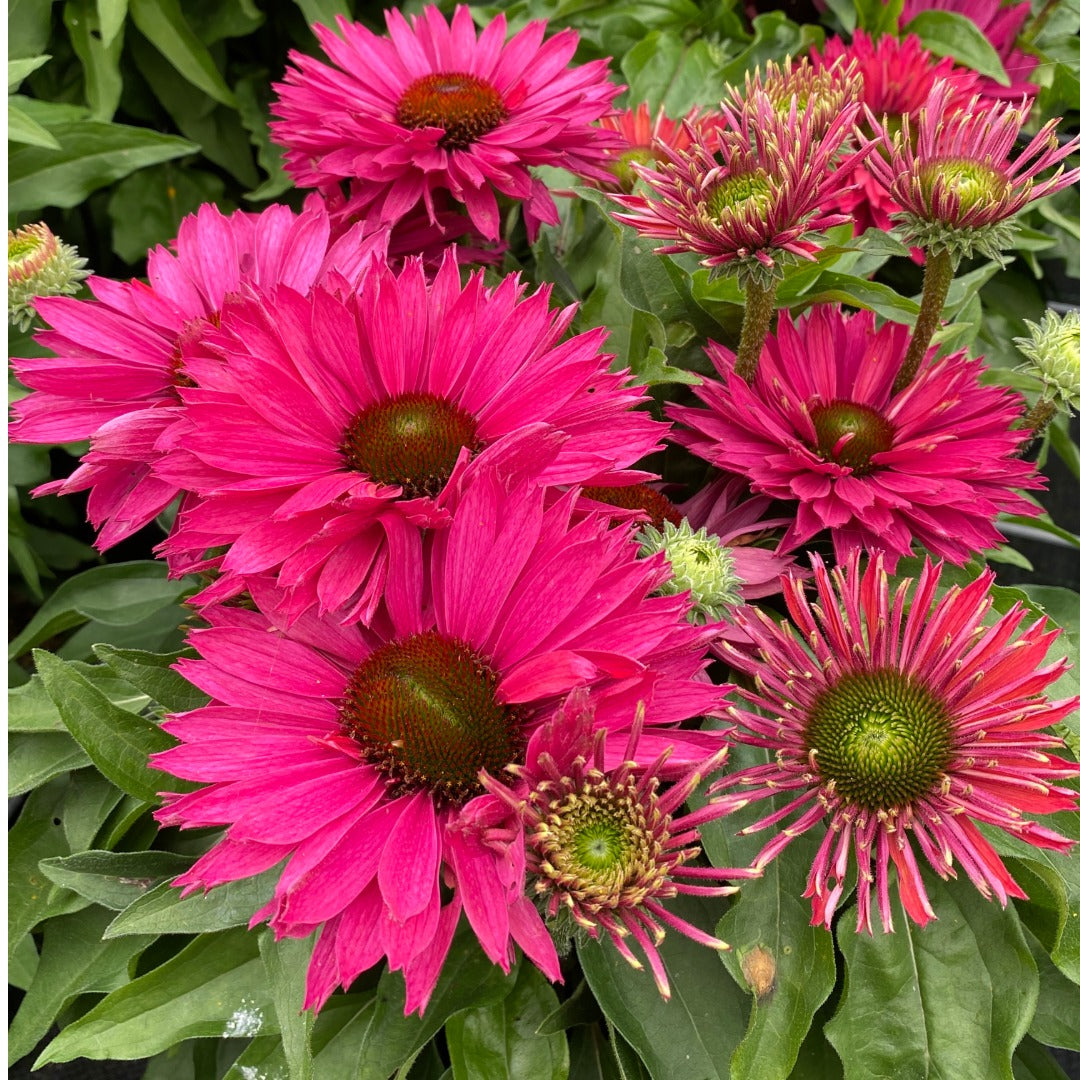
Electrify your garden beds with the Sweet Fuchsia Coneflower, a variety that redefines outdoor brilliance. It deploys a profusion of double blooms in an absolutely striking neon fuchsia pink, maintaining this intense chromatic saturation even under the relentless summer sun. Thanks to its compact habit and exemplary stem strength, it offers an impeccable structure while irresistibly attracting both onlookers and butterflies. #JardineriesBotanix
Characteristics
Foliage: Produces deep forest green, textured lanceolate leaves that create a dark backdrop, making the vibrant pink blooms pop.
Flowering: Displays spectacular double flowers with a dense, pompon-like centre surrounded by radiating petals, all bathed in saturated fuchsia.
Light: Requires full sun to maintain stem vigour and colour saturation.
Habit: Exhibits a compact, bushy, and very well-branched silhouette.
Growth: Reaches a mature height and spread of 45 to 60 cm.
Soil: Prefers rich, well-drained soil, though it adapts to various soil types once the root system is established.
Temperature: Benefits from excellent hardiness for northern climates (Zone 4).
Resistances: Effectively resists heat, fungal diseases, and moderate drought.
Use
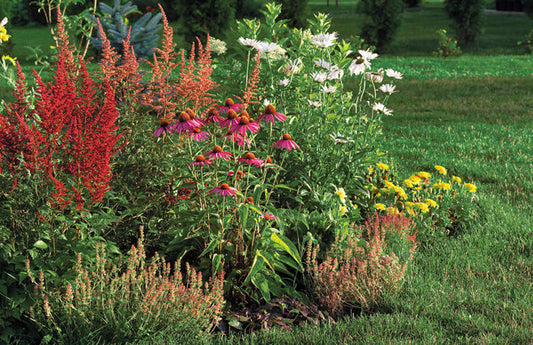
Types of use: Integrate it into perennial mass plantings, garden borders, or use it to create a strong visual impact in containers.
Decorative advantages: Adds rich texture and a modern coloration that instantly energizes landscaping projects.
Maintenance
Watering: Water regularly during the first growing season; thereafter, water only when the soil feels dry.
Fertilization: Apply a granular perennial fertilizer in early spring to encourage abundant flowering.
Pruning: Deadhead spent blooms to encourage new bud formation and cut stems back to ground level in early spring.
Planting: Space plants 45 cm apart in a hole enriched with high-quality compost.
Winter Protection: Apply organic mulch at the base to protect the crown during winters without consistent snow cover.
Osez créer des associations inédites qui sauront refléter votre personnalité, même si pour cela vous deviez déplacer certaines vivaces pour mieux les mettre en valeur.
Variétés à découvrir, la tomate se savoure crue, en sandwich, en bruschetta ou en salade. Cuite, c'est l'ingrédient de base de sauces, soupes et salsas.
En pénétrant au jardin, ce sont souvent les plantes vivaces que l’on remarque en premier. Un massif de sauges, d’hémérocalles, d’astilbes, d’échinacées ou de lavande offre un spectacle d’une beauté...