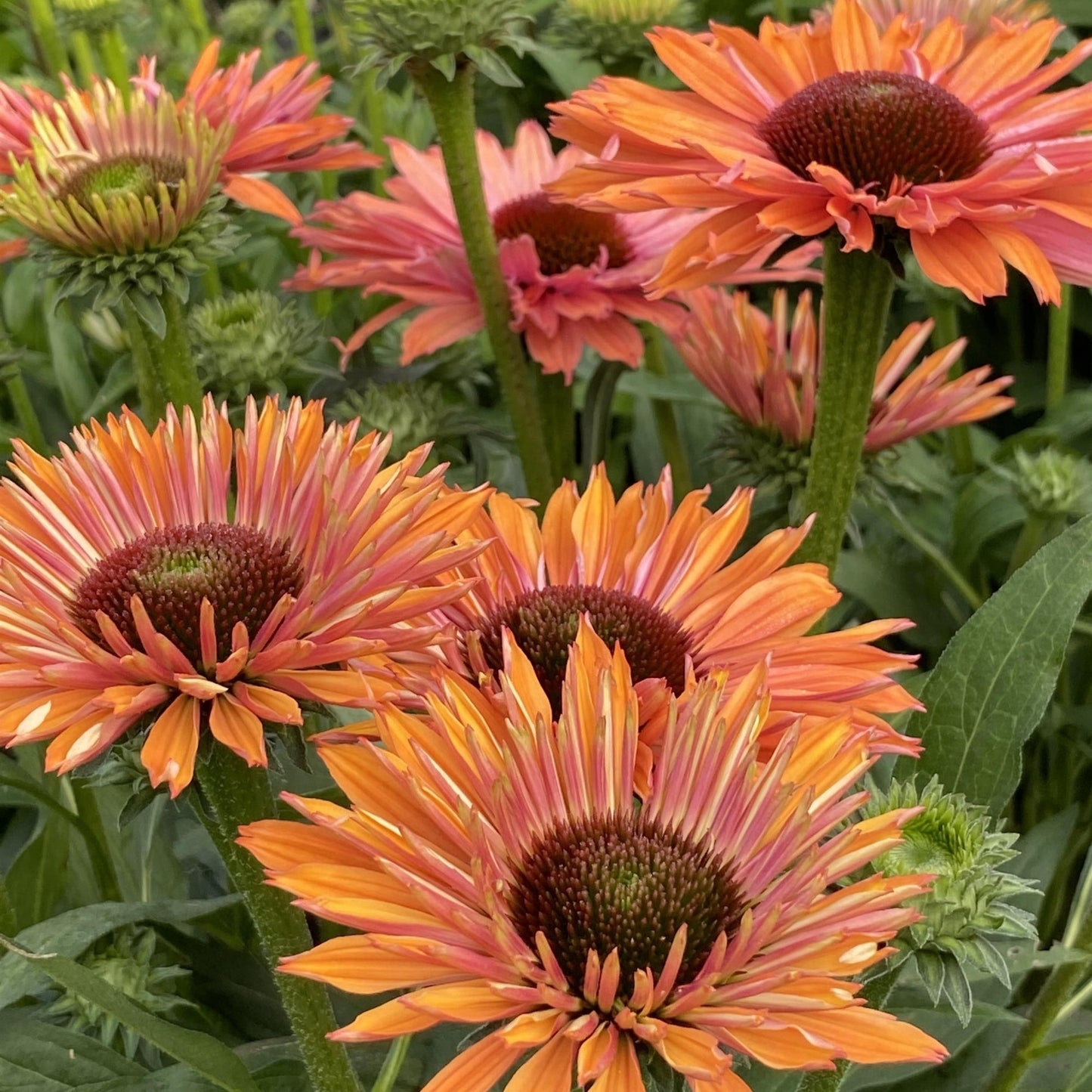
Transform your garden beds into a vibrant chromatic festival with the Rainbow Coneflower. This spectacular variety lives up to its name by deploying a constantly evolving floral display: buds open in shades of yellow and pink before maturing into rich nuances of salmon, coral, and lilac. Each flower becomes a unique masterpiece on a compact, sturdy plant, offering a warm gradient of colours that animates your outdoor space from early summer until the first frosts. #JardineriesBotanix
Characteristics
Foliage: Produces textured, medium green lanceolate leaves, forming a dense and vigorous base that proudly supports the heavy blooms.
Flowering: Displays single flowers with petals that shift in colour according to maturity, surrounding a prominent, coppery central cone.
Light: Requires full sun to maximize the intensity of the multi-coloured variations.
Habit: Exhibits a compact, upright, and very well-branched silhouette.
Growth: Reaches a mature height and spread of 45 to 60 cm.
Soil: Prefers rich, well-drained soil but tolerates drier conditions once the root system is established.
Temperature: Benefits from excellent hardiness adapted to harsh winters (Zone 4).
Resistances: Effectively resists heat, moderate drought, and white-tailed deer.
Use
Types of use: Enhances mass plantings and garden borders, and adapts perfectly to container gardening.
Decorative advantages: Offers a changing visual spectacle thanks to its multi-coloured flowering and creates striking contrasts.
Maintenance
Arrosage : Water regularly during the first year; thereafter, allow the soil to dry slightly between applications.
Fertilisation: Apply a granular perennial fertilizer in early spring to stimulate vigour.
Taille : Deadhead spent flowers to prolong the blooming season and cut stems back to ground level in early spring.
Plantation : Space plants 45 cm apart in soil enriched with organic compost.
Protection Hivernale : Apply organic mulch at the base to protect the crown during the first few winters.
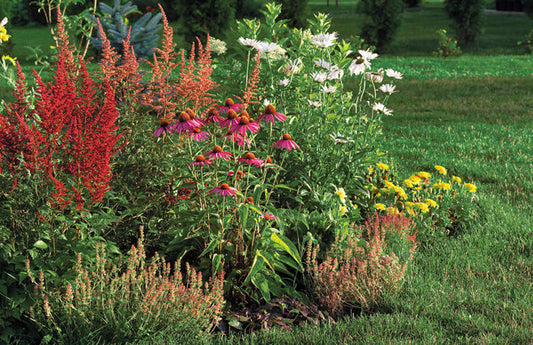
Osez créer des associations inédites qui sauront refléter votre personnalité, même si pour cela vous deviez déplacer certaines vivaces pour mieux les mettre en valeur.
Variétés à découvrir, la tomate se savoure crue, en sandwich, en bruschetta ou en salade. Cuite, c'est l'ingrédient de base de sauces, soupes et salsas.
En pénétrant au jardin, ce sont souvent les plantes vivaces que l’on remarque en premier. Un massif de sauges, d’hémérocalles, d’astilbes, d’échinacées ou de lavande offre un spectacle d’une beauté...