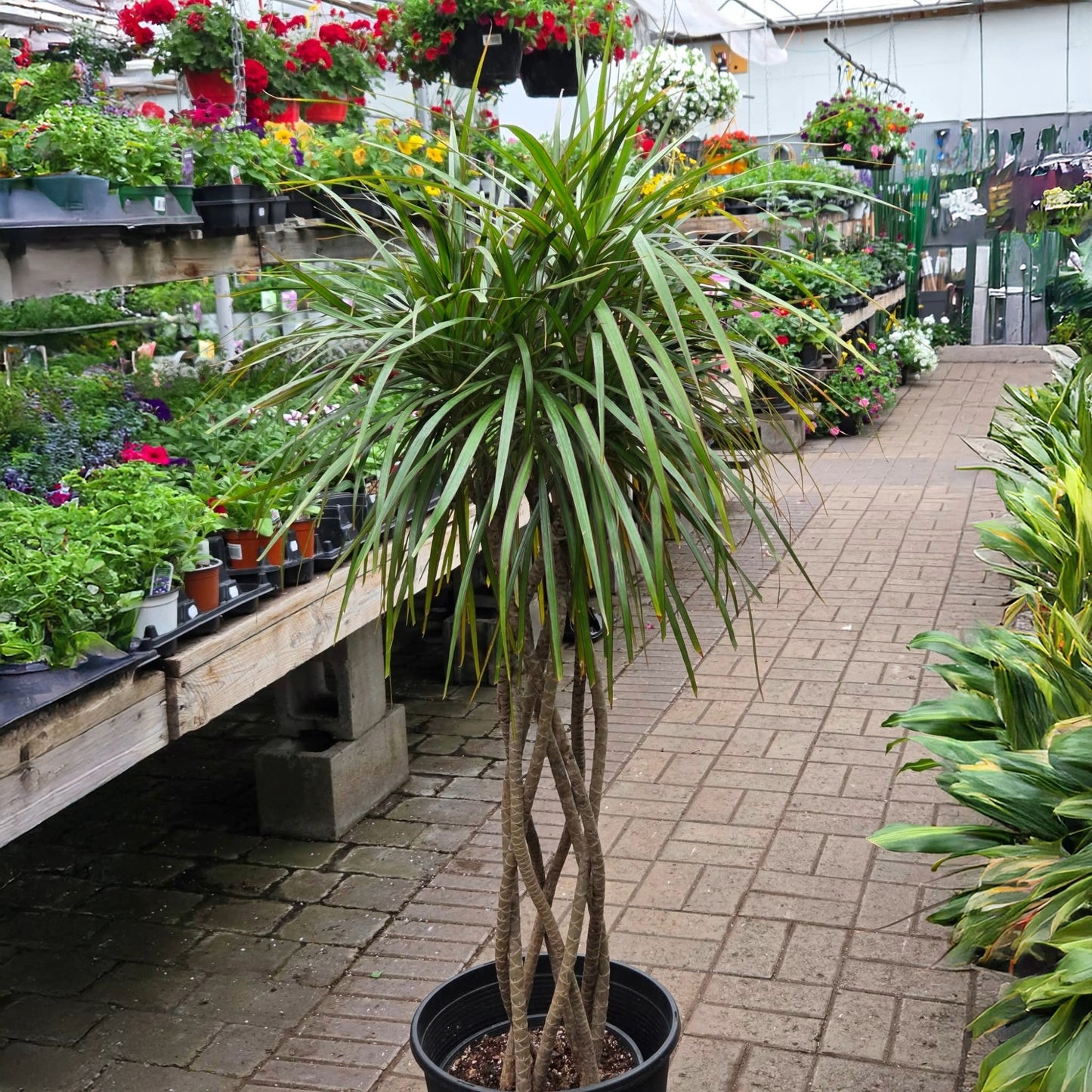
Dracaena reflexa var. angustifolia
Dracaena marginata - Braided Madagascar Dragon Tree
Exposure
- Bright indirect light
- Medium shade
- Tolerates low light
Rusticity
- Artisanal braided trunk offering sculptural design
- Slender dark green leaves edged in burgundy
- Modern palm tree look that structures spaces
- Highly robust selection adapting to lower light
- Minimalist care routine ideal for beginners
A true living sculpture, the Braided Madagascar Dragon Tree brings instant graphic elegance to your décor. Its meticulously intertwined stems rise to crown the plant with clusters of thin, arching leaves in a deep green highlighted by delicate purple-red edges. Robust and highly adaptable, this architectural specimen structures any space with a unique exotic refinement.
Characteristics
- Foliage: Deploys long, slender, flexible, and pointed leaves in dark olive green, neatly margined with rich burgundy red.
- Trunk: Features multiple artisanally braided stems, forming a spectacular single trunk that gains texture and character over time.
- Habit: Upright and architectural silhouette, topped with wispy heads of foliage evoking the look of a modern palm tree.
- Light: Thrives in bright indirect light, yet adapts remarkably well to lower light conditions and medium shade.
- Usage: Stands out as a headline floor plant, highly sought after for its air-purifying qualities and outstanding durability.
Use
- Style & Placement: Feature it proudly as a statement piece in a living room corner, welcome guests in the entryway, or add professional life to an office.
- Decorative Benefits: Its braided silhouette is beautifully enhanced when paired with a large, sleek decorative pot featuring a contemporary or minimalist design.
Care & Success
- Watering: Water moderately. Allow the potting soil to dry out almost completely through the container before watering again. This plant is sensitive to overwatering, which causes root rot.
- Potting Soil: Requires a loose, light, and perfectly drained soil mix. A standard indoor potting soil amended with perlite or pumice is ideal.
- Repotting: Repot in the spring every 2 to 3 years. Because it is slow-growing, top-dressing (replacing the top layer of soil) is often sufficient for mature specimens.
- Grooming: Simply remove lower leaves as they naturally turn yellow over time to keep the trunk clean and maintain a sharp profile.
- Fertilizing: Apply a balanced green plant fertilizer at half strength, once a month from March to September.
- Toxicity: Keep out of reach of pets (ingestion of the leaves can cause digestive distress due to saponins).
Plant details
Dimensions
Dimensions
Characteristics
Characteristics
Habit:
- Upright
- Architectural
Flowering colours:
Plant needs
Plant needs
Watering:
- Allow to dry almost completely
Maintenance:
- Very easy
Soil requirement:
- Indoor potting soil
- Light
- Well drained
Features
Features
Resistance:
Attract:
Use:
- Floor plant
- Visual centerpiece
- Large decorative pot
Attribute:
- Artisanal braided trunk
- Palm-like look
- Air purifying

Related articles
-
Potting House Plants: which pot to choose
Read the articleBien qu'une plante puisse passer plusieurs mois et parfois même plusieurs années dans le même pot, avec le temps ses racines envahissent tout l'espace disponible. Il devient important de choisir...
-
Moving Up a Level: Advanced Guide to Repotting ...
Read the articlePropagate your violets! Discover the simple cutting method, the secret to the perfect soil mix, and how to fight mealybugs.
-
The Complete Guide to Buying and Caring for Ind...
Read the articleBringing a touch of nature to your home with plants is a great idea! Not only do they beautify your living space, but they also help purify the air. However,...
-
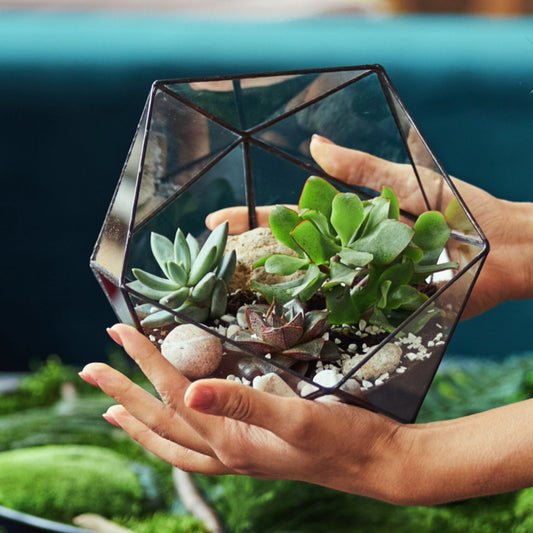
Build Your Own Terrarium: The Complete, Easy Gu...
Read the articleThe terrarium is the perfect addition to your decor! Learn how to easily create your own miniature garden with our complete guide.
-
Create a garden with succulents
Read the articleLes plantes grasses n’ont pas leur pareil pour créer des arrangements à la fois impressionnants par leurs couleurs, leurs formes et leurs textures et faciles à entretenir. Qu’on les agence...
-
Houseplants to discover - Butterfly Palm or Are...
Read the articleDypsis lutescens, anciennement Chrysalidocarpus lutescens