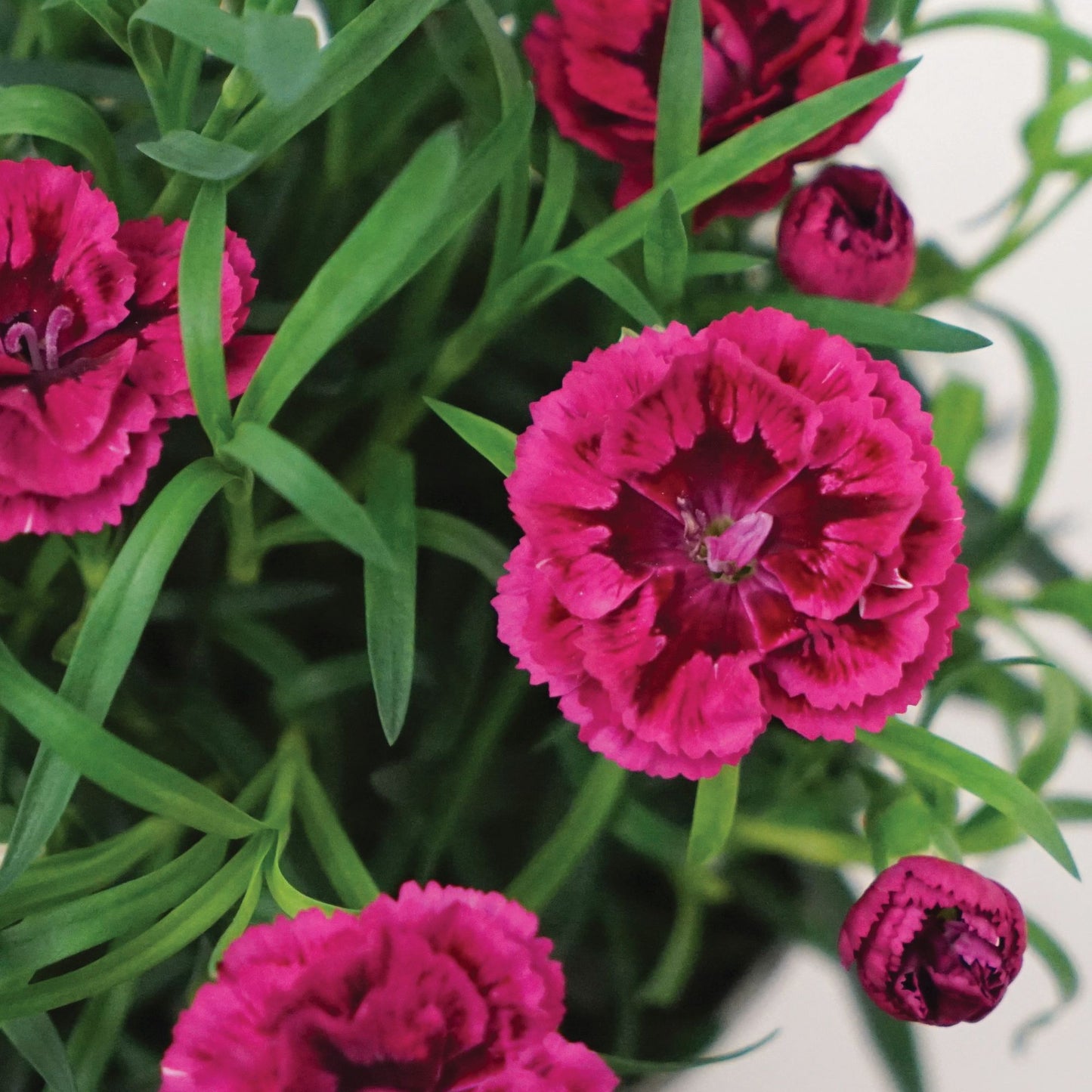
The DiaDeur™ Magenta+Red carnation reinvents classic garden charm with modern chromatic intensity and a captivating fragrance that fills the surrounding air. This variety stands out with its double flowers and serrated petals, displaying a vibrant contrast between deep magenta and a velvety red heart. Compact and robust, it forms a cushion of evergreen foliage that livens up your borders or containers from spring until the first frosts. It is the premier choice for those seeking generous blooms combined with a spicy clove scent, typical of the finest Dianthus.
Characteristics
Foliage : Fine, linear, and lanceolate, showing an elegant bluish-green (glaucous) hue that remains attractive even when not in bloom.
Flowers : A profusion of double flowers in bicolor magenta and red, exuding a powerful and sweet fragrance.
Light : Requires full sun to maximize foliage density and flower production.
Habit : Compact, bushy, and forming a well-defined rounded mound.
Growth : Moderate, reaching approximately 25 to 30 cm in height with a similar spread.
Soil : Prefers light, rich, neutral or slightly alkaline soil, and above all, perfectly drained.
Temperature : Excellent hardiness, generally rated for Zone 4.
Resistances : Stands up well to urban heat, White-tailed deer, and fungal diseases if drainage is adequate.
Use
Types of use : Ideal for flower bed borders, rock gardens, or in containers on a terrace to enjoy its scent.
Decorative advantages : Provides a touch of saturated color and fine texture thanks to its graphic foliage and chiseled flowers.
Maintenance
Watering: Water regularly during the first season, then allow the soil to dry slightly between waterings. Avoid excess moisture at the crown.
Fertilization : Apply a granular flower fertilizer in early spring and a balanced liquid fertilizer once a month during summer.
Pruning : Deadhead spent flowers regularly to encourage continuous blooming. Lightly shear the foliage after the main flush of flowers to maintain a compact habit.
Planting : Space plants 20 to 25 cm apart in a hole enriched with compost.
Winter Protection: A light snow cover is usually sufficient, but light mulching can protect roots in more exposed areas.
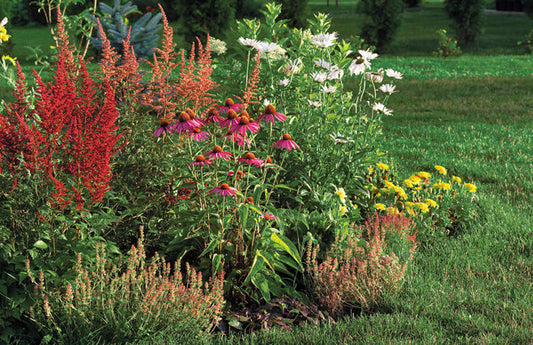
Osez créer des associations inédites qui sauront refléter votre personnalité, même si pour cela vous deviez déplacer certaines vivaces pour mieux les mettre en valeur.
Variétés à découvrir, la tomate se savoure crue, en sandwich, en bruschetta ou en salade. Cuite, c'est l'ingrédient de base de sauces, soupes et salsas.
En pénétrant au jardin, ce sont souvent les plantes vivaces que l’on remarque en premier. Un massif de sauges, d’hémérocalles, d’astilbes, d’échinacées ou de lavande offre un spectacle d’une beauté...