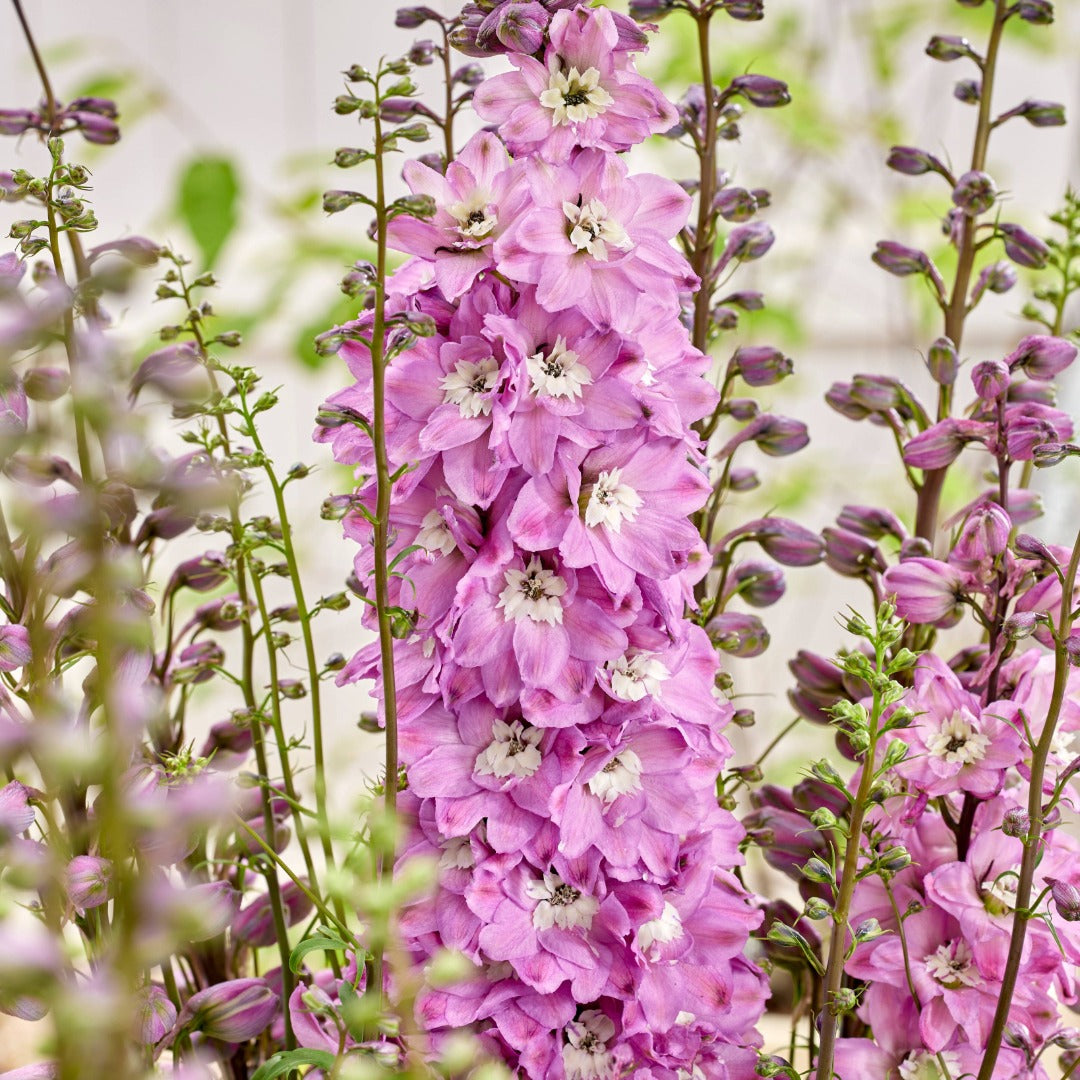
Bring a touch of soft romance and elegance to your landscape with Delphinium Pixie Rocket® Rose Rocket. This compact cultivar surprises with its tender, luminous pink flower spikes, a precious hue that instantly brightens sunny spots. Thanks to its sturdy habit and stocky silhouette, it offers all the splendour of tall larkspurs without the need for staking, making it a perfect fit for modern designs and limited living spaces.
Characteristics
Foliage : Features light green deciduous foliage, deeply cut, forming a dense and attractive base even before the first blooms appear.
Flowers : Produces double, delicate pink flowers with subtle nuances, tightly packed along vigorous and well-upright spikes.
Light : Recommended for full sun exposure to promote abundant flowering and optimal colour intensity.
Habit : Upright, compact, and naturally solid, designed to stay straight despite wind or rain.
Growth : Displays moderate growth, maintaining a tidy and structured form throughout the summer.
Soil : Requires rich soil, well-amended with compost and, above all, perfectly drained to thrive.
Temperature : Benefits from exemplary hardiness, easily withstanding Zone 3 winters.
Resistances : Shows excellent resilience against the elements thanks to its shorter, more muscular stems.
Utilization
Types of use : Ideal for accenting garden borders, filling perennial beds, or decorating containers on a terrace.
Decorative benefits : Offers soft, colourful verticality; its flowers are exceptional for creating fresh and long-lasting bouquets.
Maintenance
Watering : Water regularly to maintain constant coolness at the base, without ever saturating the soil with water.
Fertilization : Incorporate a nutrient-rich perennial fertilizer in the spring to support bud formation.
Pruning : Cut back flower stalks at the base as soon as they fade to induce a second bloom in the fall.
Planting : Provide sufficient spacing between plants to ensure proper foliage ventilation.
Winter Protection : Apply a layer of organic mulch in the fall to stabilize soil temperature around the roots.
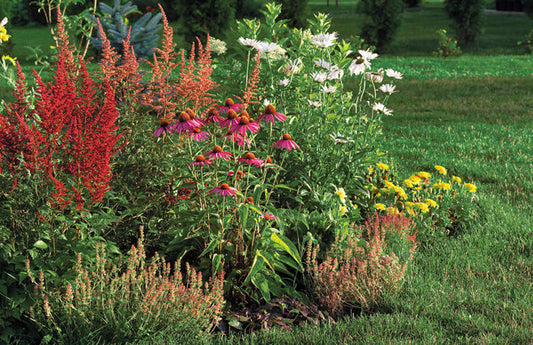
Osez créer des associations inédites qui sauront refléter votre personnalité, même si pour cela vous deviez déplacer certaines vivaces pour mieux les mettre en valeur.
Variétés à découvrir, la tomate se savoure crue, en sandwich, en bruschetta ou en salade. Cuite, c'est l'ingrédient de base de sauces, soupes et salsas.
En pénétrant au jardin, ce sont souvent les plantes vivaces que l’on remarque en premier. Un massif de sauges, d’hémérocalles, d’astilbes, d’échinacées ou de lavande offre un spectacle d’une beauté...