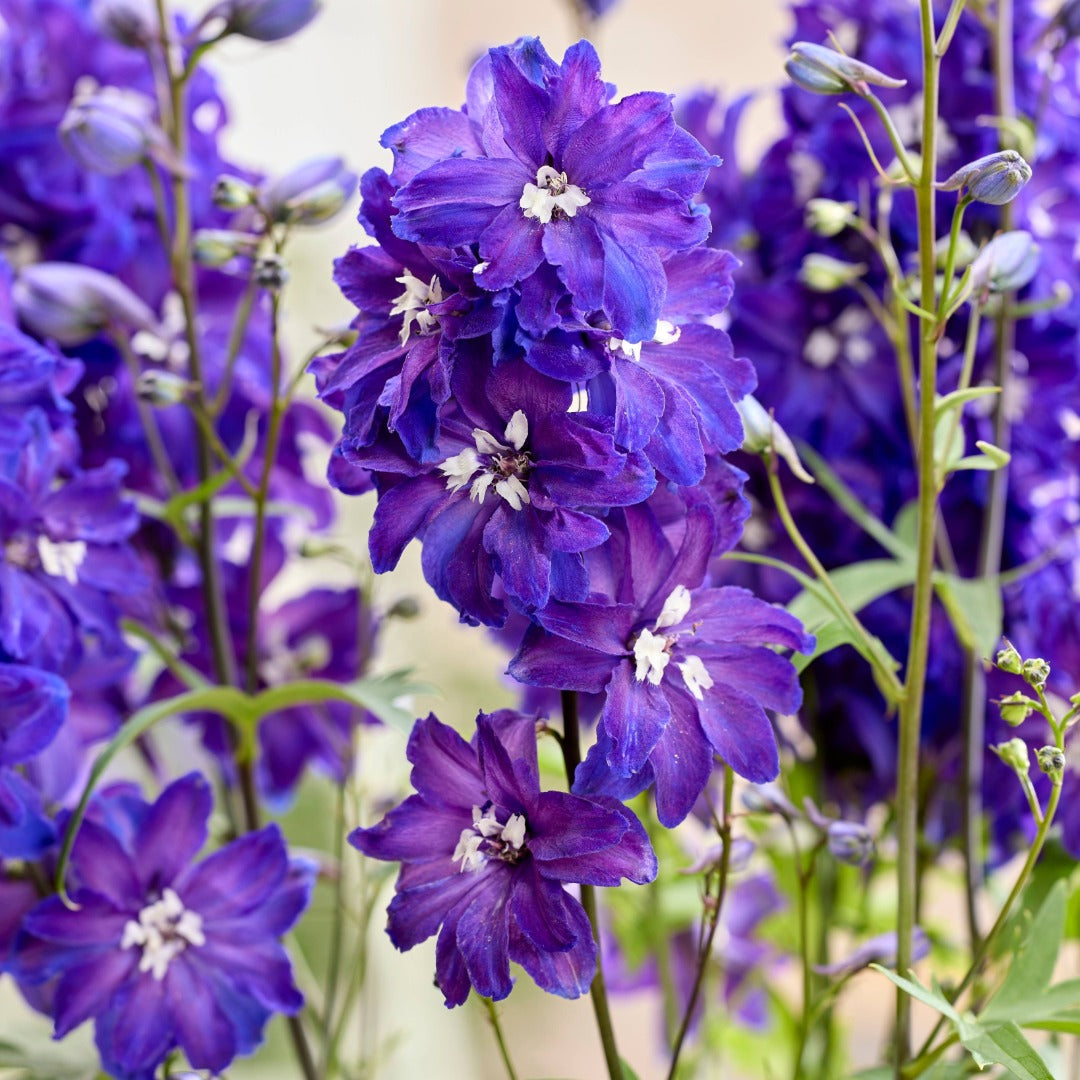
Dive into chromatic intensity with Delphinium Pixie Rocket® Neptune Rocket, a variety that commands attention through its mysterious depth. This compact cultivar produces dense spikes of deep cobalt blue, almost electric in appearance, supported by stems of exemplary strength. Ideal for creating striking contrasts in small gardens or container arrangements, it offers a powerful vertical structure without the bulk of traditional varieties.
Characteristics
Foliage : Features forest green deciduous foliage, finely chiselled, forming a compact and vigorous clump at the base of the plant.
Flowers : Displays intense cobalt blue double flowers, clustered in tight spikes for maximum visual impact.
Light : Requires a full sun location to maintain the rich flower colour and sturdy habit.
Habit : Upright, proud, and naturally short, eliminating any need for staking even during inclement weather.
Growth : Shows a moderate growth rate, ensuring a balanced and dense silhouette.
Soil : Prefers fertile soil, rich in organic matter and providing excellent drainage.
Temperature : Exhibits exceptional hardiness, adapting perfectly to the harsh winters of Zone 3.
Resistances : Shows increased resilience to wind and leaf diseases thanks to its stocky structure.
Utilization
Types of use : Integrates beautifully into perennial mass plantings, structured borders, or in containers on a sunny balcony.
Decorative benefits : Brings an unparalleled depth of blue; perfect for adding verticality and drama to small spaces.
Maintenance
Watering : Provide regular watering to keep the soil cool, especially in dry weather, while avoiding standing water.
Fertilization : Apply a phosphorus-rich granular fertilizer at the first sign of spring growth to support blooming.
Pruning : Cut back flower stems as soon as they fade to encourage a second flush of flowers later in the season.
Planting : Space plants adequately to promote air circulation and plant in amended soil.
Winter Protection : Cover the base with a layer of mulch in the fall to protect the root system.
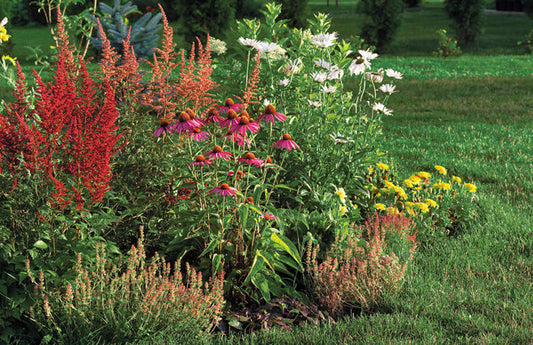
Osez créer des associations inédites qui sauront refléter votre personnalité, même si pour cela vous deviez déplacer certaines vivaces pour mieux les mettre en valeur.
Variétés à découvrir, la tomate se savoure crue, en sandwich, en bruschetta ou en salade. Cuite, c'est l'ingrédient de base de sauces, soupes et salsas.
En pénétrant au jardin, ce sont souvent les plantes vivaces que l’on remarque en premier. Un massif de sauges, d’hémérocalles, d’astilbes, d’échinacées ou de lavande offre un spectacle d’une beauté...