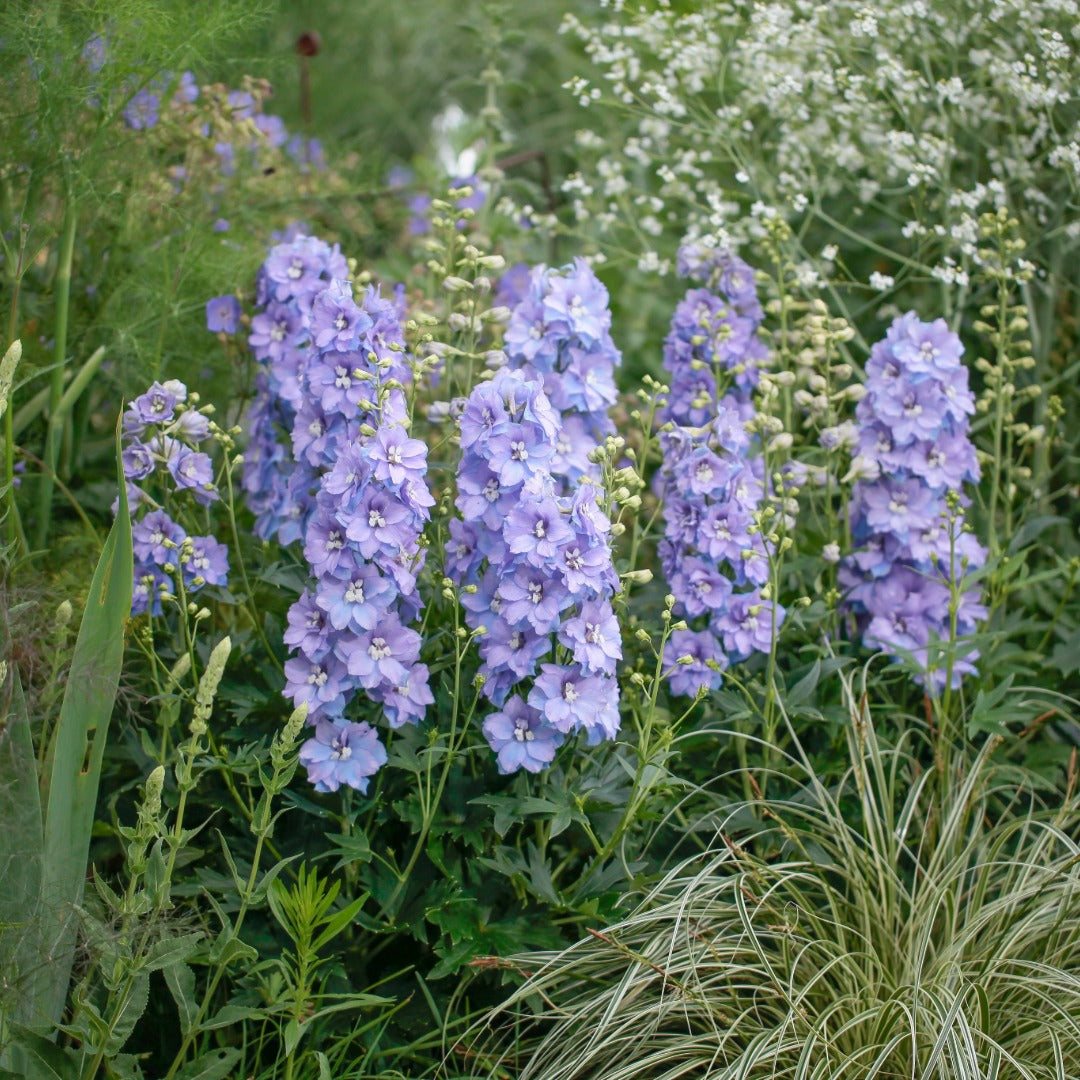
Delphinium 'Delgenius Shelby' reinvents this classic tall perennial by introducing exceptional sturdiness and outstanding branching. Its dense flower spikes bear a profusion of semi-double flowers in a soft lavender-pink, enhanced by a contrasting white bee. Its compact silhouette eliminates the need for staking, allowing this variety to stand proudly in borders from early to midsummer.
Characteristics
Foliage : Deeply lobed and finely chiseled leaves display a rich dark green shade, forming a vigorous, stocky, and extremely dense basal rosette.
Blooming / Fruiting / Stems : Multiple sturdy flower stems carry compact, generous spikes packed with pastel lavender-pink semi-double flowers from June to July.
Light : Requires a full sun location to maximize flower production and ensure the perfect rigidity of its habit.
Habit : Presents an erect, compact, vigorously branched, and exceptionally stable silhouette.
Growth : Rapid growth allows it to reach a height of 60 to 75 cm and a spread of 45 to 60 cm at maturity.
Soil : Thrives in rich, loose, fresh, and adéquately drained soil.
Temperature : Exhibits excellent hardiness and easily tolerates zone 3 winters.
Resistances : Offers superior resistance to powdery mildew compared to older varieties and naturally repels White-tailed deer as well as hares and rabbits.
Use
Types of use : Structures the midground or background of mixed flower beds, animates perennial borders, and integrates beautifully into large containers on the patio. Its solid stems provide excellent, long-lasting cut flowers for bouquets.
Decorative advantages : Creates a massive visual impact thanks to its multitude of simultaneous flower stalks, while bringing a touch of softness with its pastel coloring and staking-free verticality.
Maintenance
Watering : Maintain the soil uniformly moist, particularly during hot summer spells. Water directly at the base of the plant to avoid wetting the foliage.
Fertilization : Incorporate a good amount of compost at planting. Apply a granular perennial fertilizer in early spring to support its generous bloom.
Pruning : Cut back flower stalks as soon as they fade to stimulate new growth and encourage a second bloom later in the season.
Planting : Install the plant in spring, respecting a spacing of 50 cm, and ensure you keep the crown at ground level.
Winter protection : Let accumulated snow serve as a natural insulator. Spread an organic mulch in autumn to protect the crown from freeze-thaw cycles.
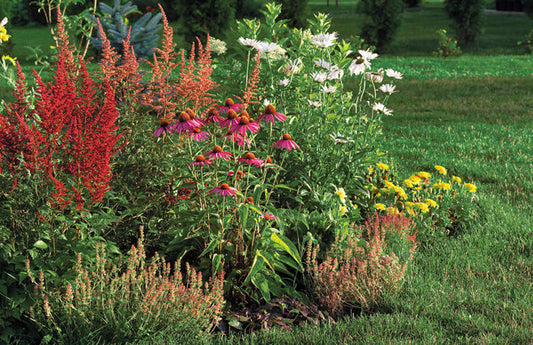
Osez créer des associations inédites qui sauront refléter votre personnalité, même si pour cela vous deviez déplacer certaines vivaces pour mieux les mettre en valeur.
Variétés à découvrir, la tomate se savoure crue, en sandwich, en bruschetta ou en salade. Cuite, c'est l'ingrédient de base de sauces, soupes et salsas.
En pénétrant au jardin, ce sont souvent les plantes vivaces que l’on remarque en premier. Un massif de sauges, d’hémérocalles, d’astilbes, d’échinacées ou de lavande offre un spectacle d’une beauté...