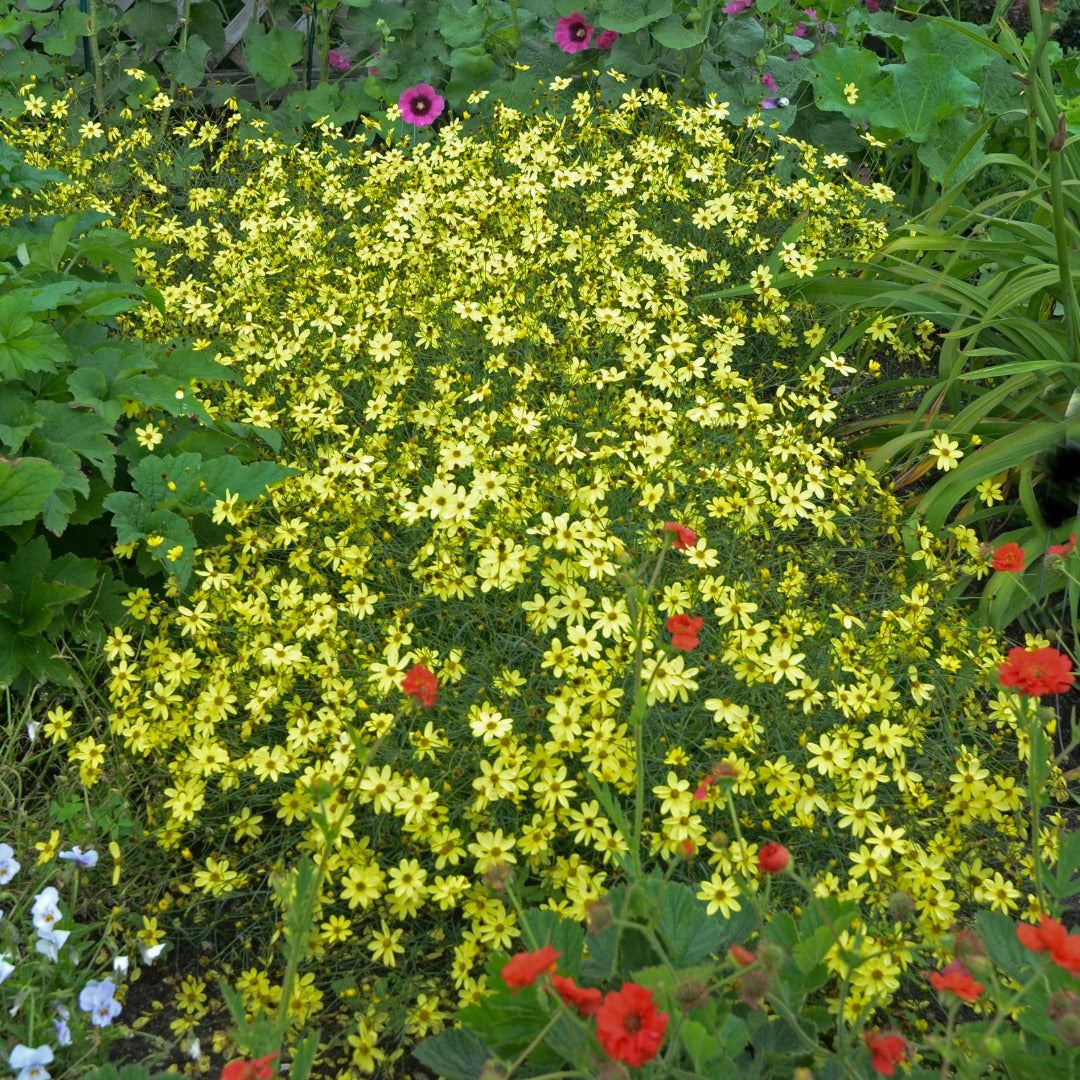
Brighten your flower beds with a profusion of star-shaped, buttery yellow flowers of exceptional softness. This coreopsis forms a mound of fine greenery that brings an airy and delicate texture to any landscape design. Its generous flowering stretches throughout the summer, offering a constant luminous display without requiring sustained effort. Perfect for sunny gardens, it resists heat and drought admirably once well established. It is the ideal choice for creating a misty carpet of flowers that irresistibly attracts pollinators.
Characteristics
Foliage: The filiform leaves, resembling fine needles, create a remarkable effect of lightness that persists all season long.
Flowering and stems: Hundreds of butter-yellow star-shaped flowers dance atop supple stems, creating a cheerful and soothing atmosphere.
Luminosity: Full sun exposure guarantees massive flowering and maintains the plant's compact silhouette.
Habit: Its bushy and rounded silhouette integrates naturally into borders or the middle of flower beds.
Growth: This vigorous groundcover reaches about 45 cm in height, spreading quickly to fill empty spaces without becoming invasive.
Soil: It performs in a wide variety of soils, even poor ones, provided they are well-drained.
Temperature (Hardiness): This robust perennial faces our winters without flinching thanks to its zone 4 hardiness.
Resistances: Naturally resistant to white-tailed deer and drought, it limits maintenance concerns in the garden.
Use
Perfect for creating a luminous flower border along a path.
Excellent choice in mass plantings or rock gardens for its natural and wild appearance.
Grows very well in containers to decorate a sunny terrace.
Maintenance
Watering: Water regularly during the first year of planting; thereafter, allow the soil to dry between waterings.
Fertilization: Apply a balanced fertilizer in the spring to stimulate foliage vigour.
Pruning: Shear the plant slightly after the first wave of flowers to encourage a new flush of blooms.
Planting: Install in the garden in spring or autumn in a location benefiting from excellent drainage.
Winter protection: Leave the foliage in place during the winter to protect the crown and clean up in the spring.
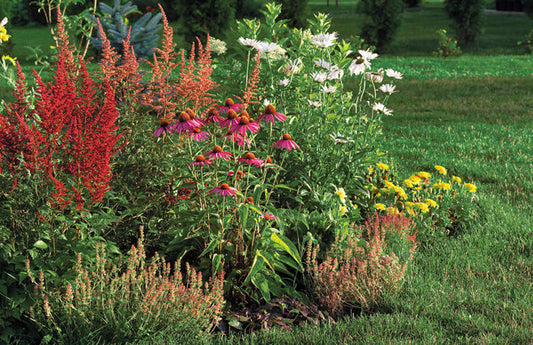
Osez créer des associations inédites qui sauront refléter votre personnalité, même si pour cela vous deviez déplacer certaines vivaces pour mieux les mettre en valeur.
Variétés à découvrir, la tomate se savoure crue, en sandwich, en bruschetta ou en salade. Cuite, c'est l'ingrédient de base de sauces, soupes et salsas.
En pénétrant au jardin, ce sont souvent les plantes vivaces que l’on remarque en premier. Un massif de sauges, d’hémérocalles, d’astilbes, d’échinacées ou de lavande offre un spectacle d’une beauté...