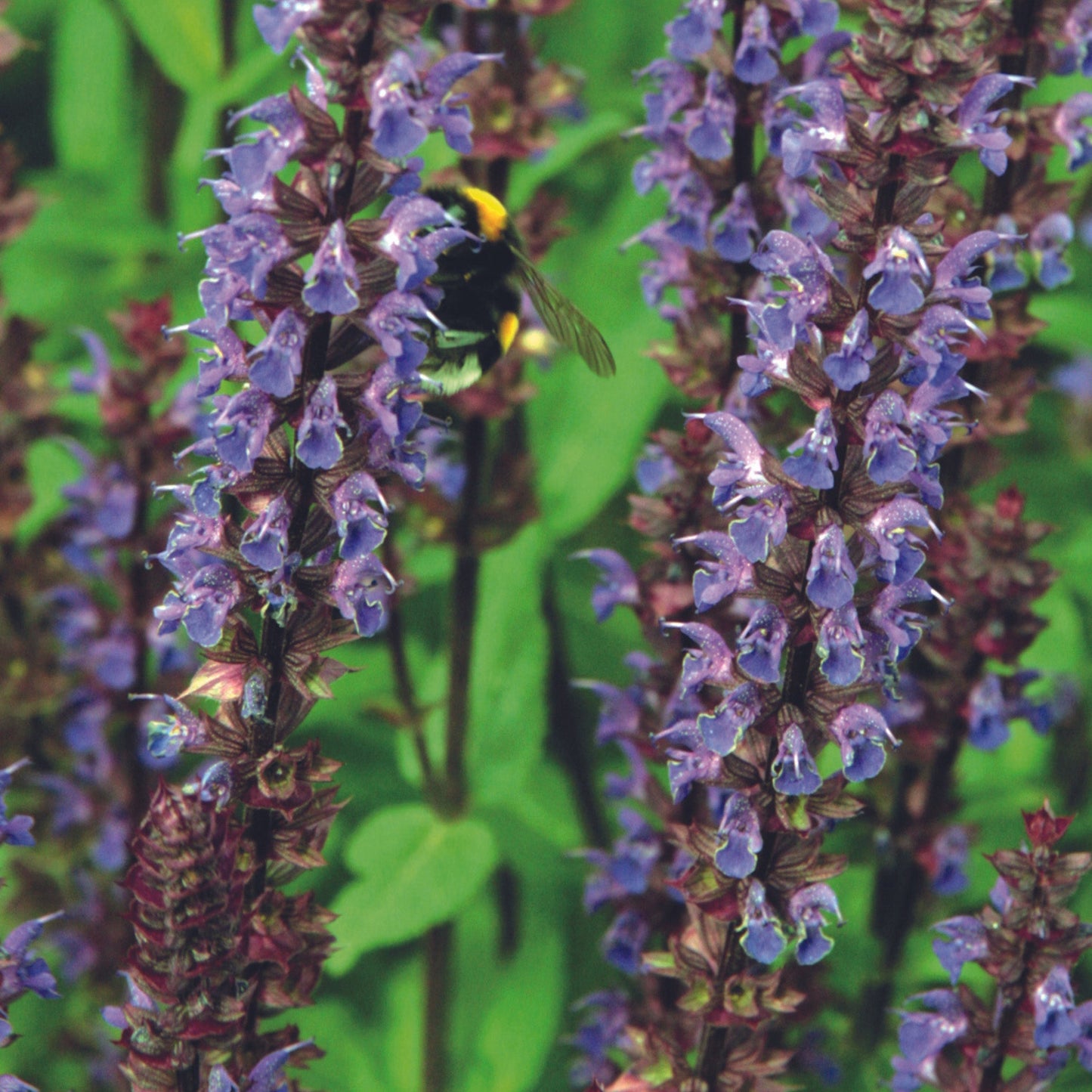
'Caradonna' Sage is a star perennial, prized by garden designers worldwide for its elegance and intense colour. This variety's main benefit is its unique structure: it displays flower stems so dark purple they are almost black, creating a striking contrast with its violet-blue flower spikes. It is an architectural plant that brings a touch of drama and refinement to borders, all while being bewilderingly easy to grow.
Characteristics
Foliage: It forms a basal clump of deciduous, grey-green leaves with a slightly rough texture, which are very aromatic when crushed.
Flowering: From early to late summer, a multitude of straight, dark stems rise above the foliage. They carry long spikes of small, intense violet-blue flowers. The stems and calyces (the small cup that holds the flower) are a purplish-black, which extends the colour interest even after the petals have fallen.
Light: It demands full sun for abundant flowering and a strong, upright habit.
Habit: It forms a mounded clump of foliage from which flower stems with a very upright, vertical habit emerge.
Growth: With a medium growth rate, it reaches a height of 60 to 75 cm (24-30 inches) in bloom, with a spread of 45 to 60 cm (18-24 inches).
Soil: It thrives in average to poor soil, as long as the drainage is excellent. It does not tolerate heavy, wet soils in winter.
Hardiness: Very hardy, it faces Zone 3 winters without any problem.
Resistance: This robust plant admirably resists White-tailed deer and rabbits.
Uses
Types of Use: Its vertical structure makes it a perfect choice to add rhythm and height to beds and borders. It is spectacular in mass plantings.
Ornamental Features: The contrast between the black stems and violet flowers is its main attraction. It offers a long season of colour and attracts a host of pollinators.
Care
Watering: Water at planting to establish it well. Afterwards, it is very drought tolerant.
Fertilizing: No fertilization is necessary. It flowers better in soil that is not too rich.
Pruning: After the first major wave of flowering (around mid-July), cut back all the faded flower stems severely to the basal foliage. This encourages a new bloom in late summer and fall.
Planting: Plant it in the spring or fall in a very sunny location with impeccable drainage.
Winter Protection: No protection is required. Simply ensure the soil is well-drained to prevent root rot.
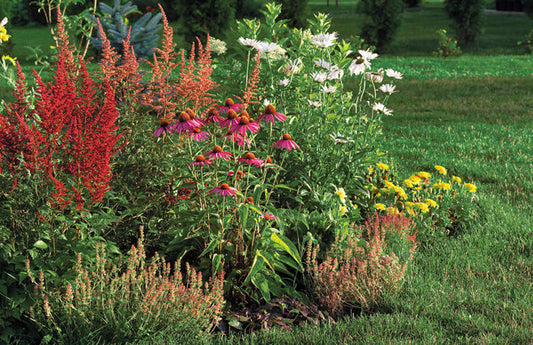
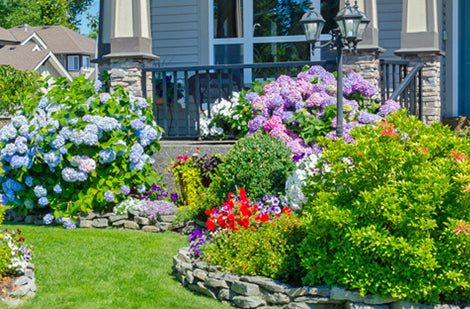
Osez créer des associations inédites qui sauront refléter votre personnalité, même si pour cela vous deviez déplacer certaines vivaces pour mieux les mettre en valeur.
Variétés à découvrir, la tomate se savoure crue, en sandwich, en bruschetta ou en salade. Cuite, c'est l'ingrédient de base de sauces, soupes et salsas.
En pénétrant au jardin, ce sont souvent les plantes vivaces que l’on remarque en premier. Un massif de sauges, d’hémérocalles, d’astilbes, d’échinacées ou de lavande offre un spectacle d’une beauté...