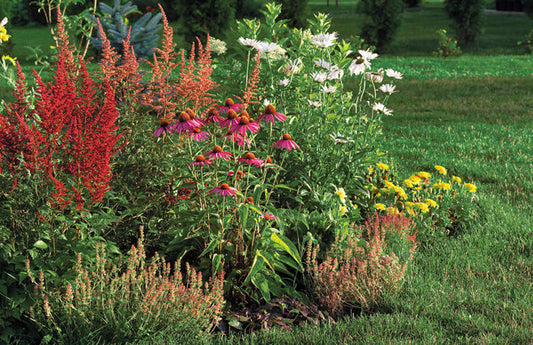
Astilbe x arendsii 'Fanal' is a true icon of the shade garden, renowned for its deep, velvety blood-red plumes that are among the darkest of the genus. This classic variety captivates from early spring with its bronze and copper-toned young foliage, which matures into a rich forest green by the time it blooms. Vigorous and well-structured, it brings dramatic intensity and elegant verticality to cool, dappled corners of the landscape.
Characteristics
Foliage : Displays magnificent foliage, initially tinted reddish-bronze upon emergence, then turning deep lustrous green. The leaves are finely incised and toothed, offering a dense and sophisticated texture.
Flowering : Produces narrow, dense, and upright flower spikes in an intense crimson red. This vibrant blooming occurs in early summer and maintains its structure even after drying.
Light Requirements : Prefers partial shade to full shade. It can tolerate slightly more sun than other varieties if the soil remains waterlogged, but avoid harsh afternoon sun.
Habit : Upright and bushy, forming a compact, sturdy clump that requires no staking.
Growth : Moderate growth rate, spreading slowly via rhizomes to form beautiful colonies.
Soil : Requires humus-rich soil, acidic to neutral, and above all, consistently cool to moist. It absolutely does not tolerate drought.
Temperature : Perfectly hardy, performing successfully in climates reaching Zone 3.
Resistance : Known for high resistance to White-tailed deer and hares; few pest issues when soil moisture is maintained.
Use
Types of Use : Essential for cool flower bed borders, woodland mass plantings, or near water features. It also excels in containers to provide structure for a north-facing balcony or terrace.
Decorative Advantages : The contrast between the fire-red flowers and the dark foliage creates a striking visual impact. Its flower stems are excellent for both fresh and dried floral arrangements.
Maintenance
Watering : Water generously and consistently. The soil must remain moist at all times; mulching is essential to prevent evaporation during summer.
Fertilization : Amend the soil with compost in spring or apply a fertilizer rich in organic matter to support foliage vigour.
Pruning : Cut back spent flowers to stimulate the plant, or keep them to enjoy their architectural silhouette throughout the autumn. Cut the entire clump back to the ground in early spring.
Planting : Install in a hole enriched with high-quality planting soil and humus. Space adequately to promote air circulation.
Winter Protection : Highly hardy; requires only a good layer of protective mulch to maintain root moisture during freeze-thaw cycles.
Osez créer des associations inédites qui sauront refléter votre personnalité, même si pour cela vous deviez déplacer certaines vivaces pour mieux les mettre en valeur.
Variétés à découvrir, la tomate se savoure crue, en sandwich, en bruschetta ou en salade. Cuite, c'est l'ingrédient de base de sauces, soupes et salsas.
En pénétrant au jardin, ce sont souvent les plantes vivaces que l’on remarque en premier. Un massif de sauges, d’hémérocalles, d’astilbes, d’échinacées ou de lavande offre un spectacle d’une beauté...