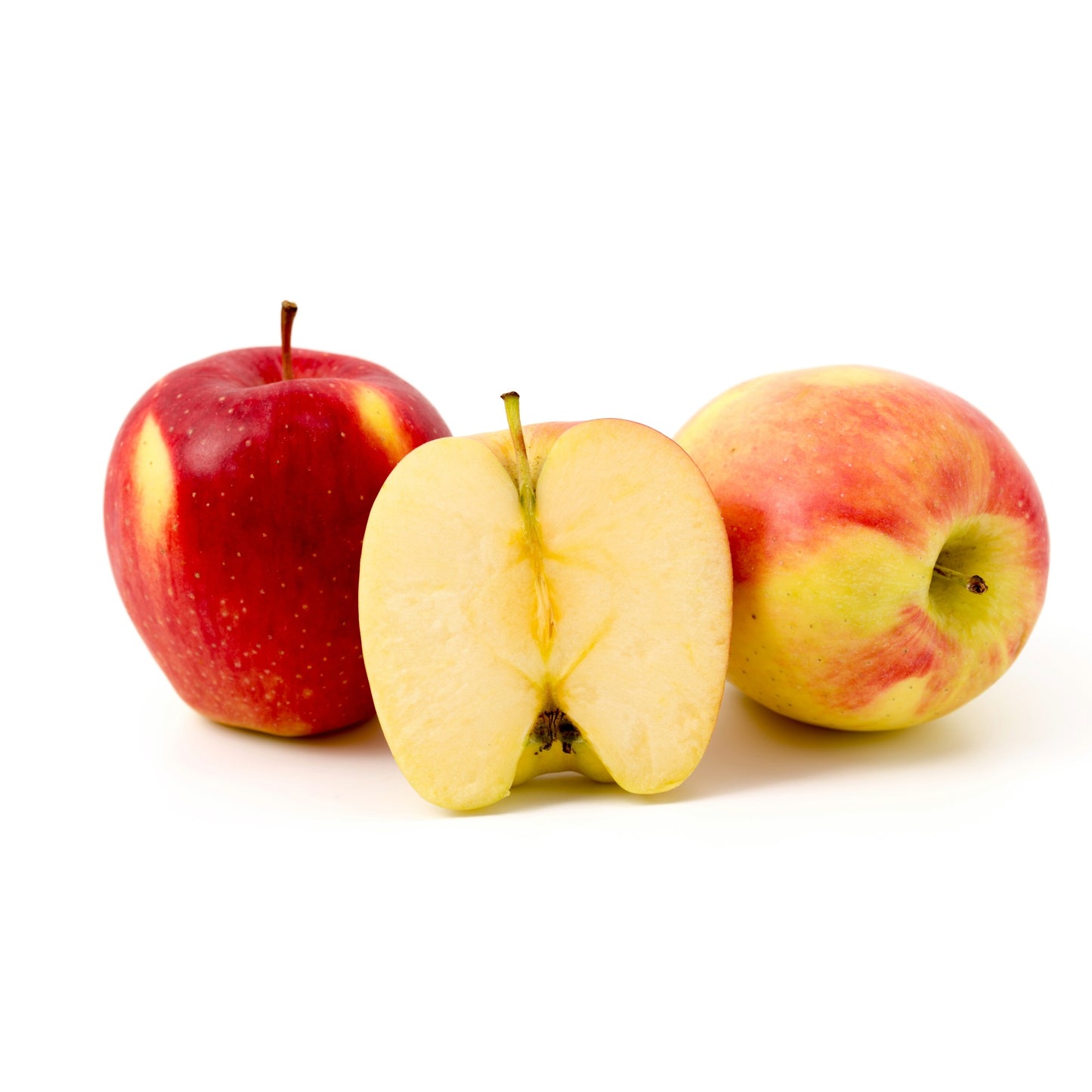


Malus domestica 'Ambrosia'
'Ambrosia' Apple Tree - Malus domestica 'Ambrosia'
'Ambrosia' Apple Tree - Malus domestica 'Ambrosia'
Exposure
- Sun
Rusticity
Bloom time
- May
- Exceptional honey-like flavour and very sweet flesh
- Pure white flesh that resists browning (slow oxidation)
- Hardy and vigorous Canadian variety (Zone 4)
- Excellent storage life (3 to 4 months in cold storage)
- Fragrant and highly ornamental spring blossoms
Discover sweetness in its purest form: the 'Ambrosia' apple tree. Discovered by chance in British Columbia, this Canadian variety has quickly become a global favourite thanks to its unique honey-like flavour and creamy white flesh that boasts the exceptional property of not browning after being sliced. With its very sweet profile and crisp texture, it is the ultimate snacking apple for modern home orchards.
Characteristics
- Foliage: Oval, rich green leaves creating a dense and healthy canopy that provides lovely shade throughout the summer season.
- Flowering / Fruit: Fragrant white flowers tinged with pink in spring. Produces medium to large fruit with smooth, cream-yellow skin elegantly blushed with bright pink and red. Ripens for harvest in late September.
- Rootstock and Dimensions: Grafted on semi-dwarf rootstock (typically S-M4 or MM106), reaching a height of 4 to 5 metres with a spread of 3 to 4 metres at maturity.
- Pollination: Self-sterile variety (Group 3). Requires a compatible pollinating partner such as 'Gala', 'Honeycrisp', 'Spartan', or 'McIntosh'.
- Light: Full sun required to ensure high sugar content and the distinctive pink skin coloration.
- Habit: Upright and vigorous habit, rounding out with age and fruit load, providing a sturdy and easy-to-maintain structure.
- Soil: Prefers deep, fertile, and well-drained soil. Does not tolerate heavy clay or areas with standing water.
- Temperature: Very hardy (Zone 4), well-suited for Quebec and Canadian climates.
- Resistance: Good overall resistance, though monitoring for apple scab and fire blight is recommended in humid areas.
Usage
- Types of Use: Ideal for home orchards, urban agriculture projects, or as an ornamental fruiting specimen in a backyard.
- Culinary Benefits: The slow-browning flesh makes it perfect for fruit platters, lunchboxes, and fresh salads.
- Decorative Benefits: Beautiful massive spring blossoms followed by highly aesthetic bi-coloured fruit that remains decorative on the tree until harvest.
Maintenance
- Watering: Maintain consistent moisture during establishment and throughout summer fruit development to ensure fruit size and juiciness.
- Fertilization: Apply mature compost at the base of the tree each spring or a balanced fruit tree fertilizer to support productivity.
- Pruning: Perform structural pruning during the first few years, followed by annual maintenance pruning in late winter to promote airflow.
- Planting: Install in full sun in a wide hole. Ensure the graft union remains about 5 cm above the soil level.
- Preventive Treatments: Applying dormant oil in early spring helps prevent pest infestations.
- Winter Protection: Install a white protective spiral on the trunk to prevent rodent damage and frost cracking.
Companion Planting
Maximize your tree's health by creating a beneficial guild. Nasturtium (Tropaeolum majus) deters aphids, while Chives (Allium schoenoprasum) help prevent apple scab. For a nutrient boost, plant Comfrey (Symphytum x uplandicum), and encourage effective pollination with Catmint (Nepeta x faassenii) to attract pollinating insects.
Plant details
Dimensions
Dimensions
Characteristics
Characteristics
Habit:
- Upright
- Rounded
Flowering colours:
- White
- Pink
Plant needs
Plant needs
Watering:
- Moderate
Maintenance:
- Pruning spring
- Fertilize regularly
Soil requirement:
- Rich
- Well drained
Features
Features
Resistance:
- Cold
Attract:
- Pollinators
- Birds
- Butterflies
Use:
- Isolated
- Full ground
Attribute:
- Comestible
- Early flowering
- Fragrant