1
/
of
3
Acer tataricum subsp. ginnala (Syn. Acer ginnala)
Acer tataricum subsp. ginnala – Amur Maple
Acer tataricum subsp. ginnala – Amur Maple
Exposure
- Sun
- Part Shade
Rusticity
2, 3, 4, 5, 6, 7, 8, 9
Bloom time
- May
- June
- Spectacular fall colour
- Flamboyant scarlet red
- Very hardy (Zone 2)
- Ideal for small spaces
- Fragrant spring flowers
The Amur Maple is a small tree with a big heart, whose primary mission is to set the autumn landscape ablaze with its spectacular colours. Known for its great adaptability and exceptional hardiness, it offers interest over several seasons. But it truly steals the show in the fall, when its glossy green foliage transforms into a fireworks display of scarlet red with unparalleled reliability and intensity. It is the top choice for small properties seeking the greatest possible visual impact at the end of the season.
Characteristics
- Foliage: Deciduous, three-lobed foliage is a glossy dark green during the summer. Its main appeal lies in its fall colouration, one of the most spectacular and reliable in the plant world, turning a brilliant and luminous scarlet red across the entire plant.
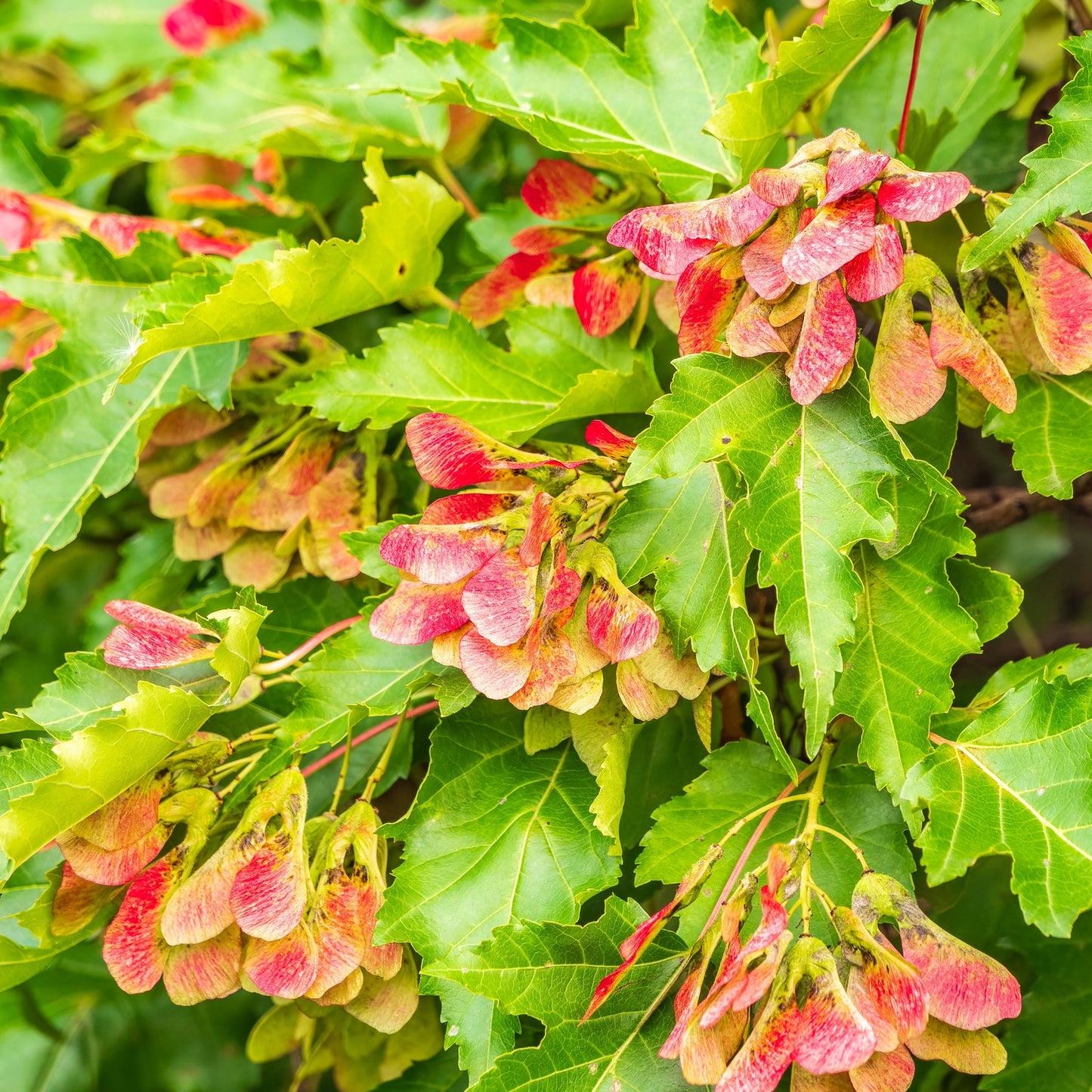
- Flowering / Fruiting: After the leaves appear in spring, small clusters of creamy-white, fragrant flowers emerge, attracting pollinators. They are followed in late summer by decorative samaras (winged seeds) that are often tinged with red, adding a decorative touch, although the foliage is its major show.
- Light: Performs best in full sun, which guarantees the most intense fall colouration, but it tolerates part shade well.
- Habit: Naturally shrubby and multi-trunked, it forms a broad, rounded silhouette with age. It can easily be trained to a single trunk to give it the appearance of a small tree.
- Growth: With a moderate to fast growth rate, it reaches a height and width of 4 to 6 metres (15-20 feet).
- Soil: Shows great adaptability. It tolerates a wide range of soils, including heavy or poor soils, and handles urban conditions well.
- Temperature: Extremely hardy and trouble-free, it is perfectly adapted to all climates in Canada.
- Resistance: Very drought-resistant once well-established, and tolerant of pollution.
Use
- Types of Use: Excellent as a specimen tree in small gardens, in a group to form a grove, to create tall, informal screening hedges, or even as a small street tree under power lines.
- Decorative Advantages: Its main advantage is its unparalleled scarlet fall colour, which makes it a stunning focal point. It also provides light shade, a beautiful structure, and appeal for wildlife.
Care
- Watering: Water regularly and deeply after planting to encourage a good root system. Once established, it is very tolerant.
- Fertilization: No fertilization is usually necessary.
- Pruning: Prune in late winter or early spring as needed to remove dead or damaged wood, or to shape into the desired form (tree or shrub).
- Planting: It is ideally planted in spring or fall.
- Winter Protection: No winter protection is necessary.
Plant details
Dimensions
Dimensions
Spacing
400 - 600 cm
Spread
400 - 600 cm
Height
400 - 600 cm
Spacing
160 - 240 in.
Spread
160 - 240 in.
Height
160 - 240 in.
Characteristics
Characteristics
Habit:
- Rounded
- Bushy
- Vase-Shaped
Flowering colours:
- White
Plant needs
Plant needs
Watering:
- Moderate
Maintenance:
- Easy
Soil requirement:
- Adaptable
Features
Features
Resistance:
- Drought
Attract:
- Pollinators
- Birds
Use:
- Specimen
- Hedge
- Mass planting
Attribute:
- Fall Colour
- Fragrant
- Small Spaces & Landscaping