
1
/
of
1
Vaccinium corymbosum 'Top Shelf®'
Top Shelf® Highbush Blueberry – Vaccinium corymbosum
Top Shelf® Highbush Blueberry – Vaccinium corymbosum
Exposure
- Sun
Rusticity
4, 5, 6, 7, 8, 9
Bloom time
- May
- June
- Giant berries with spectacular calibre
- Exceptional mid season harvest yields
- Perfectly balanced flavour and texture
- Vibrant red ornamental autumn foliage
- Outstanding overall resilience in gardens
Introduce the 'Top Shelf®' blueberry to your garden and enrich your green space with a high-end fruit shrub. This exceptional variety stands out for its herculean-sized berries and remarkable vigour. In addition to maximizing your harvests, it beautifully structures the landscape thanks to its erect habit and vibrant red autumn colour.
The Harvest: Yield and Flavour
This giant blueberry bush sets a new standard for productivity and berry calibre, guaranteeing spectacular mid-season harvests.
- Harvest Period: July to August
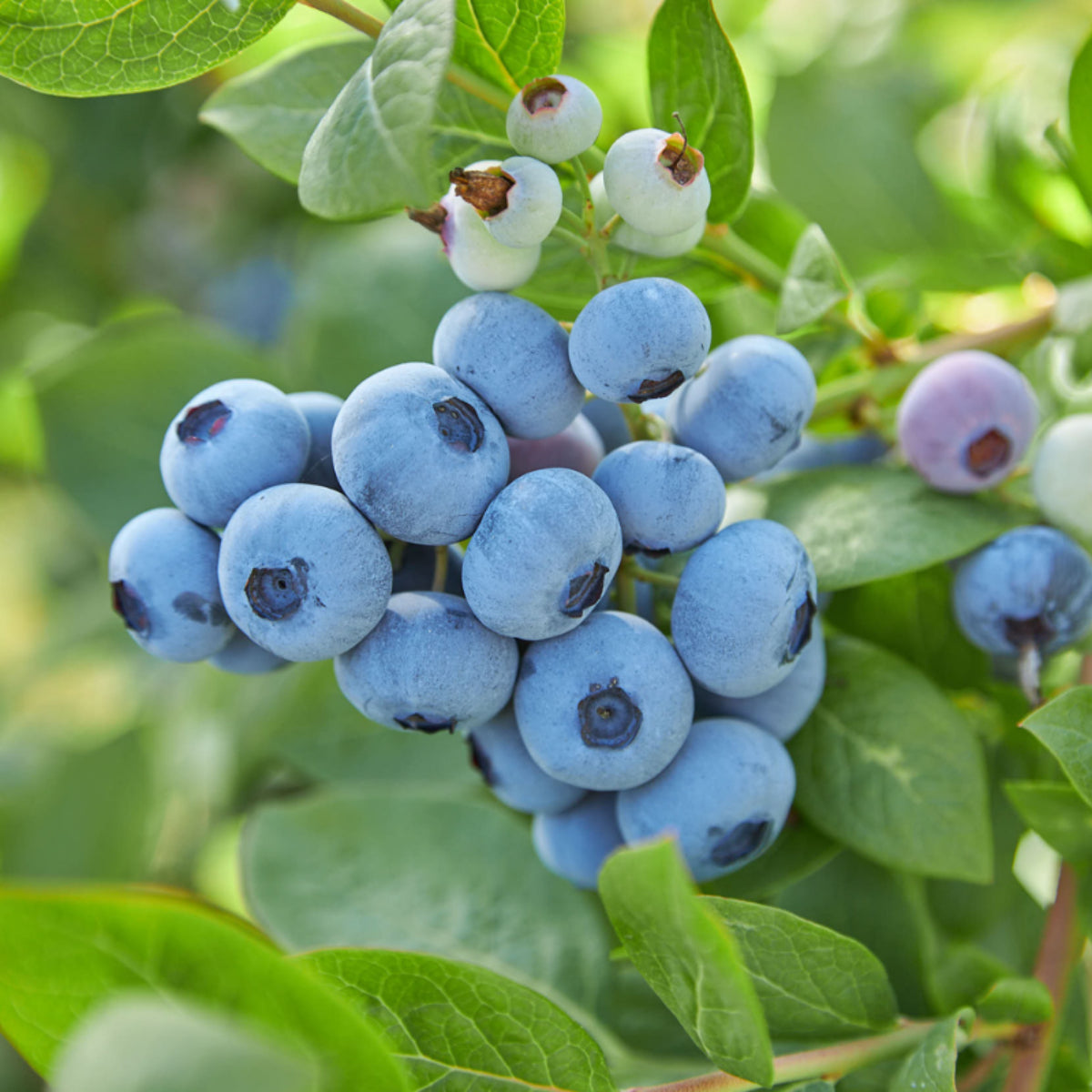
- Visual Description: Giant, firm, and plump berries displaying a luminous blue colour covered in a fine waxy bloom.
- Flavour Profile: Flavourful and well-balanced taste, combining a pronounced sweetness with a refreshing touch of acidity.
- Culinary Uses: Fantastic for fresh eating straight from the bush, perfect for crowning desserts, incorporating into pastries, or transforming into premium quality jams.
Planting Guide
Careful installation ensures vigorous establishment and maximum fruit production for decades to come.
- Ideal Location: Plant the shrub in full sun to maximize sugar development in the fruit. Choose a well-ventilated spot.
- Soil Preparation: Blueberry bushes require highly acidic soil (ideal pH between 4.5 and 5.2) that is light, sandy, and rich in organic matter. Generously incorporate sphagnum peat moss, acidic compost, or elemental sulfur if your soil is too alkaline.
- Planting: Dig a hole twice as wide as the root ball. Set the crown at ground level, then backfill with your amended soil mixture and lightly tamp. Space plants 1.2 to 1.5 metres (4 to 5 feet) apart.
- Pollination: This variety is self-fertile, but yields are significantly higher in both quantity and berry size when another cultivar blooms nearby at the same time.
- Suggested Partners: Vaccinium corymbosum 'Bluecrop', 'Duke', or 'Draper'.
Care and Maintenance Guide
- Water: Keep the soil uniformly moist but never waterlogged. Water consistently and deeply during fruit development and ripening, as well as during hot, dry summer spells.
- Apply: Use a fertilizer specially formulated for acid-loving plants (such as for azaleas and rhododendrons) in early spring to support growth without altering the soil pH.
- Prune: Cut back in late winter or very early spring before new growth begins. Remove dead, diseased, or broken wood, and eliminate the oldest canes (over 5 or 6 years old) to ground level to stimulate the renewal of productive stems.
- Protect:
- Bird Protection: Install bird netting as soon as the berries begin to turn blue to secure your harvest.
- Winter Protection: This shrub withstands cold without artificial protection thanks to its Zone 4 hardiness. Apply a thick layer of organic mulch at the base to stabilize soil temperature and retain moisture.
Plant details
Dimensions
Dimensions
Spacing
127 - 150 cm
Spread
120 - 150 cm
Height
120 - 150 cm
Spacing
50 - 60 in.
Spread
48 - 60 in.
Height
48 - 60 in.
Characteristics
Characteristics
Habit:
- Bushy
- Upright
Flowering colours:
- White
Plant needs
Plant needs
Watering:
- Moderate
Maintenance:
- Medium
Soil requirement:
- Acidic
- Well-drained
- Rich
- Sandy
Features
Features
Resistance:
- White-tailed deer
- Rabbits and hares
- Severe cold
- Diseases
Attract:
- Pollinators
- Birds
- Butterflies
- Beneficial insects
Use:
- Hedges
- Mass planting
- Flowerbeds
- Ground planting
Attribute:
- Autofertile
- Fall coloration
- Edible fruit
- Produces berries