
Comptonia peregrina
Comptonia peregrina – Sweetfern
Exposure
- Sun
- Partial shade
Rusticity
Bloom time
- April
- May
- Aromatic foliage with captivating scent
- Fixes soil nitrogen naturally
- Perfect for stabilizing steep banks
- Extreme resistance to severe cold
- Unique fern-like shrub silhouette
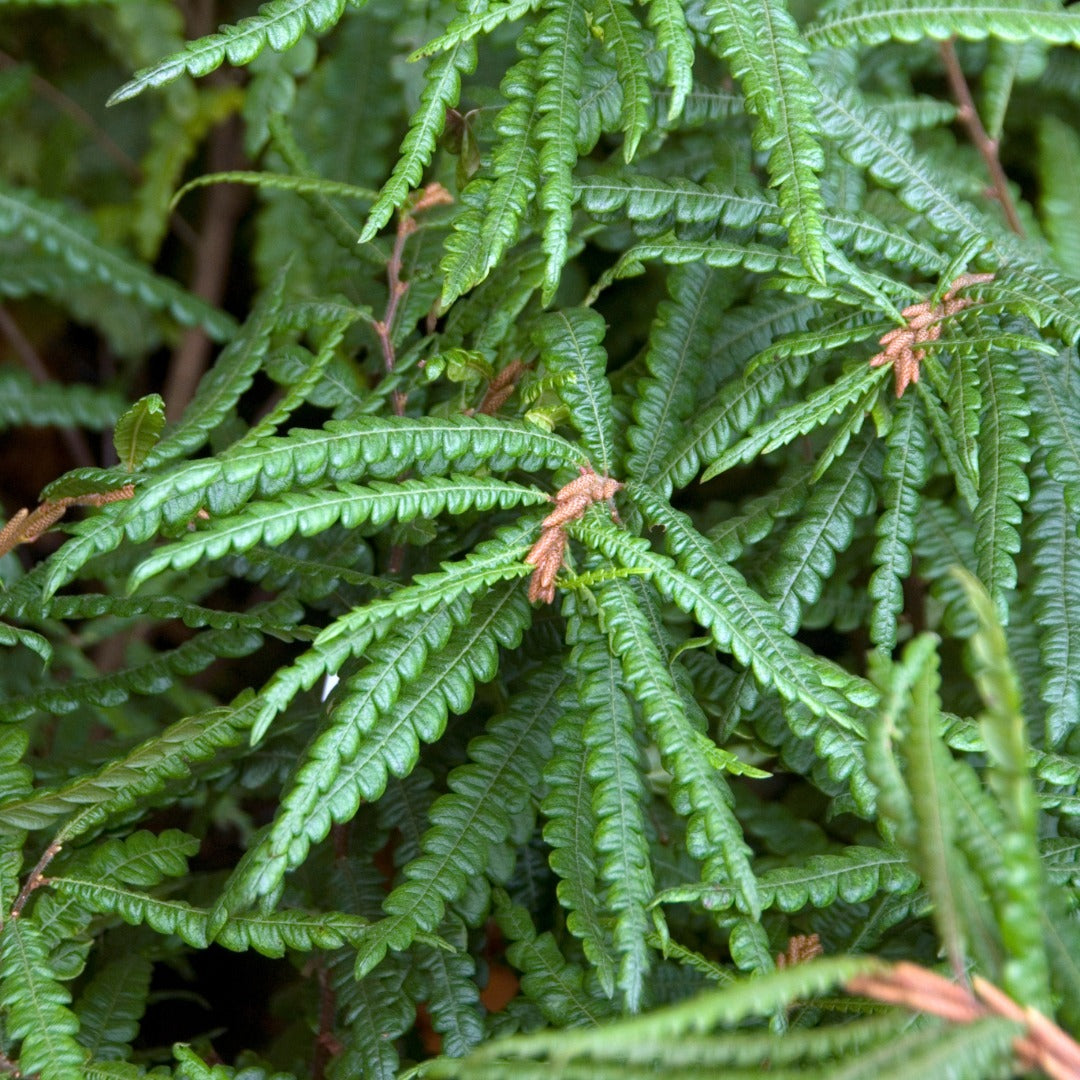
Sweetfern structures open spaces with its unique shrubby fern-like appearance and releases a captivating aromatic scent at the slightest touch. This ultra-hardy native subshrub efficiently colonizes the poorest soils and degraded slopes thanks to its unique ability to fix atmospheric nitrogen. Adopt it to sustainably green up challenging areas while enjoying its textured foliage that shifts from bright green to shades of orange and copper with the first autumn frosts.
Characteristics
- Foliage : Deciduous, alternate, long, and deeply notched leaves, strangely resembling fern fronds. They display a textured dark green in summer before turning rich amber and russet hues in autumn.
- Flowering / Fruiting / Stems : Inconspicuous catkins in spring followed by small, round fruits hidden in bristly bur-like clusters. The brownish stems exude a highly fragrant essential oil when crushed.
- Light : Performs at its best in full sun or partial shade.
- Habit : Bushy, spreading, and low-growing, forming a dense groundcover over time through creeping rhizomes.
- Growth : Medium growth rate, reaching a maximum height of about 90 cm and a spread of up to 120 cm.
- Soil : Adapts flexibly to acidic, sandy, gravelly, and dry soils. Avoid heavy or poorly drained soils completely.
- Temperature : Excellent hardiness, withstanding winters effortlessly down to zone 2.
- Resistance : Tolerates established drought, salt spray, infertile soils, and demonstrates superb immunity to common diseases.
Use
- Types of use : Ideal for stabilizing embankments, greening up rock gardens, edging open woodlands, or covering ungrateful ground areas in mass plantings.
- Decorative advantages : Brings an incomparable fine and wild texture to the landscape. Its woody fragrance deters mosquitoes near outdoor living areas, and its autumn colour changes animate the garden.
Maintenance
- Watering : Water regularly during the first year following planting. Once the root system is well established, allow the soil to dry out completely between waterings, as it tolerates drought superbly.
- Fertilization : Avoid any fertilizer applications. This native plant enriches the soil on its own by fixing atmospheric nitrogen.
- Pruning : Prune lightly early in the spring to remove dead wood or to densify the habit if necessary, though it naturally maintains a beautiful silhouette.
- Planting : Provide a spacing of 90 to 120 cm to allow it to spread freely without smothering neighbouring plants.
Plant details
Dimensions
Dimensions
Characteristics
Characteristics
Habit:
- Bushy
- Spreading
Flowering colours:
- Brown
Plant needs
Plant needs
Watering:
- Tolerates extremely dry soil
- Tolerates dry and well-drained soil
- Moderate
Maintenance:
- Easy
Soil requirement:
- Well drained
- Acidic
- Poor
- Sandy
- Gravelly
Features
Features
Resistance:
- White-tailed deer
- Hare and rabbit
- Heat
- Cold
- Disease
- Drought
- Salt
Attract:
- Beneficial insects
Use:
- Border
- Groundcover
- Mass planting
- Flower bed
- Rock garden
- In-ground
Attribute:
- Autumn colour
- Slow growth
- Native
- Fragrant
- Small landscaping and garden

Related articles
-
Trees and shrubs for small space landscaping
Read the articleHaving an exceptional garden is possible, even in the city! Discover our selection of trees and shrubs perfect for small lots, and transform your outdoor space into a green oasis.
-
When and how to plant shrubs: successful planti...
Read the articleDiscover our complete guide to mastering shrub planting and care. Learn the best planting times, essential techniques, along with tips for watering, fertilizing, and managing common issues. Our practical advice...
-
Choosing shrubs to plant
Read the articleIn exterior design, shrubs represent furniture. They set the scene and set the tone for the flower bed. Shrubs constitute the living architectural elements of the landscaped garden. As proof,...
-

Shrubs: beautiful all year long
Read the articleLe grand choix d’espèces fournit l’occasion de varier les formes, les feuillages, et de créer des floraisons successives, bref, de composer un jardin magnifique à longueur d’année. Pour toutes ces...