
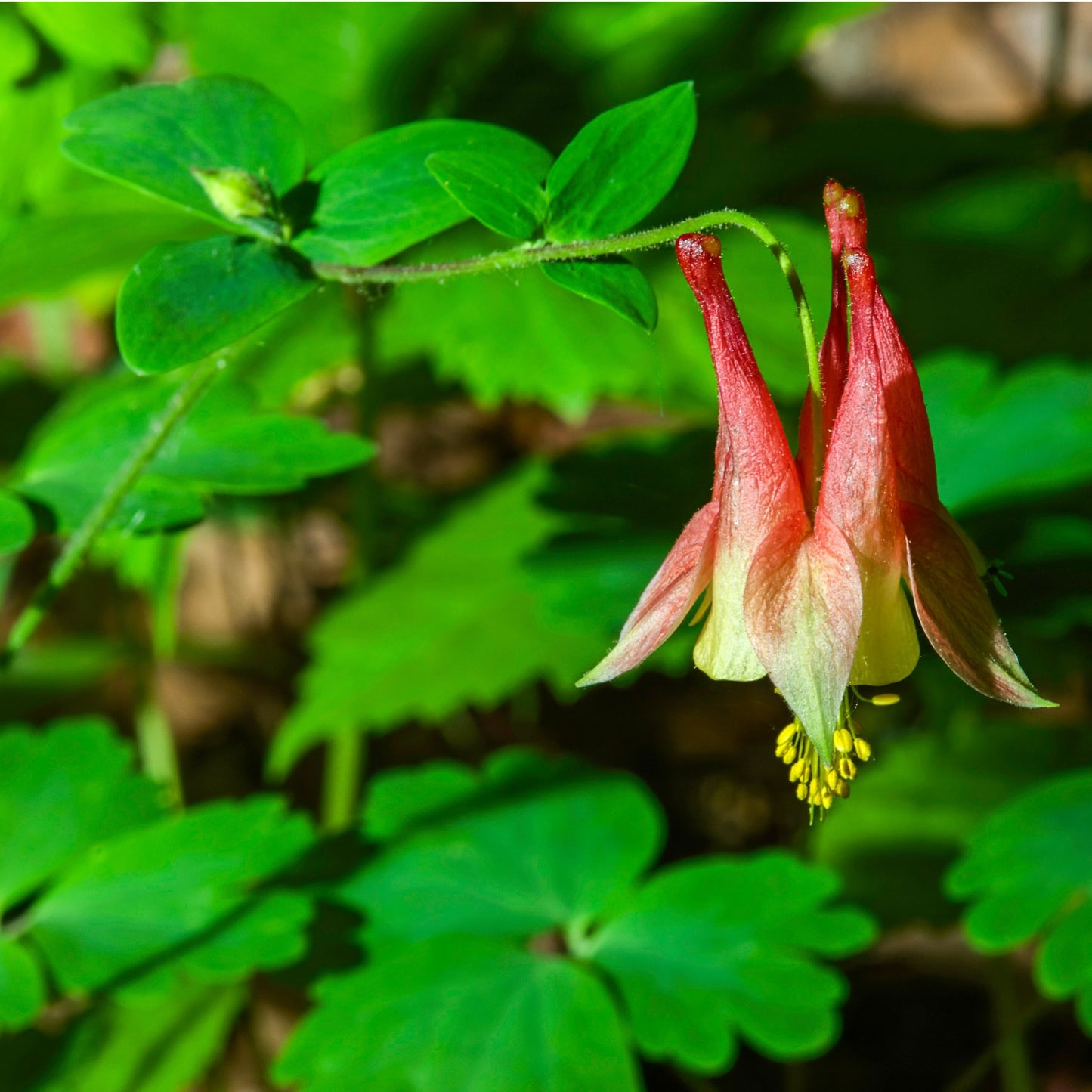
Aquilegia canadensis
Aquilegia canadensis – Wild Red Columbine
Exposure
- Partial shade
- Shade
- Sun
Rusticity
Bloom time
- May
- June
- Natural hummingbird magnet
- Robust Canadian native
- Brilliant spring bloom
- Perfect for shade
- Self-seeds with grace
The Wild Red Columbine breathes wild vitality into your woodland settings and shaded gardens with its suspended bicolor bells swaying in the breeze. This robust Canadian native charms with its natural elegance and unique ability to attract hummingbirds early in the season. It stands out as a must-have for creating effortless naturalistic scenes, colonizing challenging spaces with unparalleled grace.
Characteristics
- Foliage: Features delicately divided, light bluish-green foliage reminiscent of the fineness of ferns. Deciduous, it remains attractive until late summer if the soil stays cool.
- Flowering: Deploys spectacular nodding flowers with bright red petals and contrasting yellow spurs, carried on slender but sturdy stems from May to June.
- Light: Thrives in part shade to full shade, though it tolerates full sun if the soil maintains consistent moisture.
- Habit: Presents an erect and bushy habit, forming an airy and graceful clump.
- Growth: Displays rapid growth, reaching approximately 60 cm in height with a 30 to 45 cm spread.
- Soil: Prefers soil rich in organic matter, well-drained and cool, though it adapts to rocky or poorer conditions.
- Temperature: Excellent Canadian hardiness, adapted up to zone 3.
- Resistances: Resists intense cold and tolerates proximity to black walnuts.
Use
- Types of use: Ideal for woodland gardens, shaded rockeries, border massifs, or in containers to brighten a low-light patio.
- Decorative advantages: Brings a delicate vertical structure and a touch of brilliant color that illuminates dark corners of the garden. Its flowers instantly catch the eye and attract winged wildlife.
Maintenance
- Watering: Maintain uniformly moist soil, especially during summer droughts. Water at the base to avoid wetting the foliage.
- Fertilization: Apply rich compost or a balanced fertilizer in early spring to support blooming.
- Pruning: Cut back flower stems after blooming to stimulate new foliage, or leave them in place if you wish to encourage natural self-seeding.
- Planting: Space plants 30 to 40 cm apart to allow for good air circulation. Plant ideally in spring or fall.
- Winter Protection: No specific protection is required due to its great hardiness. An organic mulch helps protect roots from freeze-thaw cycles.
Plant details
Dimensions
Dimensions
Characteristics
Characteristics
Habit:
- Upright
- Bushy
Flowering colours:
- Red
- Yellow
Plant needs
Plant needs
Watering:
- Moderate
- Tolerates moist soil
Maintenance:
- Easy
- Cut back
- Remove spent flowers
Soil requirement:
- Rich
- Well-drained
- Adaptable
- Humus-rich
Features
Features
Resistance:
- White-tailed deer
- Hare and rabbit
- Cold
Attract:
- Hummingbirds
- Butterflies
- Pollinators
Use:
- Border
- Massif
- Flower bed
- Rock garden
Attribute:
- Native
- Early bloom
- Shade

Related articles
-
Perennials for all occasions
Read the articleOsez créer des associations inédites qui sauront refléter votre personnalité, même si pour cela vous deviez déplacer certaines vivaces pour mieux les mettre en valeur.
-
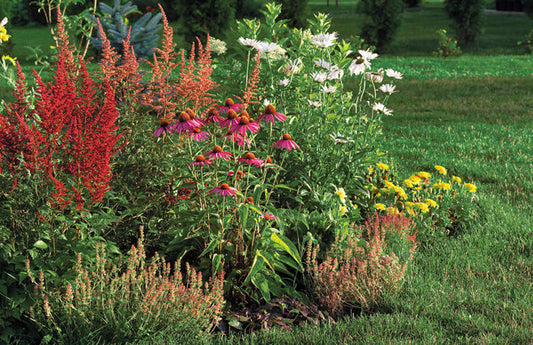
Landscaping with perennials
Read the articleVariétés à découvrir, la tomate se savoure crue, en sandwich, en bruschetta ou en salade. Cuite, c'est l'ingrédient de base de sauces, soupes et salsas.
-
Perennial Care Guide: How to Prune and Fertiliz...
Read the articleRevitalize your garden beds and extend your flowering season with our simple pruning and fertilizing techniques tailored for local hardiness zones.
-
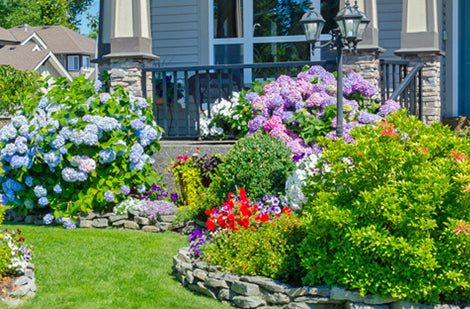
How to plant perennials in your garden
Read the articleEn pénétrant au jardin, ce sont souvent les plantes vivaces que l’on remarque en premier. Un massif de sauges, d’hémérocalles, d’astilbes, d’échinacées ou de lavande offre un spectacle d’une beauté...