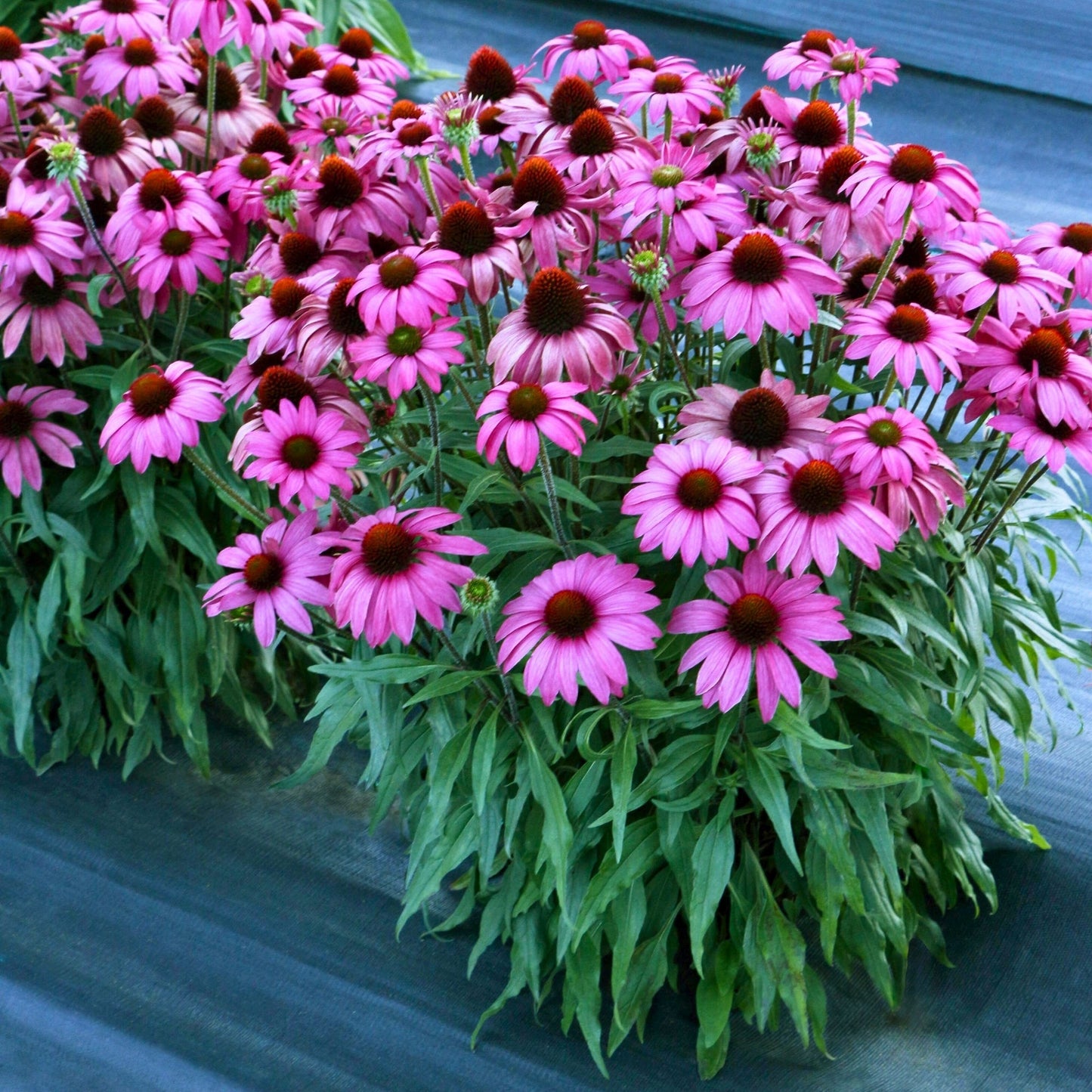
Get ready for a vibrant show with Echinacea PRIMA™ ‘Berry’! This petite powerhouse perennial stands out with its deep berry-pink flowers, whose petals gracefully drape slightly downward. A variety destined for a starring role in the garden, it flaunts very large blooms atop a tight, compact habit, offering a spectacular and long-lasting display perfect for brightening your borders and containers.
Characteristics
Foliage: Dense green foliage, forming a sturdy, very compact clump with multiple crowns. Foliage is deciduous (disappears in winter).
Flowering: Produces very large, deep berry-pink flowers with petals that gracefully drape slightly downward. These dazzling blooms abundantly blanket the plant. Flowering is long, extending from June to October, and is remarkably dense from the first year.
Light Requirements: Needs full sun (6+ hours per day) for optimal flowering and colouration.
Habit: Very compact, dense, and clumping habit with a mounding shape.
Growth: Its growth is fast. Reaches a mature height of approximately 35 cm (14 inches) and a spread of 60 cm (24 inches), with a flower height of about 45 cm (18 inches).
Humidity: Requires average water needs. Tolerates drought once established. Also humidity tolerant.
Soil: Adapts to average, well-drained soil.
Temperature: Extremely hardy and tolerant of heat and humidity. Cold hardy.
Watering: Average watering. Once established, it tolerates low water usage and drought.
Resistances: Deer resistant. Tolerant of hot, dry sites and humidity.
Usage
Types of Use: Excellent for front of beds, borders, mixed garden beds, and containers. Perfect as a cut flower for bouquets. Beneficial for pollinators and attracts butterflies. Its seed cones provide food for birds in winter.
Decorative Benefits: Its deep berry-pink colour and spectacular flowers create a dramatic visual impact. Its compact habit makes it an ideal plant for the foreground or small spaces, bringing a touch of intense colour and prolonged visual interest from early summer until frost.
Maintenance
Fertilization: An annual application of compost in spring can promote healthy growth and generous flowering, but it is tolerant of average soils.
Pruning: Deadhead spent flowers to encourage new growth and prolong the bloom. Leave flower cones in place in the fall for winter interest and bird food.
Plantation:
Spacing: Approximately 45 to 60 cm (18 to 24 inches) apart to allow for proper clump development.
Depth: Plant at the same depth as it was in its container.
Period: Spring or early fall are the best times for planting.
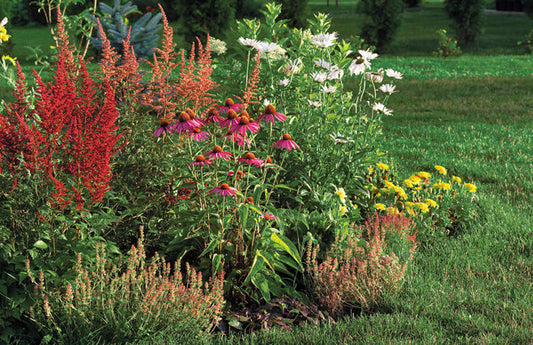
Osez créer des associations inédites qui sauront refléter votre personnalité, même si pour cela vous deviez déplacer certaines vivaces pour mieux les mettre en valeur.
Variétés à découvrir, la tomate se savoure crue, en sandwich, en bruschetta ou en salade. Cuite, c'est l'ingrédient de base de sauces, soupes et salsas.
En pénétrant au jardin, ce sont souvent les plantes vivaces que l’on remarque en premier. Un massif de sauges, d’hémérocalles, d’astilbes, d’échinacées ou de lavande offre un spectacle d’une beauté...