

Lonicera caerulea 'Boreal Beauty'
'Boreal Beauty' Haskap - Lonicera caerulea 'Boreal Beauty'
'Boreal Beauty' Haskap - Lonicera caerulea 'Boreal Beauty'
Exposure
- Sun
- Part shade
Rusticity
Bloom time
- May
- June
- Large fleshy highly flavourful fruits
- Late maturity extending harvest season
- Robust shrub with extreme hardiness
- Excellent resistance against plant diseases
- Perfect choice for edible landscaping
Discover the 'Boreal Beauty' Haskap, an exceptional late-season variety from the University of Saskatchewan's breeding program! This remarkable shrub truly lives up to its name, displaying a highly elegant, upright habit and producing massive, oval berries that ripen late in the season. Its delayed bloom schedule protects its buds from the harshest spring frosts, ensuring a bountiful harvest long after other varieties have finished producing. It is the perfect choice for extending the pleasure of picking healthy, delicious fruit directly from your backyard.
The Harvest: Yield and Flavour
The 'Boreal Beauty' Haskap stands out for its late harvest. Its fleshy fruits possess an incredible firmness that allows them to hang on the bush without softening, making a staggered harvest easy to enjoy.
- Harvest period: Late July - Early August
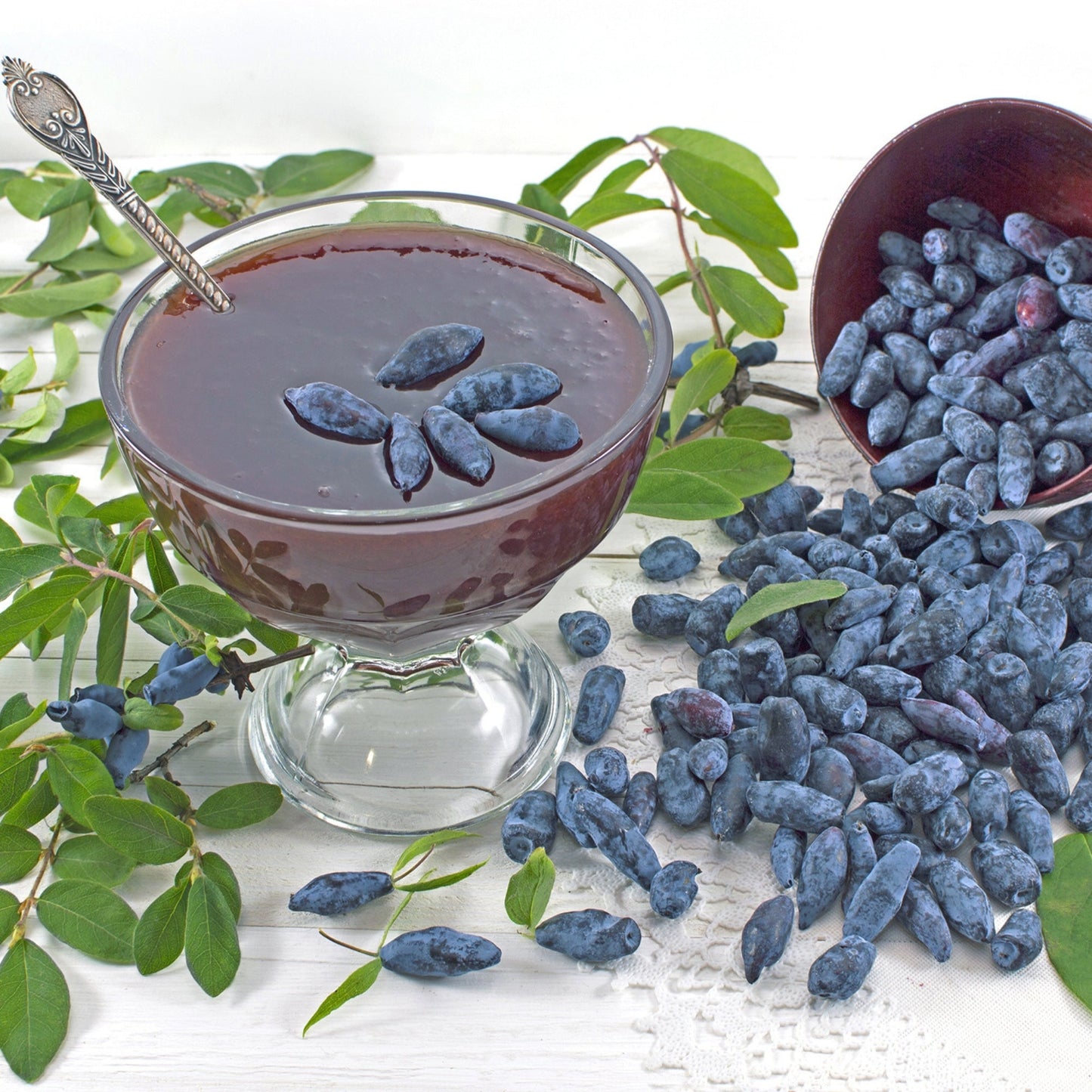
- Visual description: Very large, heavy, symmetrically oval berries boasting a magnificent deep blue color covered in a thick waxy bloom. Its tough skin and firm flesh guarantee excellent holding power after harvest.
- Flavour profile: Sweet, rich, and perfectly balanced. Less acidic than earlier varieties, it unveils intense fruity aromas that instantly appeal to both children and adults.
- Culinary uses: Delicious for fresh eating straight from the garden, it transforms beautifully into thick jams, rustic pies, and coulis, or freezes whole for your winter recipes.
Planting Guide
To successfully establish your 'Boreal Beauty' Haskap and encourage vigorous growth, follow these key steps:
- The ideal location: Plant your 'Boreal Beauty' in full sun to maximize photosynthesis and concentrate sugars in the fruit. Its strong branches and naturally vertical habit require no structural support or staking.
- Soil preparation: This shrub prefers a rich, loose, well-drained soil that stays cool and moist. Highly versatile, it tolerates neutral to slightly acidic soils, making it much easier to grow than traditional blueberries. Mix a generous amount of compost into the soil when planting.
- Planting out: Dig a hole twice as wide as the root ball. Position the plant so the base of the stems is buried slightly (about 2 to 3 cm below the surrounding ground level) to stimulate the growth of vigorous new shoots from the root crown. Tamp gently and water thoroughly. Space your plants 1.2 to 1.5 metres apart.
- Pollination:
- Type: Self-sterile. The 'Boreal Beauty' Haskap requires the presence of another compatible haskap variety that blooms late to ensure successful cross-pollination.
- Suggested partners: 'Boreal Beast' (the ideal match) or 'Boreal Blizzard'.
Care and Maintenance Guide
- Watering: Keep the soil consistently moist but never waterlogged during the first two years. Regular watering while the berries are forming and swelling in the heat of mid-summer is crucial for achieving large-calibre fruit.
- Fertilization: Top-dress with a generous layer of mature compost around the base every spring. An application of natural fertilizer formulated for small fruits at the start of the season effectively stimulates healthy, robust foliage.
- Pruning: This shrub requires very little effort. Do not prune the branches for the first 3 to 4 years. Afterward, perform a maintenance pruning in late winter to remove dead or weak wood from the center to maximize sunlight penetration into the canopy.
- Protection:
- Against birds: Birds highly covet these large blue berries. Deploy protective netting as soon as the fruit begins to color to safeguard your harvest.
- Winter care: Exhibiting exceptional cold hardiness (Zone 2), the 'Boreal Beauty' Haskap easily withstands the most intense Canadian winters. Its late flowering virtually eliminates any risk of damage caused by late spring frosts.
Plant details
Dimensions
Dimensions
Characteristics
Characteristics
Habit:
- Upright
- Rounded
Flowering colours:
- White
- Yellow
Plant needs
Plant needs
Watering:
- Moderate
Maintenance:
- Easy
Soil requirement:
- Rich
- Moist
- Well-drained
Features
Features
Resistance:
- Cold
- Disease
Attract:
- Birds
- Pollinators
Use:
- Hedge
- Massed
- Border
- Container
- Open Ground
Attribute:
- Autumn Colour
- Edible
- Fast Growth
- Small Landscaping And Garden
- Produces Berries