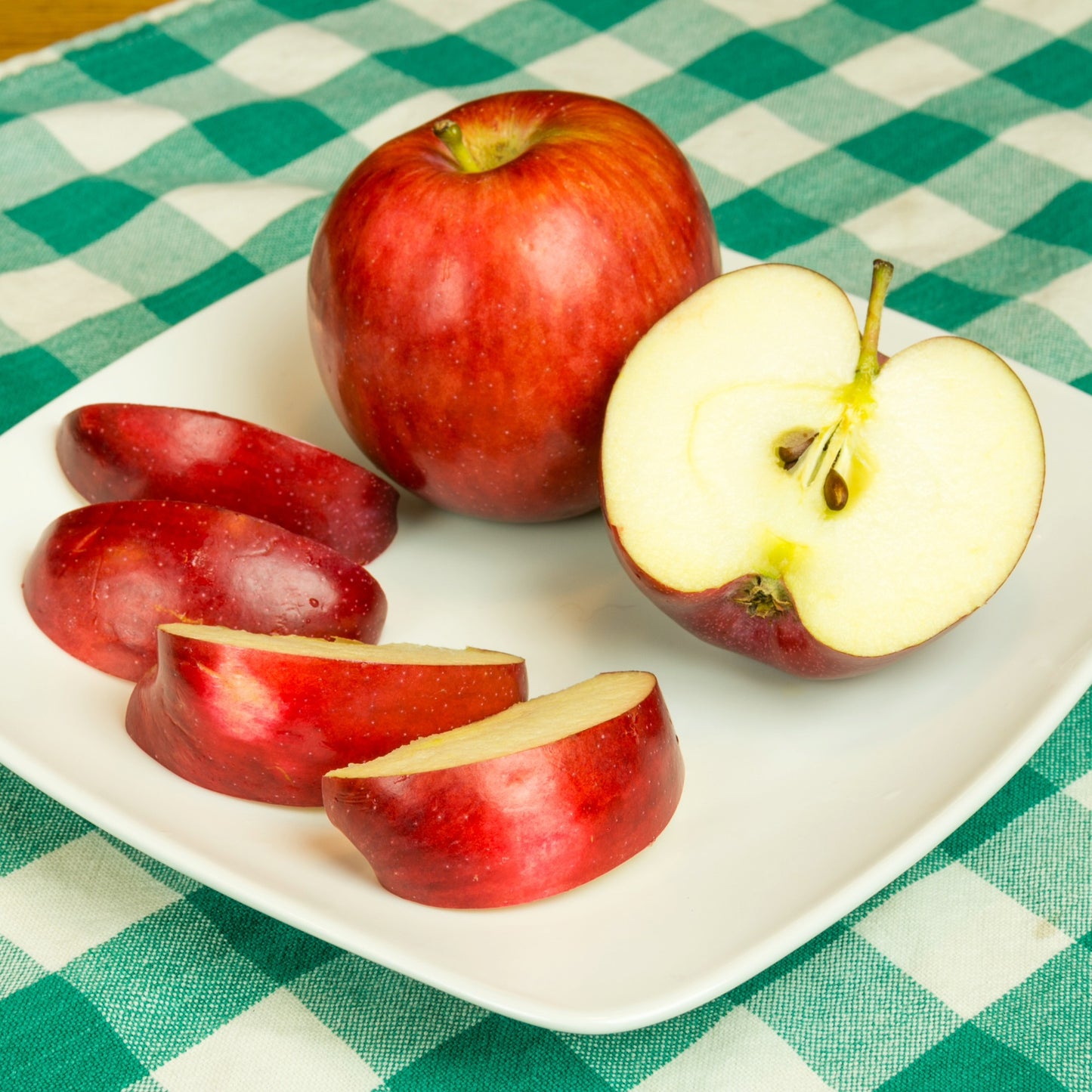


Malus domestica 'Empire'
'Empire' Apple Tree - Malus domestica 'Empire'
'Empire' Apple Tree - Malus domestica 'Empire'
Exposure
- Sun
Rusticity
Bloom time
- May
- Crisp texture with very juicy, creamy white flesh.
- Balanced sweet-tart flavour, inherited from the McIntosh.
- Excellent storage life and superior bruising resistance.
- Compact tree habit, perfect for smaller home gardens.
- Royal red fruit, providing striking visual appeal in the fall.
Discover the perfect balance: the 'Empire' apple tree. A true star of North American orchards, this variety—a cross between 'McIntosh' and 'Red Delicious'—outshines its parents with a firmer texture and better bruising resistance. With its sweet-tart flavour and deep royal red skin, it is the ultimate multipurpose apple, as delicious for fresh snacking as it is for cooking.
Characteristics
- Foliage: Oval, dark glossy green leaves. The tree develops a compact and well-structured canopy, providing a tidy visual appeal in the landscape.
- Flowering / Fruit: Fragrant white flowers delicately tinged with pink in spring. Produces medium-sized fruit with an attractive dark purple-red skin. The flesh is creamy white, crisp, and exceptionally juicy. Ripens for harvest in early October.
- Rootstock and Dimensions: Grafted on semi-dwarf rootstock, reaching a height of 4 to 5 metres with a spread of 3 to 4 metres at maturity. It features a naturally rounded habit.
- Pollination: Self-sterile variety (Group 3). Requires a compatible pollinating partner such as 'Cortland', 'Gala', 'Honeycrisp', or 'Ambrosia'.
- Light: Full sun required to maximize intense fruit coloration and encourage consistent cropping.
- Habit: Naturally balanced form with strong branch angles, making fruit load management easier.
- Growth: Medium vigour, making it an excellent choice for medium-sized gardens.
- Soil: Thrives in rich, deep, well-drained soil. Tolerates a wide range of soil types, provided they are not excessively wet.
- Temperature: Very hardy (Zone 4), well-suited for Quebec and Canadian winter conditions.
- Resistance: Less susceptible to apple scab than 'McIntosh', though monitoring for fire blight is recommended.
Usage
- Types of Use: Ideal choice for home orchards, school projects (due to its popularity with children), and as an ornamental fruiting tree.
- Culinary Benefits: Its crisp flesh does not soften quickly, making it an exceptional apple for lunchboxes, applesauce, and pies that hold their shape.
- Decorative Benefits: Its compact habit and dark, almost purple-red fruit create a magnificent contrast in the fall.
Maintenance
- Watering: Maintain uniform moisture, especially during summer dry spells, to avoid water stress that could affect fruit size.
- Fertilization: A spring compost application promotes healthy growth and abundant flowering the following year.
- Pruning: Perform annual thinning pruning in late winter to allow light to penetrate the centre of the tree.
- Planting: Install in a wide, deep hole, ensuring the graft union is well clear of the ground (about 5 cm).
- Preventive Treatments: Applying dormant oil is recommended in spring to dislodge overwintering insects.
- Winter Protection: Use a white protective spiral on the trunk to prevent damage from voles and deer.
Companion Planting
Promote a healthy ecosystem around your 'Empire' apple tree. Nasturtium (Tropaeolum majus) draws aphids away from the tree, while Dill (Anethum graveolens) attracts beneficial predatory wasps. To enrich the soil, plant White Clover (Trifolium repens) as a nitrogen-fixing groundcover, and grow Lemon Balm (Melissa officinalis) to attract pollinating bees.
Plant details
Dimensions
Dimensions
Characteristics
Characteristics
Habit:
- Rounded
- Upright
Flowering colours:
- White
Plant needs
Plant needs
Watering:
- Moderate
Maintenance:
- Pruning Spring
- Fertilize Regularly
Soil requirement:
- Rich
- Well Drained
Features
Features
Resistance:
- Cold
- Disease
Attract:
- Pollinators
- Birds
- Butterflies
Use:
- Isolated
- Full Ground
- Container
Attribute:
- Comestible
- Fragrant
- Early Flowering