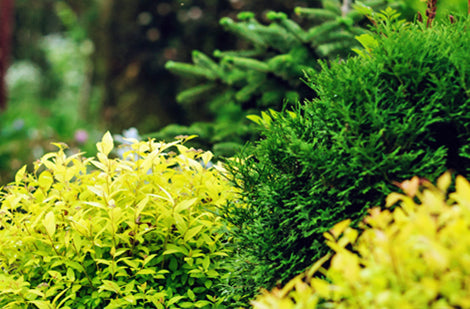
Brighten strategic areas of your landscape with Lemony Lace® Elderberry, a shrub that energizes the scenery with its incomparable radiance. Its deeply cut foliage resembles fine lace or fern fronds, emerging in shades of red and bronze in spring before transforming into a vibrant golden-yellow throughout the season. This compact and hardy variety produces delicate clusters of white flowers in spring, offering a striking contrast against the dark stems. It provides an airy texture and a rare luminosity that instantly upgrades your garden décor.
Characteristics
Foliage: Deciduous and deeply dissected, offering a very refined, feathery texture. Reddish young shoots turn bright yellow and then lime green during the summer.
Flowering / Fruiting / Stems: Produces small white flowers in conical panicles in spring, followed by bright red berries that attract birds.
Light: Requires full sun for optimal foliage colour, though it accepts partial shade.
Habit: Shrubby, compact, and mounded, with gracefully arching stems.
Growth: Displays rapid growth, reaching approximately 150 cm in height and spread.
Soil: Thrives in rich, cool, and well-drained soil.
Temperature: Hardy to zone 4.
Resistances: Stands up very well to intense cold and is naturally resistant to White-tailed deer.
Use
Types of use: Ideal for mass plantings, decorative hedges, focal specimens, or even in large containers to colour a terrace.
Decorative advantages: Creates a luminous focal point and adds a fine texture that contrasts beautifully with dark-leaved plants.
Maintenance
Watering: Maintain uniformly moist soil, particularly during heatwaves and for the first two years following planting.
Fertilization: Apply a balanced fertilizer in early spring to support its vigorous development.
Pruning: Prune lightly after flowering to maintain a compact shape or perform a severe rejuvenation pruning in early spring.
Planting: Plant in a hole enriched with compost and ensure sufficient spacing to promote air circulation.
Winter Protection: Take advantage of its high hardiness; it requires no specific protection once the plant is established.
Having an exceptional garden is possible, even in the city! Discover our selection of trees and shrubs perfect for small lots, and transform your outdoor space into a green oasis.
Discover our complete guide to mastering shrub planting and care. Learn the best planting times, essential techniques, along with tips for watering, fertilizing, and managing common issues. Our practical advice...
In exterior design, shrubs represent furniture. They set the scene and set the tone for the flower bed. Shrubs constitute the living architectural elements of the landscaped garden. As proof,...
Le grand choix d’espèces fournit l’occasion de varier les formes, les feuillages, et de créer des floraisons successives, bref, de composer un jardin magnifique à longueur d’année. Pour toutes ces...