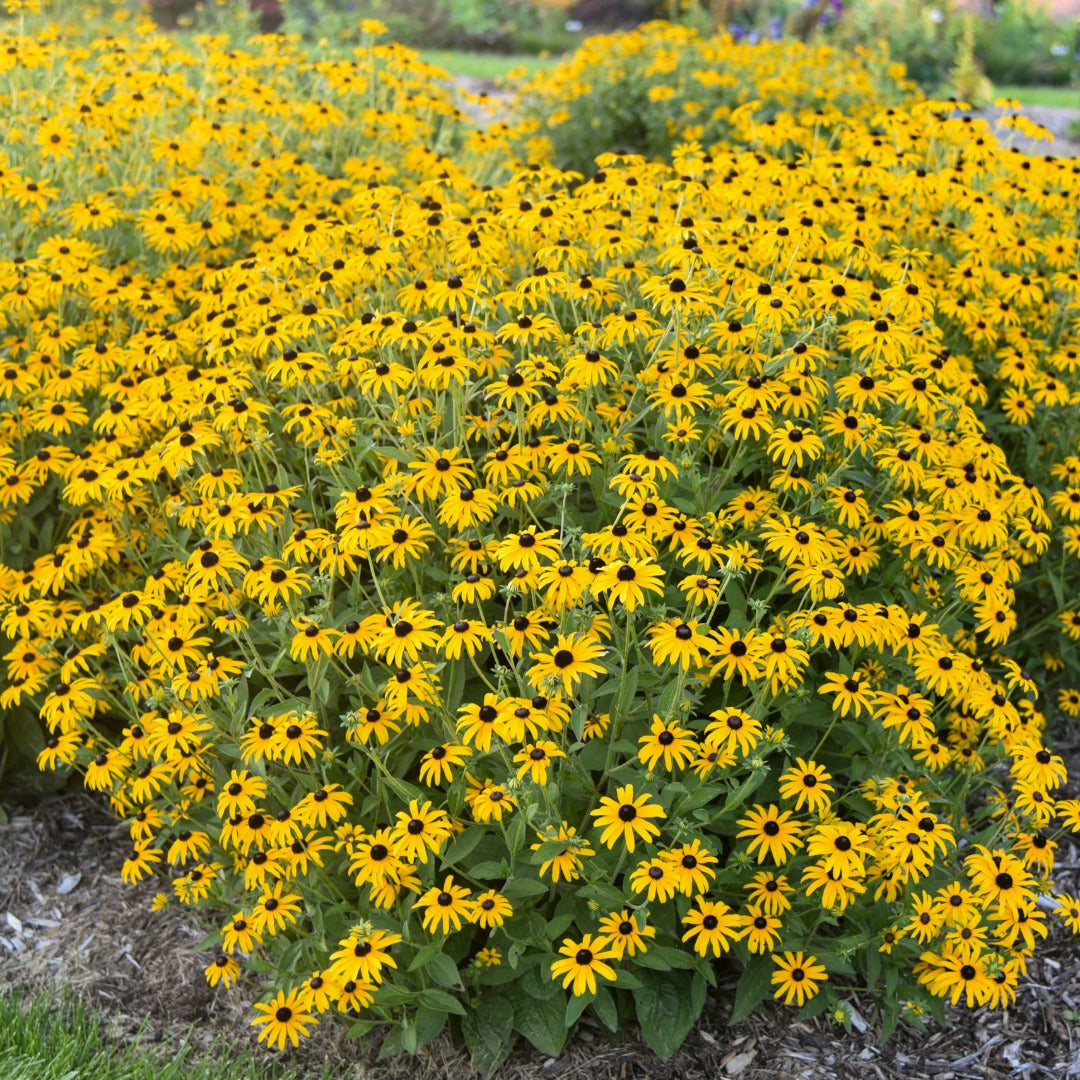
Brighten your landscape with this spectacular perennial that produces an abundance of large, golden-yellow blooms centered with dark brown cones from midsummer straight through autumn. Its robust, well-branched habit supports a massive, continuous flower show, while its sturdy foliage maintains a clean look all season long thanks to superior resistance to foliar diseases.
Characteristics
Foliage: Large, dark green, textured, deciduous leaves forming a dense, vigorous clump.
Flowering / Stems: Giant golden-yellow daisy-like flowers with rich chocolate-brown center cones, held upright on sturdy, well-branched stems.
Light: Full sun to partial shade (achieves peak flowering density in full sun).
Habit: Upright, bushy, and sturdy.
Growth: Fast-growing, reaching 80 to 95 cm in height with a spread of 90 to 105 cm.
Resistances: Excellent resistance to Septoria leaf spot; strong tolerance to summer heat, transient drought, and white-tailed deer.
Use
Types of use: Ideal for sunny mass plantings, mixed perennial borders, cottage gardens, and large patio containers.
Decorative advantages: Creates an eye-catching, long-lasting golden display, attracts pollinators, and provides outstanding cut flowers for seasonal floral arrangements. Seed cones left intact for winter add visual structure and feed songbirds.
Maintenance
Watering: Water regularly during the first growing season to establish a deep root system. Once established, allow the top layer of soil to dry out between waterings.
Fertilization: Apply a balanced slow-release granular fertilizer or top-dress with organic compost in early spring. Avoid excessive nitrogen to maintain rigid stems.
Taille: Deadhead spent flowers regularly to encourage continuous blooming. Cut all stems back to ground level in late autumn or early spring.
Planting: Plant in spring or early autumn, spacing individual plants 90 to 105 cm apart in compost-enriched soil.
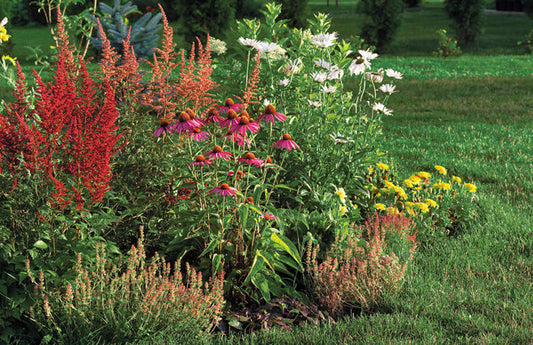
Osez créer des associations inédites qui sauront refléter votre personnalité, même si pour cela vous deviez déplacer certaines vivaces pour mieux les mettre en valeur.
Variétés à découvrir, la tomate se savoure crue, en sandwich, en bruschetta ou en salade. Cuite, c'est l'ingrédient de base de sauces, soupes et salsas.
En pénétrant au jardin, ce sont souvent les plantes vivaces que l’on remarque en premier. Un massif de sauges, d’hémérocalles, d’astilbes, d’échinacées ou de lavande offre un spectacle d’une beauté...