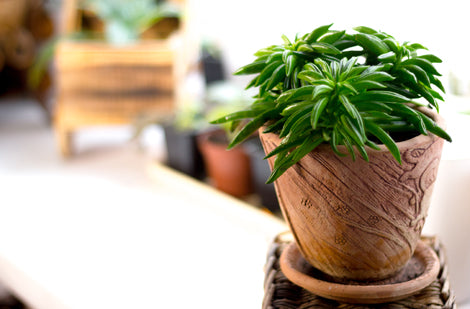
Rhipsalidopsis gaertneri
Rhipsalidopsis gaertneri (syn. Hatiora gaertneri) – Easter Cactus
Exposure
- Bright light without direct sun
- Medium light
Rusticity
Bloom time
- March
- April
- May
- June
- Spectacular star-shaped spring blooms
- Unique graceful cascading habit
- Safe for pets
- Easy to propagate by segments
- Long-lived houseplant
Celebrate the renewal of spring with the dazzling blooms of the Easter Cactus. Unlike desert cacti, this tropical wonder unfolds a profusion of star-shaped flowers in vibrant hues, transforming each segment of its foliage into a natural spectacle. Its graceful cascading habit makes it the ideal candidate to enhance your hanging baskets, bringing a touch of tropical rainforest and a unique architectural structure to your interior decor.
Characteristics
- Foliage: Segmented, flat, and fleshy bright green stems, creating a graphic and supple silhouette.
- Flowering: Spectacular explosion of symmetrical star-shaped flowers in spring (March to May).
- Light: Prefers bright but indirect light. Avoids direct sun which can scorch its segments.
- Habit: Initially bushy, it becomes gracefully pendulous with age.
- Growth: Moderate.
- Potting Soil: Requires a porous and well-aerated mix, ideally a cacti potting soil amended with organic matter.
- Temperature and Humidity: Thrives between 18°C and 22°C. Appreciates high ambient humidity and a cool winter period to bloom.
- Resistances: Good overall resistance; sensitive to root rot in case of overwatering.
Use
- Types of Use: Hanging baskets, elevated decorative pots, bright offices, or outdoors in the shade during summer.
- Decorative Advantages: Offers inverted verticality and an intense splash of color during its seasonal bloom.
Maintenance
- Watering: Water when the potting soil begins to dry on the surface during flowering. Reduce watering in winter without letting segments shrivel.
- Fertilization: Fertilize every two weeks with a flowering plant fertilizer from March to September.
- Pruning: Pinch segments after flowering to encourage denser branching if desired.
- Planting: Repot every 2 to 3 years in a well-drained pot after the flowering period.
- Winter Protection: Keep indoors, away from direct heat sources to prevent bud drop.
Plant details
Dimensions
Dimensions
Characteristics
Characteristics
Habit:
- Trailing
- Bushy
Flowering colours:
- Scarlet Red
- Pink
- Mauve
- White
Plant needs
Plant needs
Watering:
- Moderate
- Mist foliage regularly
Maintenance:
- Easy
Soil requirement:
- Well drained
- Cactus and succulent potting soil
Features
Features
Resistance:
- Low light
Attract:
Use:
- Hanging
- Gift
- Decoration
Attribute:
- Slow growth
- Non-Toxic Cat
- Non-Toxic Dog
- Shade

Related articles
-
-
Kalanchoe: The Secret to Massive Blooms That La...
Read the articleNeed lasting colour? The Kalanchoe blooms profusely for over two months! An easy succulent that tolerates neglect and adds a vibrant touch to your home.
-
Snake Plant: The Unkillable Houseplant, Perfect...
Read the articleLooking for a robust plant that thrives on neglect? Meet the Sansevieria, the champion of clean air! Learn how to care for this striking succulent, explore fascinating varieties like 'Moonshine'...
-
Edible Flowers: Top 5 for Garden and Kitchen
Read the articleOffrant une belle gamme de couleurs, de formes et de textures, les fleurs comestibles enthousiasment les amoureux de jardinage et de cuisine.
-
Tropical Flowering Plants: A touch of the exoti...
Read the articleDreaming of a getaway? Add these spectacular tropical plants to your outdoor decor and enjoy a summer with Southern vibes, right at home!
-
Keep a palm tree on the terrace - why not!
Read the articleIt’s hard to resist the call of the tropics when the sun and mild temperatures finally make an appearance. There is nothing better than a palm tree on the terrace...