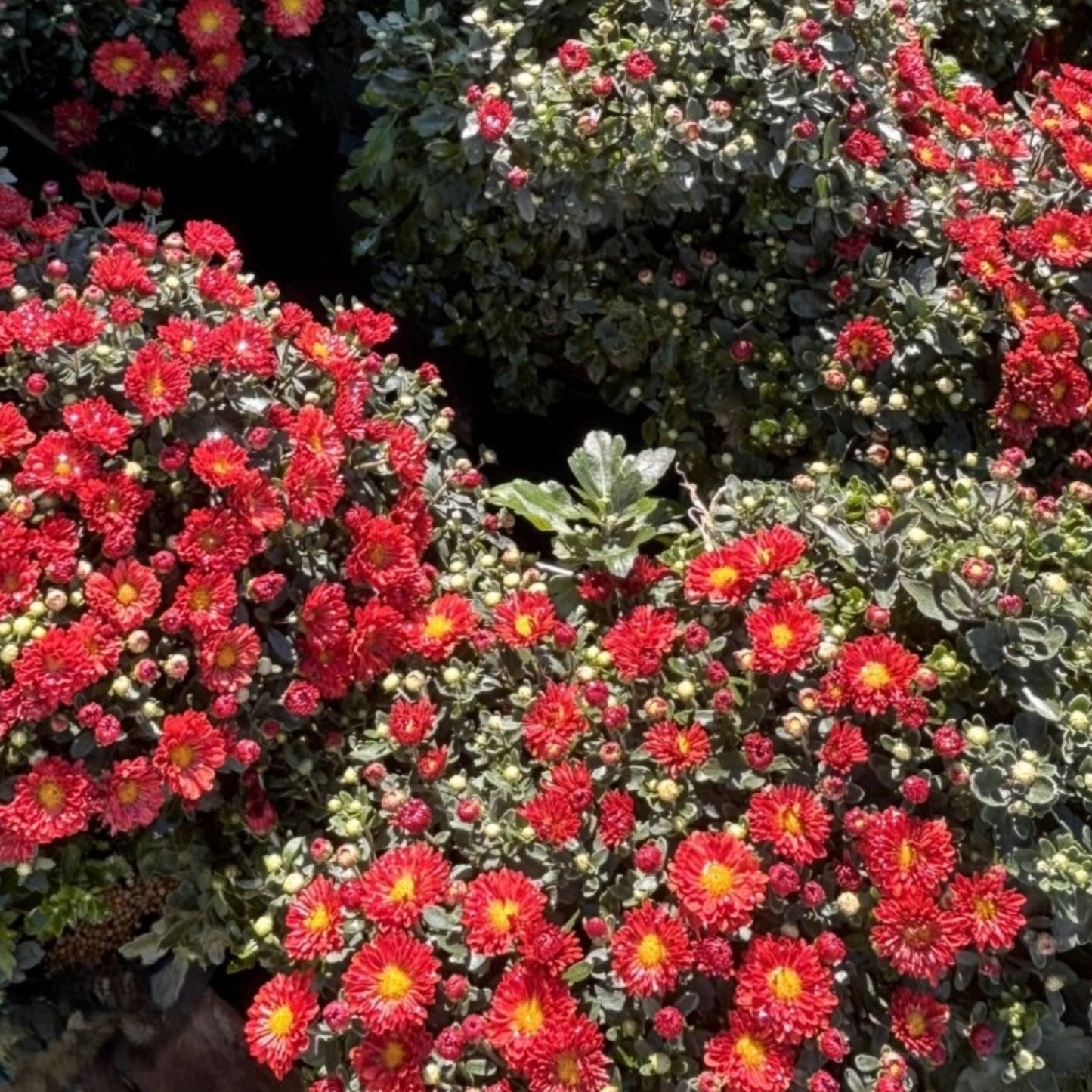
'Mammoth Red' Chrysanthemum is another star of the Mammoth™ series, renowned for its hardiness and exceptional performance. This variety's appeal is its ability to form a perfect dome covered in rich, deep red flowers, without any pruning or pinching required. It combines this unparalleled ease of care with a massive fall bloom in a classic daisy style, making it a must--have perennial for an effortless autumn garden.
Characteristics
Foliage: It develops a very dense mound of deciduous, dark green, and aromatic foliage, forming an almost perfect shrub.
Flowering: In late summer and fall, the plant literally disappears under an avalanche of flowers. They feature a classic daisy shape, with single, velvety red petals surrounding a bright yellow center.
Light: It demands full sun for maximum flowering and a very dense habit.
Habit: It naturally forms a large, perfectly rounded and uniform mound.
Growth: Fast. It reaches a height of 60 to 90 cm (2-3 feet) with a spread that can reach 90 to 120 cm (3-4 feet) after a few years.
Soil: It thrives in rich, very well-drained soil. Drainage is the key to its winter survival.
Hardiness: Exceptionally hardy for a chrysanthemum.
Resistance: It has good disease resistance and is generally ignored by deer and rabbits.
Uses
Types of Use: Its impressive size makes it an excellent choice as a standalone specimen for maximum fall impact. It is also spectacular in mass plantings or for creating a temporary border.
Ornamental Features: It offers an explosion of rich red colour in the fall. The classic daisy shape of its flowers brings a timeless and cheerful charm.
Care
Watering: Water regularly to keep the soil moist, especially the first year and during dry spells.
Fertilizing: Apply a balanced fertilizer in the spring to support its vigorous growth.
Pruning: Its maintenance is remarkably simple. No pinching is necessary during the summer. Simply cut the dead stems back to the ground in the spring, after the threat of deep cold has passed.
Planting: Plant it in the spring or fall in a sunny location with excellent drainage.
Winter Protection: A good mulch of fallen leaves applied after the ground freezes is highly recommended to ensure its survival during its first winter.
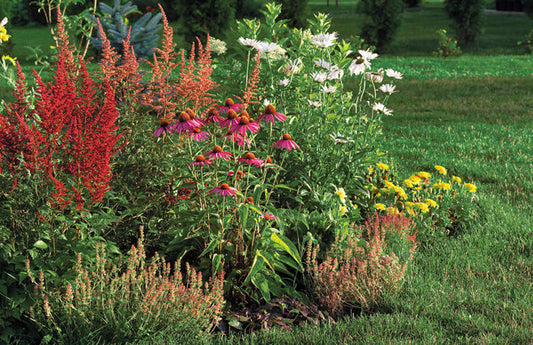
Osez créer des associations inédites qui sauront refléter votre personnalité, même si pour cela vous deviez déplacer certaines vivaces pour mieux les mettre en valeur.
Variétés à découvrir, la tomate se savoure crue, en sandwich, en bruschetta ou en salade. Cuite, c'est l'ingrédient de base de sauces, soupes et salsas.
En pénétrant au jardin, ce sont souvent les plantes vivaces que l’on remarque en premier. Un massif de sauges, d’hémérocalles, d’astilbes, d’échinacées ou de lavande offre un spectacle d’une beauté...