Dracaena indivisa
Dracaena Indivisa or Spike Plant
Exposure
- Sun
- Partial shade
Rusticity
- Trhiller Plant - Graphic Vertical Accent
- Green, sword-shaped foliage
- Easy to maintain
- Tolerates heat and drought (moderate)
- Ideal for containers and flowerbeds
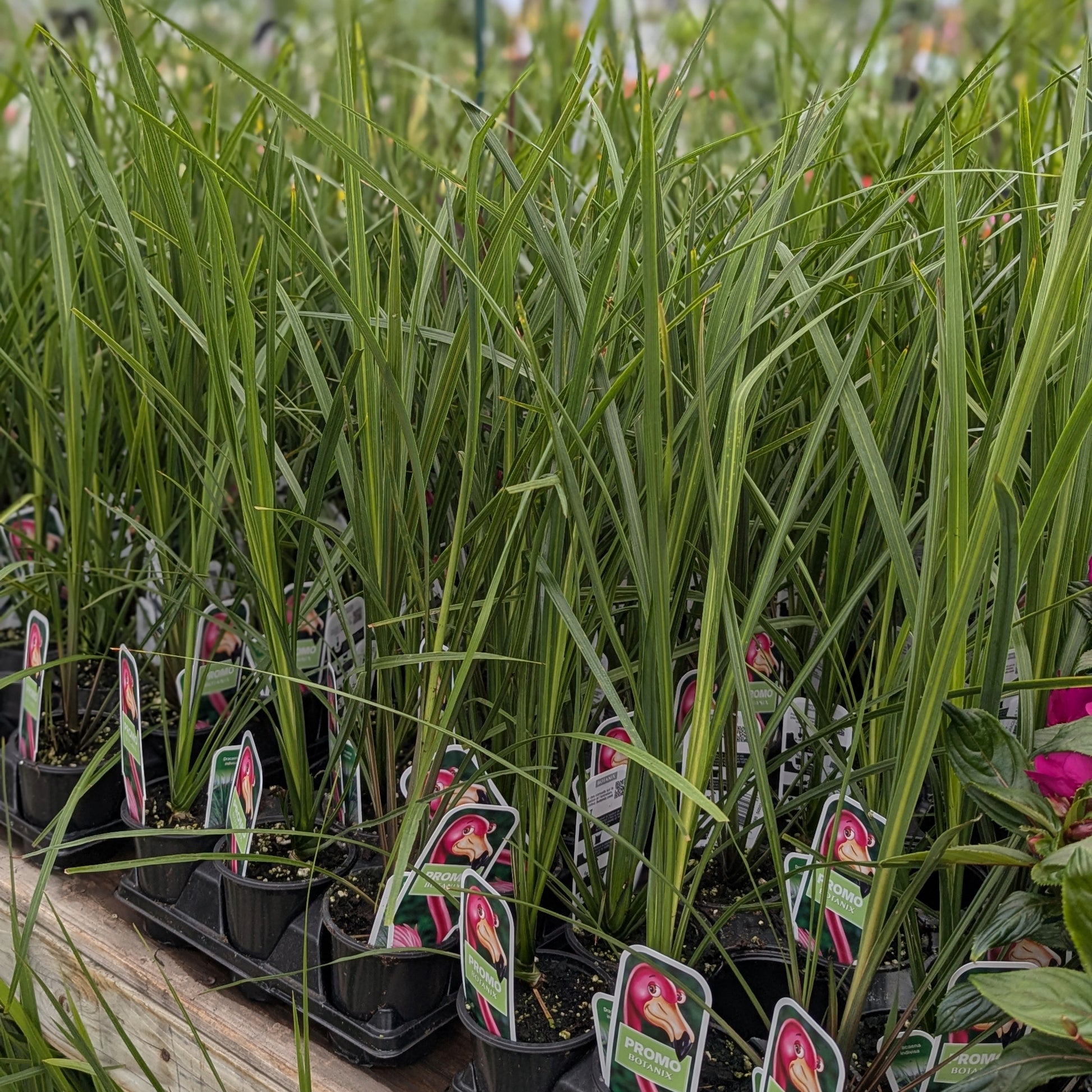
Bring a touch of exoticism and structure to your flower beds and containers with Dracaena indivisa, often sold under the name Cordyline indivisa or 'Spike Plant'. Known for its upright habit and long, sword-shaped green leaves that arch gracefully, it offers a striking contrast with other plants and adds lasting vertical interest throughout the season. Easy to care for and heat tolerant, it's a must-have for dynamic summer arrangements.
Characteristics
- Foliage : The foliage consists of long, evergreen, rigid, sword-shaped leaves, green to light green in colour. They are inserted in a round pattern on an upright stem that forms a 'false trunk' with age. The foliage arches slightly outward as it grows older.
- Light : Prefers full sun or partial shade. A minimum of 4 to 6 hours of sunlight is recommended.
- Habit : Its habit is upright, with a strong central stem and foliage that forms an erect and slightly weeping silhouette along the edges.
- Growth : Growth is relatively slow. When grown as an annual or in a pot, it generally reaches a height of 60 to 90 cm (24 to 36 inches) and a spread of 38 to 46 cm (15 to 18 inches). With many years in a pot and proper overwintering, it can reach 2 metres or more.
- Humidity : Requires moisture. The soil must be well-drained to avoid excess moisture, which can lead to root rot or botrytis. Drought-tolerant once established.
- Soil : Thrives in well-drained soil, preferably with a pH between 5.8 and 6.5. Avoid heavy clay soils. For pot cultivation, use a good quality well-drained potting mix. Be aware of fluoride toxicity in some soils/fertilizers that can cause brown spots on leaves (maintaining an adequate pH and avoiding superphosphate fertilizers can help).
- Temperature : It is a tropical plant that does not tolerate frost. To keep it in colder climates, it must be brought indoors before the first frosts, ideally in a cool location (like an orangery or unheated veranda) with a minimum temperature around 10°C (50°F), or in a bright indoor location.
- Watering : Water when the soil surface begins to dry. Maintain regular moisture but avoid standing water. Drought-tolerant once well-established, but appreciates regular watering in containers during hot weather.
Uses
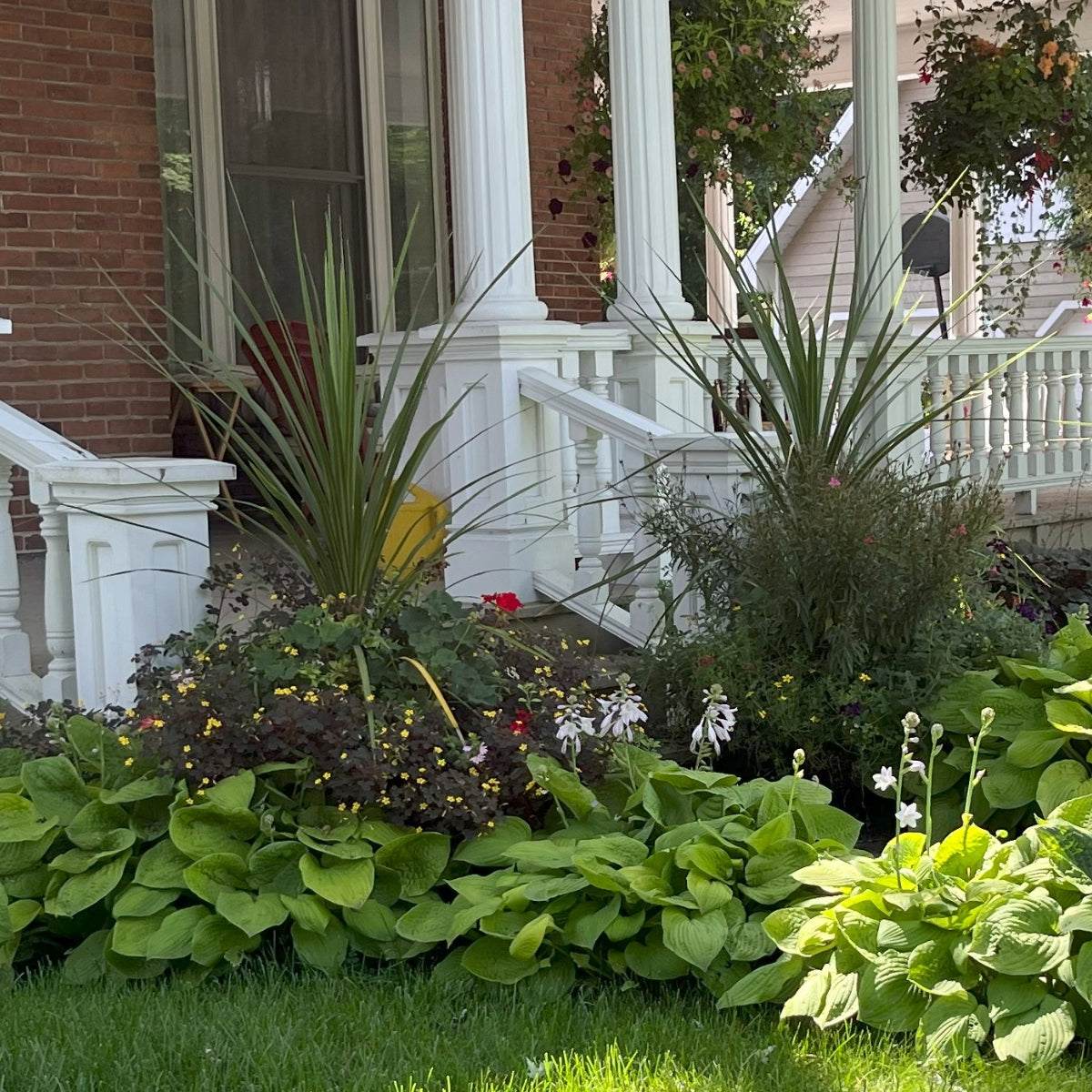
- Types of Use : Excellent as a 'thriller' (central vertical element) in mixed container arrangements, in individual pots on patios, balconies, and terraces, or integrated into flower beds as an annual to add height and textural contrast.
- Decorative Advantages : Its graphic foliage and upright habit bring architectural interest and an instant exotic touch. It highlights flowering or lower-growing foliage plants around it. It is deer and rabbit resistant.
Care
- Fertilization : Fertilize once a month during the growing season (spring to late summer) with a balanced soluble fertilizer.
- Pruning : No pruning is generally necessary. Yellowed or damaged leaves can be removed at the base as needed.
- Planting :
- Distance : If planted in the ground (as an annual), space plants 38 to 46 cm (15 to 18 inches) apart. In containers, spacing depends on companion plants, but ensure good airflow.
- Depth : Plant so that the root ball or the base of the plant is covered with soil.
- Period : Plant outdoors in the spring after all risk of frost.
Plant details
Dimensions
Dimensions
Characteristics
Characteristics
Habit:
- Upright
- Erect
Flowering colours:
Plant needs
Plant needs
Watering:
- Average
Maintenance:
- Easy
Soil requirement:
- Well-drained
- Tropical Plant Soil
Features
Features
Resistance:
Attract:
Use:
- Container
- Flowerbeds (annual)
- Patio
- Balcony
- Terrace
- Vertical Accent
- Feature Plant Arrangement
Attribute:
- Decorative foliage

Related articles
-
Annuals - dear to homeowners’ hearts
Read the articleUn coussin de fleurs qui retombe en cascade du bord de la fenêtre attire toujours le regard. Quelques pots et jardinières débordants de fleurs forment instantanément un jardin sur la...
-
Laying-out your annuals
Read the articleComme les annuelles sont souvent en fleur au moment de l’achat, il est facile de faire des essais sur place. Distribuez les rôles afin d’obtenir un ensemble harmonieux. Quelques plantes...
-
Annuals - dear to homeowners’ hearts
Read the articleQue ce soit sur le balcon de votre appartement ou sur la terrasse, ou encore aux quatre coins de la cour, rien de tel que des fleurs épanouies, colorées et...
-
Planning an outdoor project
Read the articleAvec une bonne planification et en suivant les quelques règles de base qui suivent, il vous sera facile et agréable de concevoir votre plan d’aménagement extérieur en peu de temps...
-
Vibrant Potted Annuals: Easy Planting with Eco-...
Read the articleAnnuals are easy to grow, and most bloom profusely all summer long. So, why not grow them in containers? Planting annuals in containers is a breeze when you follow the...
-
Tropical Flowering Plants: A touch of the exoti...
Read the articleDreaming of a getaway? Add these spectacular tropical plants to your outdoor decor and enjoy a summer with Southern vibes, right at home!