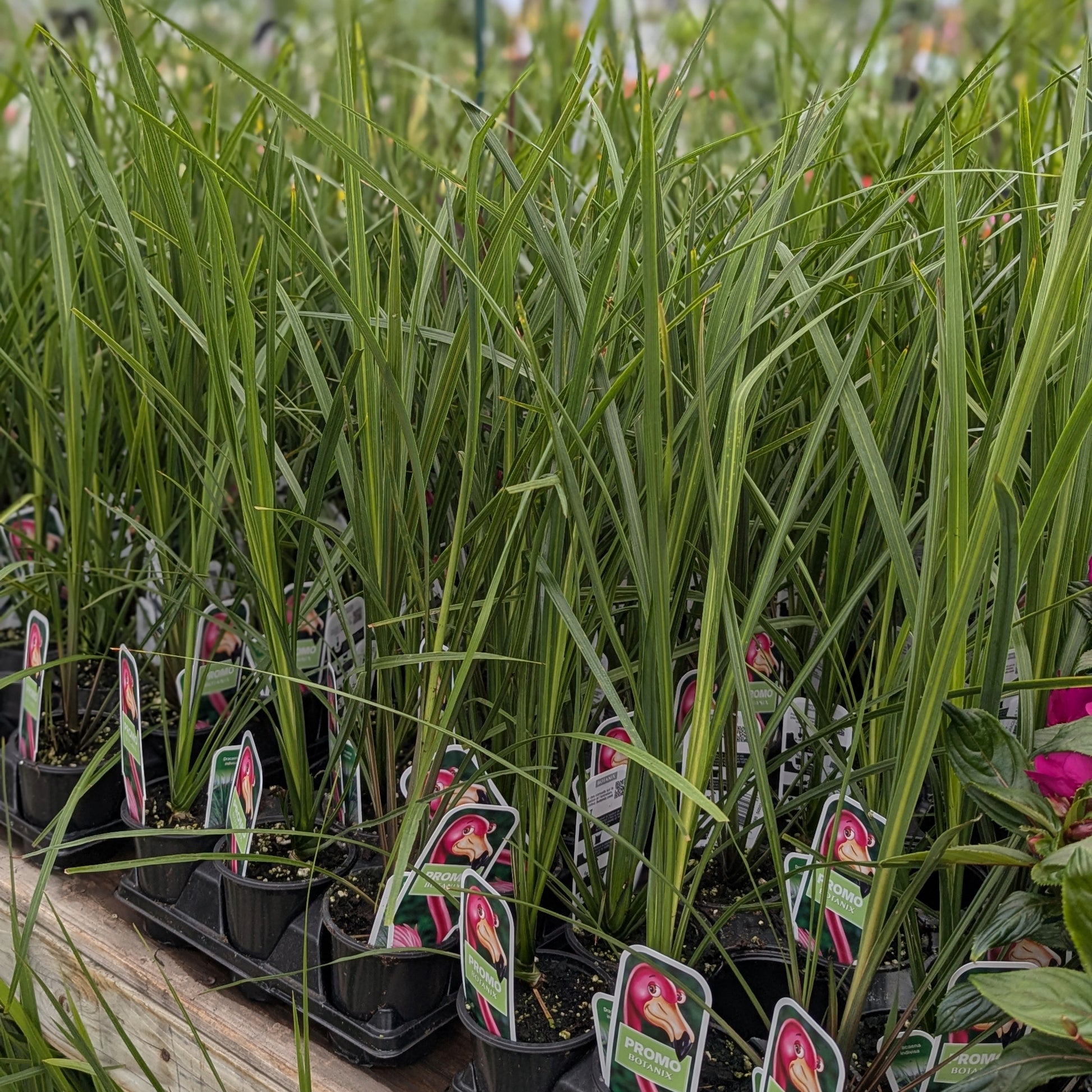
Dracaena indivisa
Dracaena Indivisa or Spike Plant
Exposure
- Sun
- Partial shade
Rusticity
- Trhiller Plant - Graphic Vertical Accent
- Green, sword-shaped foliage
- Easy to maintain
- Tolerates heat and drought (moderate)
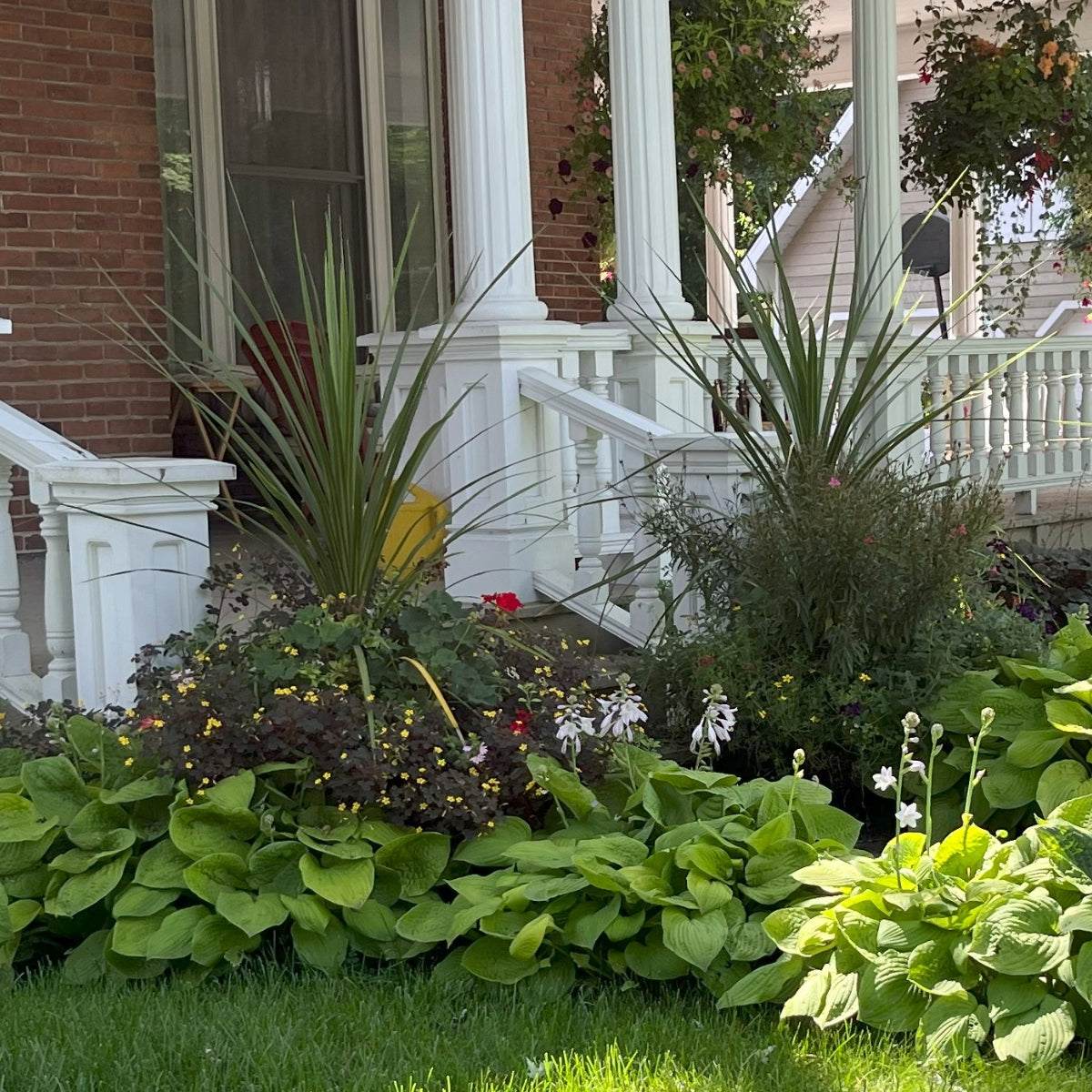
- Ideal for containers and flowerbeds
Bring a touch of exoticism and structure to your flower beds and containers with Dracaena indivisa, often sold under the name Cordyline indivisa or 'Spike Plant'. Known for its upright habit and long, sword-shaped green leaves that arch gracefully, it offers a striking contrast with other plants and adds lasting vertical interest throughout the season. Easy to care for and heat tolerant, it's a must-have for dynamic summer arrangements.
Characteristics
- Foliage : The foliage consists of long, evergreen, rigid, sword-shaped leaves, green to light green in colour. They are inserted in a round pattern on an upright stem that forms a 'false trunk' with age. The foliage arches slightly outward as it grows older.
- Light : Prefers full sun or partial shade. A minimum of 4 to 6 hours of sunlight is recommended.
- Habit : Its habit is upright, with a strong central stem and foliage that forms an erect and slightly weeping silhouette along the edges.
- Growth : Growth is relatively slow. When grown as an annual or in a pot, it generally reaches a height of 60 to 90 cm (24 to 36 inches) and a spread of 38 to 46 cm (15 to 18 inches). With many years in a pot and proper overwintering, it can reach 2 metres or more.
- Humidity : Requires moisture. The soil must be well-drained to avoid excess moisture, which can lead to root rot or botrytis. Drought-tolerant once established.
- Soil : Thrives in well-drained soil, preferably with a pH between 5.8 and 6.5. Avoid heavy clay soils. For pot cultivation, use a good quality well-drained potting mix. Be aware of fluoride toxicity in some soils/fertilizers that can cause brown spots on leaves (maintaining an adequate pH and avoiding superphosphate fertilizers can help).
- Temperature : It is a tropical plant that does not tolerate frost. To keep it in colder climates, it must be brought indoors before the first frosts, ideally in a cool location (like an orangery or unheated veranda) with a minimum temperature around 10°C (50°F), or in a bright indoor location.
- Watering : Water when the soil surface begins to dry. Maintain regular moisture but avoid standing water. Drought-tolerant once well-established, but appreciates regular watering in containers during hot weather.
Uses
- Types of Use : Excellent as a 'thriller' (central vertical element) in mixed container arrangements, in individual pots on patios, balconies, and terraces, or integrated into flower beds as an annual to add height and textural contrast.
- Decorative Advantages : Its graphic foliage and upright habit bring architectural interest and an instant exotic touch. It highlights flowering or lower-growing foliage plants around it. It is deer and rabbit resistant.
Care
- Fertilization : Fertilize once a month during the growing season (spring to late summer) with a balanced soluble fertilizer.
- Pruning : No pruning is generally necessary. Yellowed or damaged leaves can be removed at the base as needed.
- Planting :
- Distance : If planted in the ground (as an annual), space plants 38 to 46 cm (15 to 18 inches) apart. In containers, spacing depends on companion plants, but ensure good airflow.
- Depth : Plant so that the root ball or the base of the plant is covered with soil.
- Period : Plant outdoors in the spring after all risk of frost.
Plant details
Dimensions
Dimensions
Characteristics
Characteristics
Habit:
- Upright
- Erect
Flowering colours:
Plant needs
Plant needs
Watering:
- Average
Maintenance:
- Easy
Soil requirement:
- Well-drained
- Tropical Plant Soil
Features
Features
Resistance:
Attract:
Use:
- Container
- Flowerbeds (annual)
- Patio
- Balcony
- Terrace
- Vertical Accent
- Feature Plant Arrangement
Attribute:
- Decorative foliage

Related articles
-
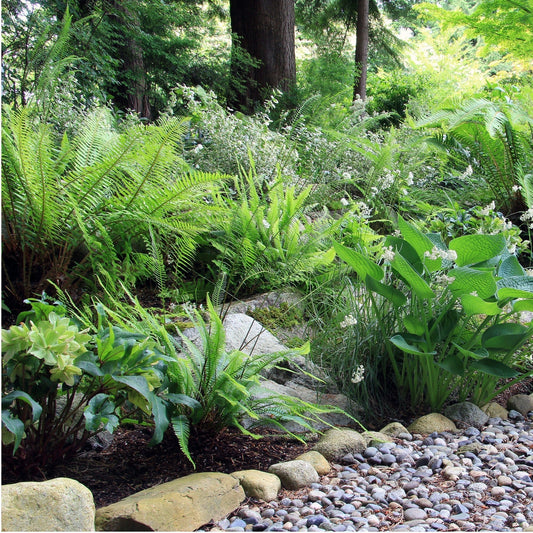
Mastering Your Shade Garden: A World of Texture...
Read the articleWho says shade can't be gourmet? Learn how to blend stunning perennials, native plants, and leafy greens to create a spectacular, eco-friendly shade garden.
-
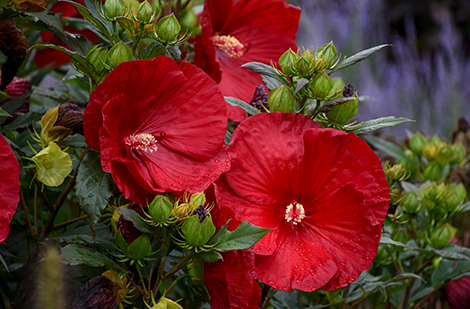
Hibiscus: charm’s the word for these tropical b...
Read the articleLes hibiscus sont une façon simple et rapide d’ajouter une touche d’exotisme dans la cour ou sur la terrasse. Offertes dans une panoplie de couleurs vibrantes, les immenses fleurs nous...
-
Growing ornamental grasses in a container
Read the articleSi les herbes ornementales sont devenues des incontournables au jardin, elles constituent également une tendance certaine pour la culture en pot. Elles peuvent répondre à une grande variété de besoins...
-
Choosing annuals for your planters
Read the articleLes annuelles se cultivent très bien en contenant et décorent les terrasses, les balcons et le patio. L'important est de choisir la bonne plante pour chaque emplacement et le bon...
-
Potting House Plants: which pot to choose
Read the articleBien qu'une plante puisse passer plusieurs mois et parfois même plusieurs années dans le même pot, avec le temps ses racines envahissent tout l'espace disponible. Il devient important de choisir...
-
Moving Up a Level: Advanced Guide to Repotting ...
Read the articlePropagate your violets! Discover the simple cutting method, the secret to the perfect soil mix, and how to fight mealybugs.