Thuja occidentalis 'Little Giant'
Thuja occidentalis 'Little Giant' – Eastern White Cedar 'Little Giant'
Exposure
- Sun
- Partial shade
Rusticity
- Natural ball-shaped habit
- Perfect dwarf size
- Minimal maintenance required
- Permanent garden structure
- Dense soft foliage
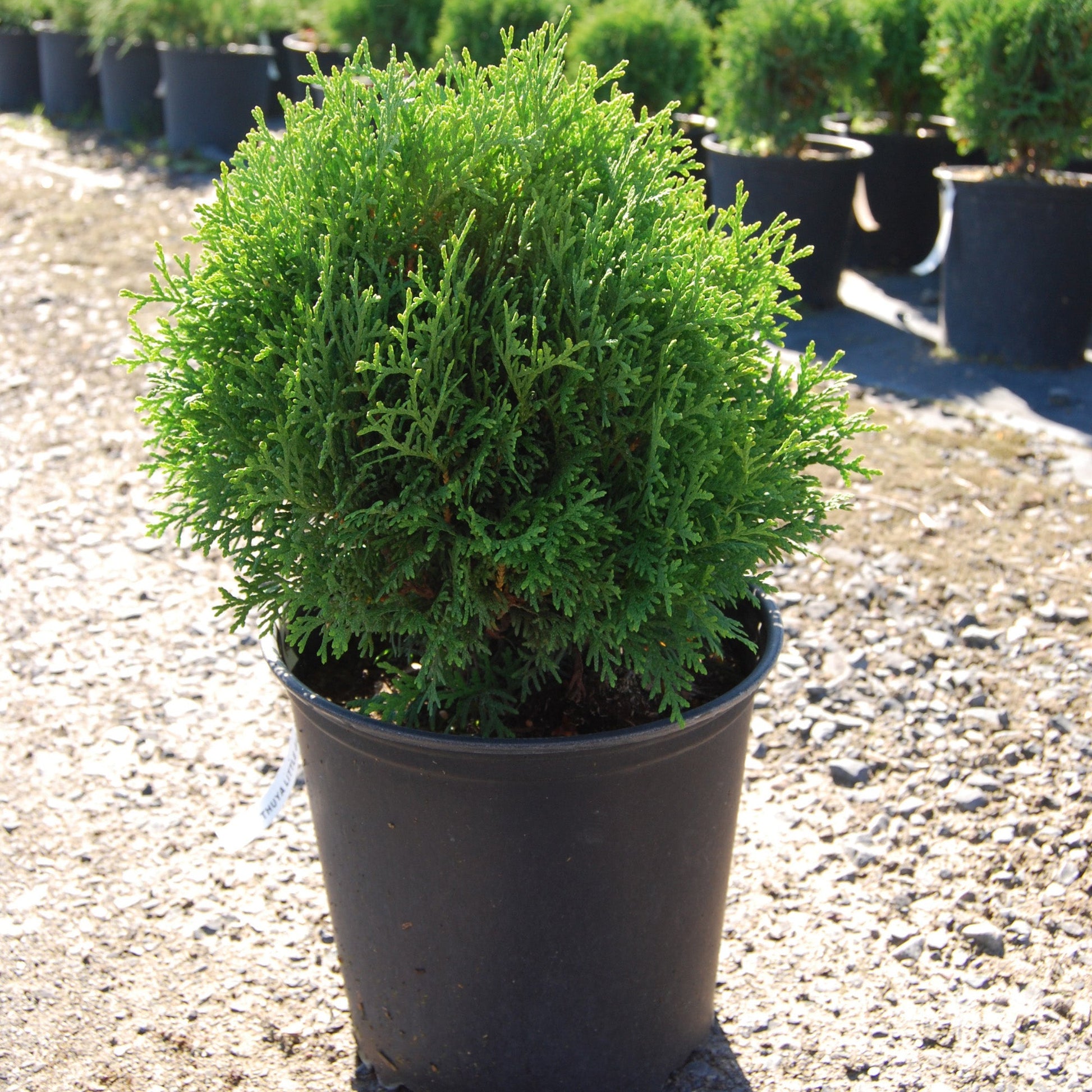
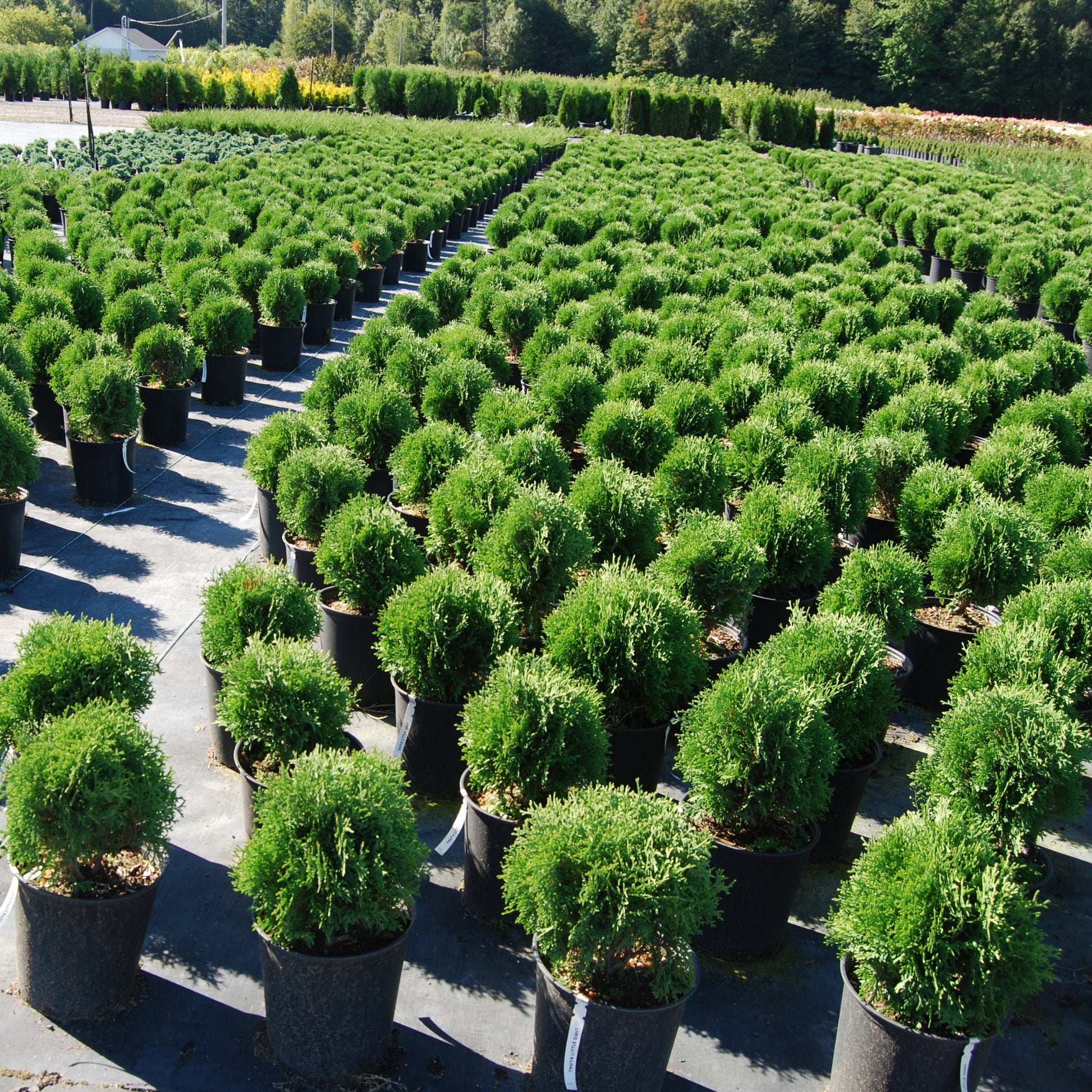
'Little Giant' is a true gem for small spaces, offering all the nobility of a cedar in a perfectly controlled miniature format. This dwarf conifer stands out with its natural globular habit and exceptional density, forming an impeccable green ball without the need for constant shearing. Its feathery foliage is soft to the touch and maintains a rich coloration year-round, making it a top-tier choice for structuring garden beds or punctuating entryways with elegance and simplicity.
Characteristics
- Foliage : Dense, supple scales of a vibrant medium green. The foliage is evergreen and maintains a beautiful appearance through the Canadian winter.
- Flowering / Fruiting / Stems : Rarely produces cones. Its branchlets are short and very tightly arranged, accentuating its compact look.
- Light : Prefers full sun to maintain its density but tolerates part-shade very well.
- Habit : Naturally globular, rounded, and very compact.
- Growth : Slow-growing, reaching approximately 80 to 120 cm in height and width after several years.
- Soil : Thrives in rich, cool, and well-drained soil. It appreciates consistent moisture without sitting in standing water.
- Temperature : Excellent hardiness (Zone 3).
- Resistances : Good resistance to common cedar diseases and tolerates urban conditions well.
Use
- Types of Use : Ideal for rock gardens, garden bed edging, foundation plantings, or in containers on a terrace.
- Decorative Advantages : Provides a soft, permanent geometric structure to the garden. Perfect for creating visual rhythm without overwhelming the space.
Maintenance
- Watering: Water regularly, especially during summer dry spells, to keep the soil cool. Applying mulch at the base helps retain moisture.
- Fertilization : Apply a fertilizer for evergreens or shrubs in early spring.
- Pruning : No pruning is required to maintain its round shape. If you wish to even out the surface, prune lightly in mid-June.
- Planting : Dig a hole twice as wide as the root ball. Ensure the top of the root ball is level with the surrounding soil.
- Winter Protection: A protection is recommended during the first few winters or if the plant is exposed to prevailing winds and de-icing salts.
Plant details
Dimensions
Dimensions
Characteristics
Characteristics
Habit:
- Rounded
Flowering colours:
Plant needs
Plant needs
Watering:
- Moderate
Maintenance:
- Easy. Pruning should be done in the new growth in late June
- if necessary.
Soil requirement:
- Rich
- Cool
- Well drained
Features
Features
Resistance:
- Cold
- Disease
- Salt
Attract:
- Birds
Use:
- Border
- Specimen
- Mass planting
- Rock garden
- Container
- In-ground
Attribute:
- Slow growth
- Evergreen foliage
- Small landscaping and yard

Related articles
-
Hedge – other shrubs available
Read the articleCréez une haie mixte, composée de différentes espèces d’arbustes comme le buis, le saule et la spirée japonaise. Donnez du style à la cours arrière.
-
Fall Pruning: Key Steps for Your Trees, Shrubs,...
Read the articleFall is here, but do you know what to prune in your garden? Discover our guide to pruning trees, shrubs, and roses and make sure you take the right steps.
-
Trees and shrubs for small space landscaping
Read the articleHaving an exceptional garden is possible, even in the city! Discover our selection of trees and shrubs perfect for small lots, and transform your outdoor space into a green oasis.
-
Healthy Cedars: Watering, Fertilization, and Ma...
Read the articleWant a lush, dense cedar hedge that lasts for decades? Discover our expert secrets for proper watering, strategic fertilization, and essential winter protection.
-
Pruning cuts for trees and shrubs
Read the articleWe all dream of a tree with well-distributed branches or a shrub full from its base to its top. To achieve this, they must be pruned. There are different types...
-
How and When to Prune Your Hedge for Profession...
Read the articleWant a perfectly straight, lush cedar hedge? Master the art of pruning with our expert tips for a dense and winter-resistant structure.