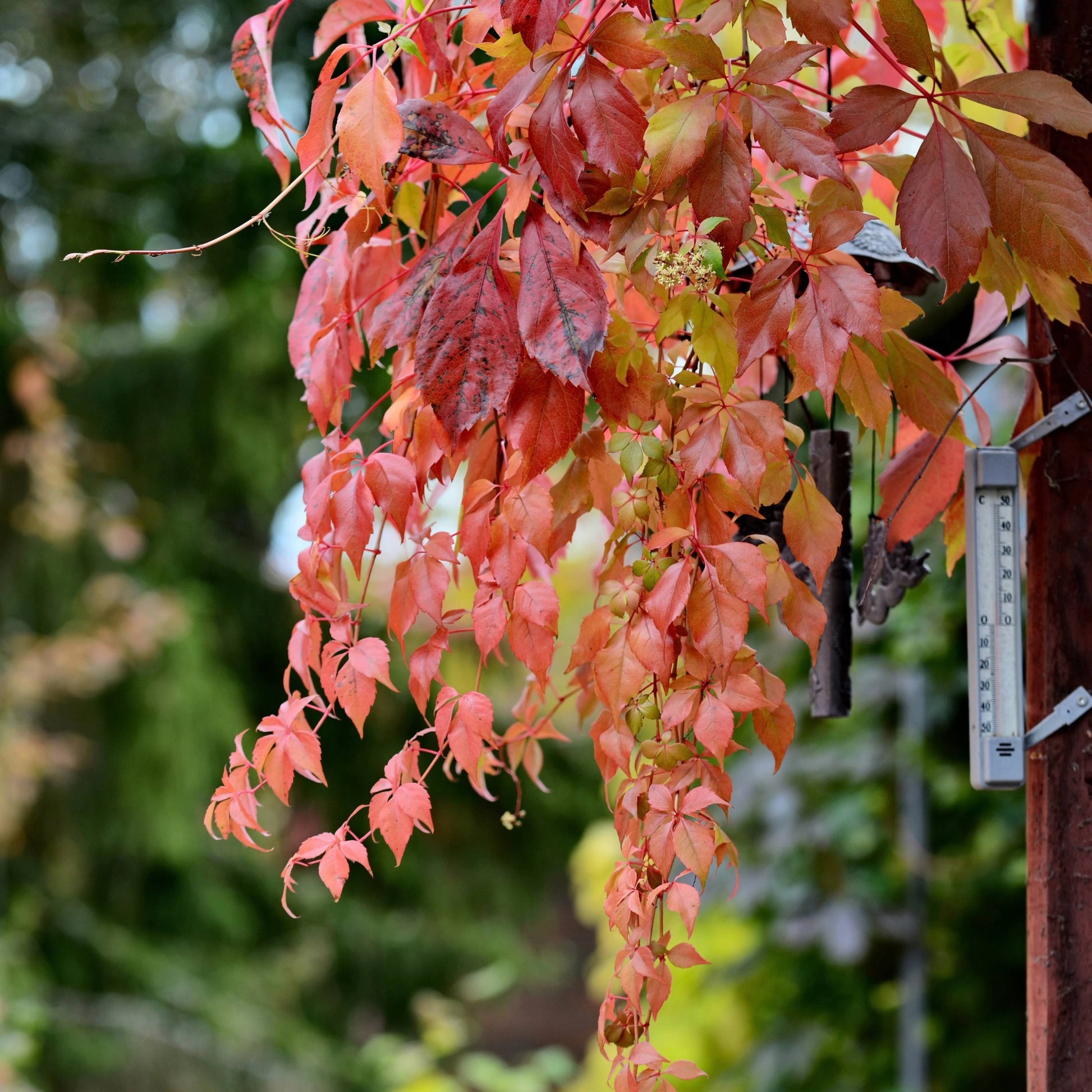
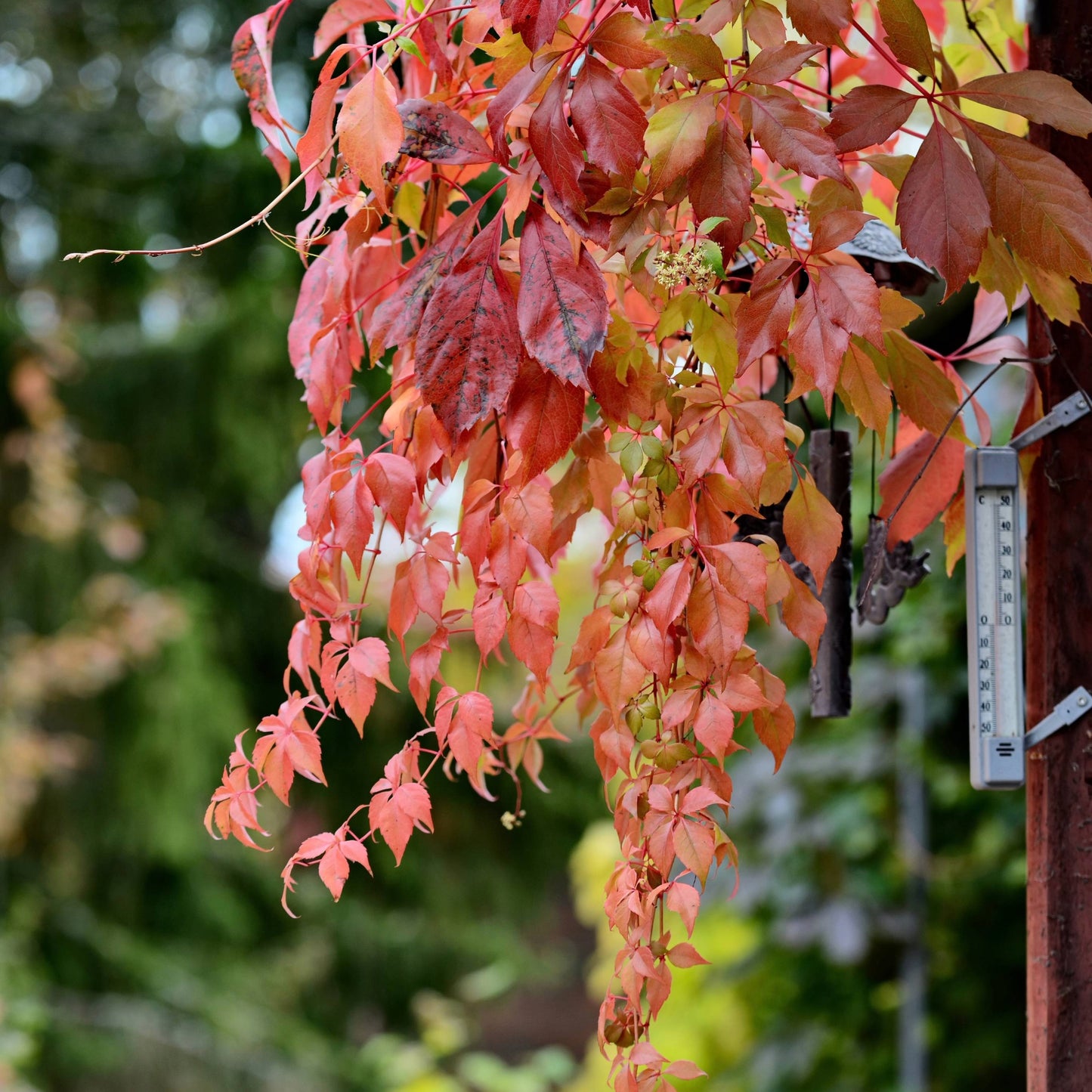
Engelmann Ivy is an exceptional climbing vine, chosen for its ability to quickly cover large surfaces with foliage that is finer and more delicate than the wild species. This vigorous vine's main benefit is the absolutely breathtaking spectacle it provides in the fall, when its foliage transforms into a wall of flamboyant scarlet-red. It is the quintessential solution for greening a wall or fence with minimal maintenance.
Characteristics
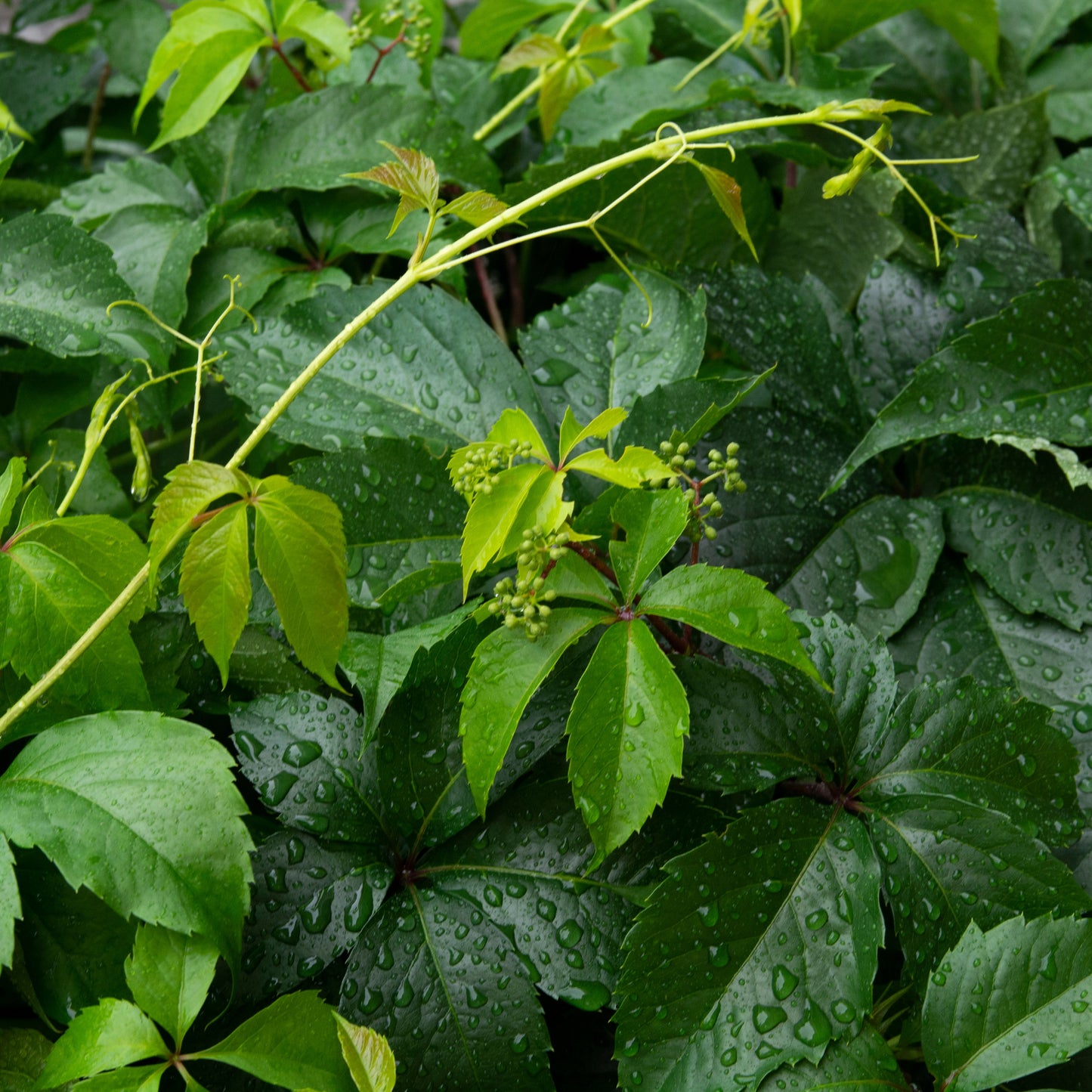
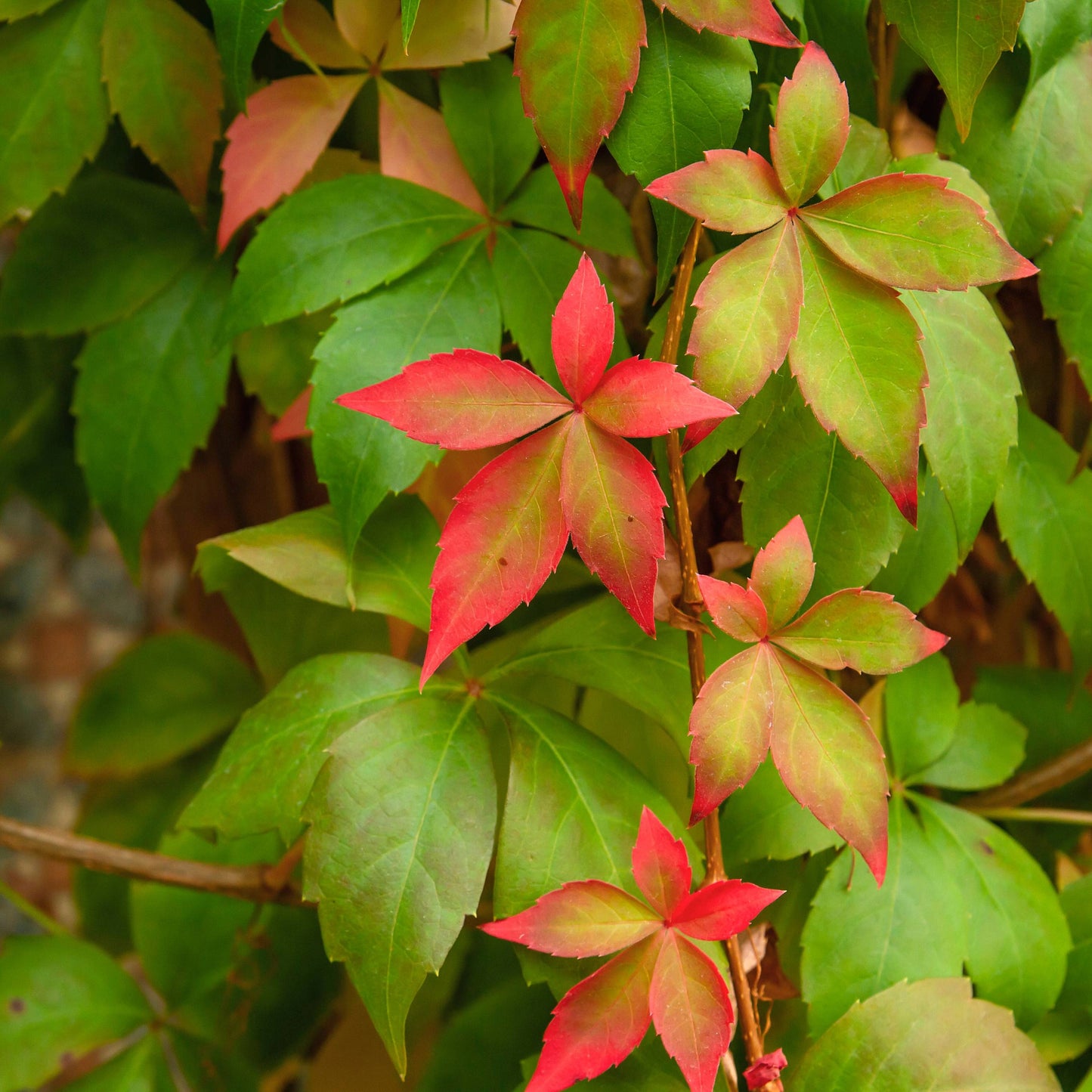
Foliage: It develops dense and lush deciduous foliage. Each leaf, composed of five leaflets, emerges with bronze hues in the spring, turns a rich green in the summer, then metamorphoses into a spectacular scarlet-red in the fall.
Flowering: In early summer, it produces clusters of small, very discreet greenish flowers, which are not its main ornamental feature but are appreciated by pollinators.
Fruiting: After flowering, small, dark blue, almost black berries form. These fruits persist after the leaves fall and attract birds, but are toxic to humans and mammals.
Light: It is an extremely adaptable plant that thrives in full sun as well as full shade. Its most beautiful fall colour develops in the sun.
Habit: It is a twining, climbing vine that clings to surfaces on its own using tendrils tipped with small adhesive discs.
Growth: Very fast. It can grow several metres in a single season and reach a height of over 15 m (50 feet) at maturity.
Soil: It adapts to almost all soil types (poor, clay, etc.), as long as they are not constantly waterlogged.
Hardiness: Extremely hardy, it faces Zone 3 winters without any problem.
Resistance: This very robust plant resists deer, drought, and urban pollution.
Uses
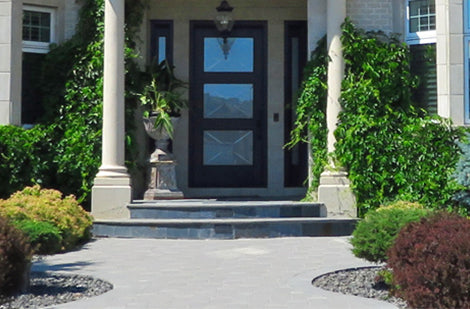
Types of Use: It is ideal for quickly covering and beautifying brick or concrete walls, fences, pergolas, or for climbing up old trees. It can also be used as a vigorous groundcover to stabilize slopes.
Ornamental Features: Its primary appeal is its incredible fiery red fall colouration. During the summer, it creates a dense and refreshing wall of green.
Care
Watering: Water regularly during the first season to promote good root establishment. Afterwards, it is very drought tolerant.
Fertilizing: No fertilization is necessary.
Pruning: Its maintenance is minimal. Prune as needed, at any time during the season, to control its spread and prevent it from covering windows, gutters, or painted surfaces.
Planting: Plant at the base of the structure you wish to cover. It will establish quickly.
Winter Protection: No protection is required for this ultra-hardy native plant.
Having an exceptional garden is possible, even in the city! Discover our selection of trees and shrubs perfect for small lots, and transform your outdoor space into a green oasis.
Discover our complete guide to mastering shrub planting and care. Learn the best planting times, essential techniques, along with tips for watering, fertilizing, and managing common issues. Our practical advice...
In exterior design, shrubs represent furniture. They set the scene and set the tone for the flower bed. Shrubs constitute the living architectural elements of the landscaped garden. As proof,...
Le grand choix d’espèces fournit l’occasion de varier les formes, les feuillages, et de créer des floraisons successives, bref, de composer un jardin magnifique à longueur d’année. Pour toutes ces...