1
/
of
6
Prunus salicina 'Elephant Heart'
'Elephant Heart' Plum - Prunus salicina 'Elephant Heart'
'Elephant Heart' Plum - Prunus salicina 'Elephant Heart'
Exposure
- Sun
Rusticity
5, 6, 7, 8, 9
Bloom time
- May
- Giant heart-shaped fruit
- Melting blood-red flesh
- Superior gourmet flavour
- Spectacular spring bloom
- Vigorous and productive tree
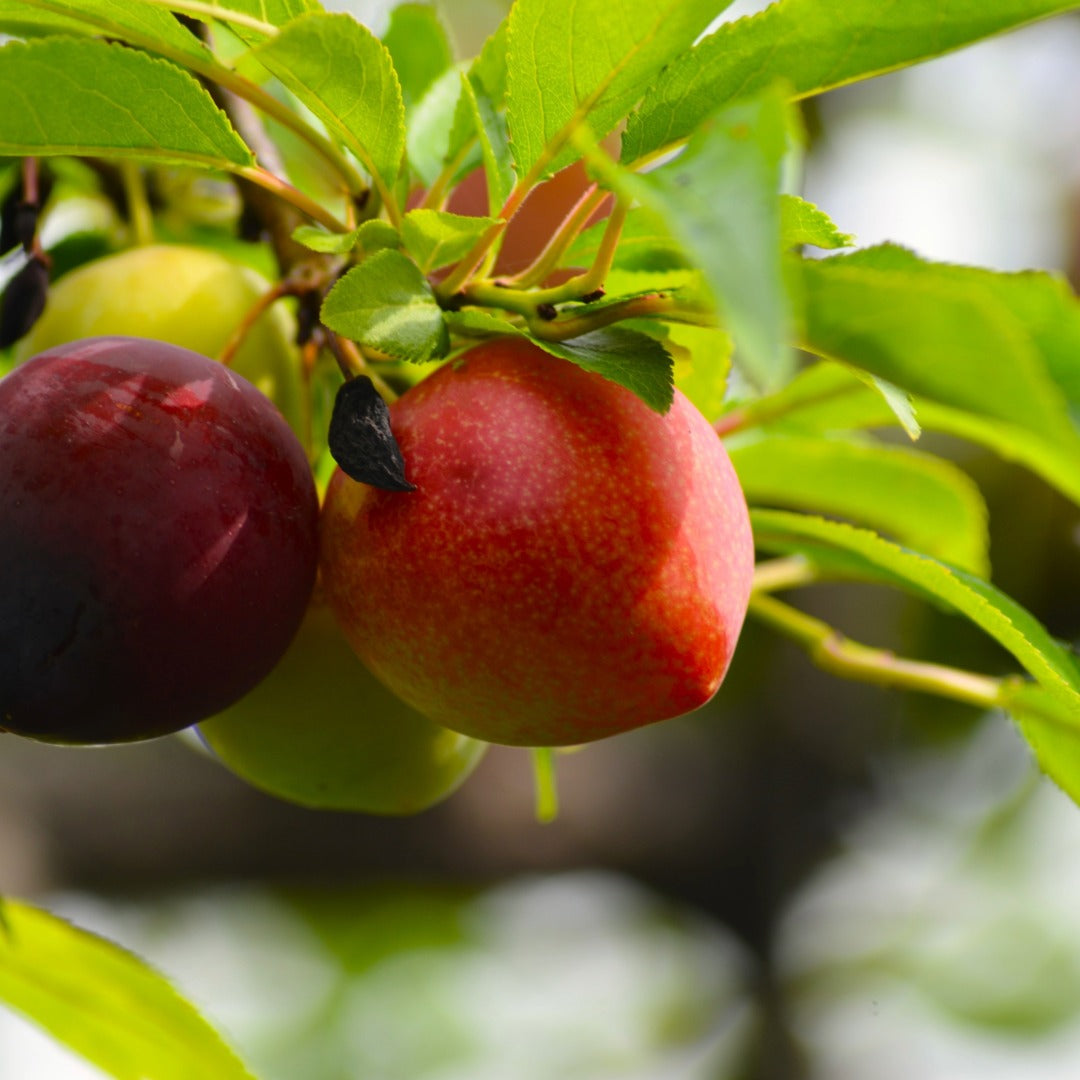
A true legend among Japanese varieties, the 'Elephant Heart' plum stands out with spectacular heart-shaped fruits that can reach the size of an apple. Beneath a dark purple skin lies a blood-red flesh, firm and incredibly juicy, offering an explosion of sweet and slightly tart flavors. This vigorous tree is the ultimate choice for gourmet gardeners looking to combine exceptional productivity with spring beauty, thanks to its pure white blossoms.
Characteristics
- Foliage: The deciduous leaves are a bright green, oblong in shape, and finely serrated, creating a dense and elegant canopy throughout the summer.
- Flowering / Fruiting: A profusion of fragrant white flowers covers the branches in May. The plums ripen toward late August, distinguished by their unique ruby-red flesh.
- Taste and Texture: The meaty, rich, and melting flesh reveals a complex aroma reminiscent of wild berries.
- Light: Requires full sun to ensure complete fruit ripening and to maximize sugar content.
- Habit: An upright and spreading tree that develops a sturdy and majestic structure with age.
- Growth: Rapid to moderate growth rate, quickly reaching production size.
- Soil: Prefers deep, fertile, and well-drained soil.
- Temperature: Displays excellent hardiness (Zone 5).
- Resistances: Shows good tolerance to common diseases once well-established.
Utilization
- Types of Use: Plant as a specimen tree as a garden centerpiece or integrate it into a diverse home orchard.
- Culinary Use: A must-have for fresh consumption. Excels in rustic tarts, vibrant sorbets, or gourmet preserves.
- Decorative Advantages: Its imposing stature and massive spring bloom bring undeniable ornamental value.
Maintenance
- Watering: Water deeply at planting and maintain consistent moisture during fruit formation.
- Fertilization: Fertilize annually in early spring with a potassium-rich fertilizer.
- Pruning: Prune every year in late winter to thin out the center of the tree and promote ripening.
- Planting: Requires a compatible pollinator to ensure an optimal harvest.
- Winter Protection: Apply organic mulch at the base and install rodent protection for the cold season.
Plant details
Dimensions
Dimensions
Spacing
498 - 500 cm
Spread
300 - 450 cm
Height
400 - 550 cm
Spacing
196 - 196 in.
Spread
118 - 177 in.
Height
157 - 216 in.
Characteristics
Characteristics
Habit:
- Upright
- Spreading
Flowering colours:
- White
Plant needs
Plant needs
Watering:
- Moderate
Maintenance:
- Protect the trunk in winter with a spiral
- Medium
- Fertilize regularly
- Prune in spring
Soil requirement:
- Rich
- Well-drained
Features
Features
Resistance:
- Heat
Attract:
- Butterflies
- Birds
- Pollinators
Use:
- Isolated
- Food forest
Attribute:
- Edible
- Fast growth
- Fragrant
- Shade